A veil of darkness descends, marking the year’s longest night. But within this deepest shadow lies a promise: the return of the light. Sunday heralds the winter solstice, a turning point etched in the rhythm of our planet.
For those north of the equator, it’s the official start of winter, a time of quietude and introspection. Yet, it’s a moment of celebration, knowing each day forward will slowly, subtly, reclaim lost sunlight. Simultaneously, in the Southern Hemisphere, summer begins with a burst of radiant energy.
The very word “solstice” whispers of this pause. Derived from Latin – “sol” for sun and “stitium” for stillness – it signifies the sun’s apparent halt in its celestial journey. The winter solstice witnesses the sun tracing its lowest, shortest arc across the sky.
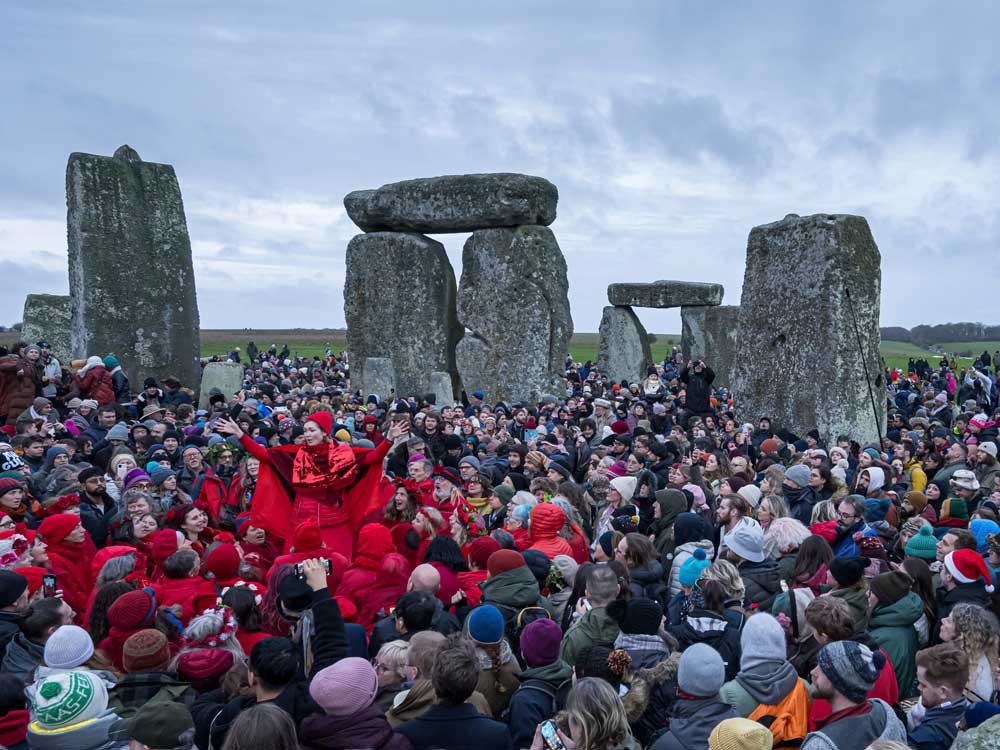
Ancient civilizations understood this cosmic dance. Monuments like Stonehenge stand as testaments to their reverence, meticulously aligned to capture the sun’s power at the solstices. It’s a connection to something far larger than ourselves, a recognition of Earth’s elegant orbit.
The Earth doesn’t orbit the sun in a perfect circle, but at an angle. This tilt is the reason for the unequal distribution of sunlight throughout the year, creating our seasons. The solstices mark the peak of this tilt, when one hemisphere is leaning furthest from, or towards, the sun.
During the winter solstice in the Northern Hemisphere, we experience the maximum tilt away, resulting in minimal daylight. Conversely, the summer solstice brings the maximum tilt towards the sun, gifting us with long, glorious days. These pivotal moments define the extremes of light and darkness.
Then there are the equinoxes, points of balance where neither hemisphere dominates. The word itself – “equal night” – reveals their essence. Day and night are nearly equal in length, a fleeting moment of equilibrium before the seasons shift again.
The autumnal equinox, typically around September 22nd, signals the transition to fall. The vernal equinox, around March 20th, welcomes the renewal of spring. These are times of transition, mirroring the cycles of nature and our own lives.
It’s important to note that there are two ways to define the seasons: astronomically, based on Earth’s position in orbit, and meteorologically, based on temperature patterns. While astronomical seasons are tied to the solstices and equinoxes, meteorological seasons begin on fixed dates – March 1st, June 1st, September 1st, and December 1st.
Ultimately, whether you follow the celestial calendar or the weather’s lead, the solstices and equinoxes remind us of the Earth’s constant motion and the beautiful, predictable rhythm of the seasons. They are moments to acknowledge the power of the sun and the enduring cycle of life.