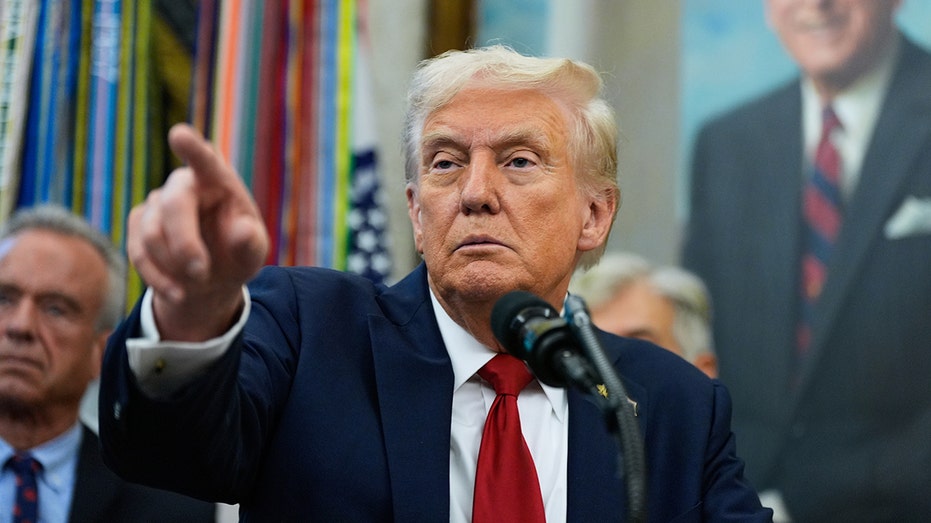
From the Diplomatic Reception Room of the White House on December 17, 2025, the President addressed the nation, painting a picture of remarkable economic turnaround. The message wasn’t simply a recitation of statistics, but a declaration of a nation regaining its footing after what he described as years of mismanagement.
A central pillar of this recovery, he asserted, was a dramatic shift in border security. For seven consecutive months, U.S. Border Patrol reported zero releases of undocumented individuals into the country. Over two million people have either returned home voluntarily or been deported, fundamentally altering the economic landscape.
The impact of this enforcement extends far beyond border control. The President explained how the influx of undocumented workers had artificially inflated housing costs, impacting everyone from renters to prospective homeowners. The logic that this only affected certain communities was, he argued, demonstrably false.

Removing this pressure on the labor market, he continued, is forcing employers to offer competitive wages to attract legal workers. This, coupled with increased payroll tax contributions from a legally employed workforce, is easing the financial burden on American citizens. Billions in previously allocated benefits are now being redirected.
The specter of soaring inflation, a recent memory for many Americans, is also receding. While peaking at 9 percent, the Consumer Price Index now stands at 2.7 percent, moving closer to the Federal Reserve’s 2 percent target. Even everyday expenses, like Thanksgiving dinner, are demonstrably cheaper than they were just a year ago.
The relief extends to the gas pump, where prices have plummeted from a high of $5 a gallon to under $3 nationally, and even as low as $2.49 in some areas. Crucially, real wages are beginning to rise, outpacing the rate of inflation and offering tangible benefits to working families.
The President boldly declared the United States the “hottest economy in the world,” a claim supported by compelling data. The stock market has surged, reaching record highs with a year-to-date increase of 16.45 percent. GDP growth is exceeding expectations, at an estimated 2.7 percent, significantly outpacing many other developed nations.
A resurgence in manufacturing is fueling this growth. Construction spending has tripled since January 2020, reaching a 30-year high for manufacturing’s share of the total. This investment is translating into jobs, with nearly 287,000 positions created in 2023 alone through reshoring and foreign investment.
The trend is continuing, with projections indicating nearly two million manufacturing jobs have returned to the U.S. since 2010, and an estimated 3.8 million new openings expected by 2033. This represents a fundamental shift in the American economic engine.
Record tariff collections, exceeding $200 billion in 2025, are further bolstering the economy. This influx of revenue is coinciding with unprecedented levels of foreign direct investment, pouring in from the Middle East, Europe, and East Asia.
The Middle East alone has pledged over $2.2 trillion in investments, focusing on key sectors like artificial intelligence, semiconductors, and energy. Saudi Arabia and the United Arab Emirates are leading the charge, with commitments reaching into the trillions of dollars. Qatar is also contributing significantly.
East Asian nations are also investing heavily, with Japan and South Korea committing $550 billion and $350 billion respectively. India has set a bilateral trade target of $500 billion by 2030, signaling a deepening economic partnership. Even the European Union projects $600 billion in private investment.
These economic gains are being directly translated into relief for American families through the “One Big Beautiful Bill.” The Child Tax Credit has been increased, providing substantial support for parents. The standard deduction has also been permanently raised, simplifying the tax process and reducing the tax burden.
The bill eliminates taxes on tip income and overtime pay, offers a deduction for auto loans on American-made vehicles, and provides seniors with an additional tax break. New tax-advantaged savings accounts for children are also being established, incentivizing long-term financial planning.
Congressional estimates project an average tax reduction of $1,300 for working families, with a typical family of four earning $80,000 receiving approximately $1,700 in relief. Those earning between $30,000 and $80,000 are seeing a 15 percent reduction, while households under $100,000 are experiencing an average reduction of 12 percent.
Beyond immediate tax relief, the bill permanently protects key provisions from previous legislation, safeguarding benefits for families and small businesses. Expanded child care credits, paid leave tax credits, and health savings accounts are now secure for the future.