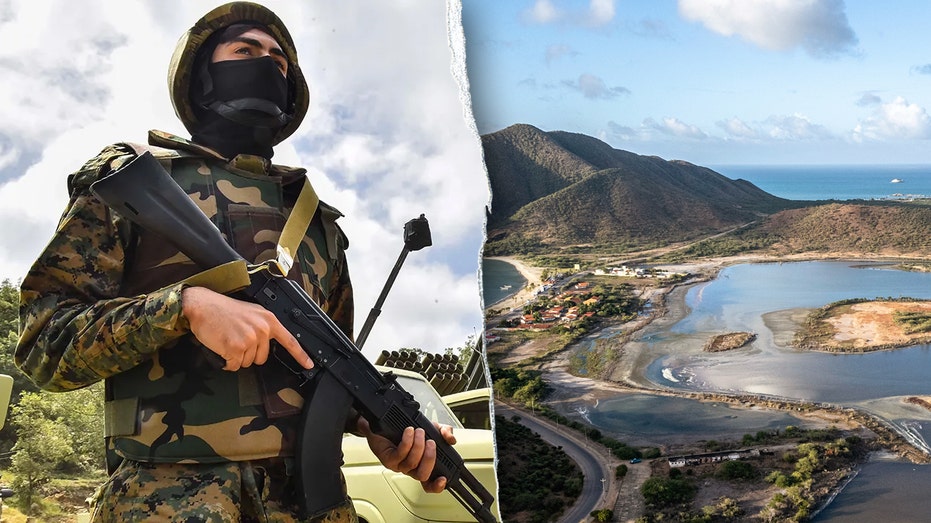
From the azure waters, Margarita Island appears as a postcard paradise – palm trees swaying, duty-free shops beckoning, a tropical escape off the Venezuelan coast. But beneath this alluring facade lies a chilling reality: U.S. officials now believe this island has become a critical stronghold for Hezbollah, bolstered by Iran’s expanding influence and shielded by the Maduro regime.
The implications extend far beyond Venezuela’s shores. Experts warn of a growing security crisis brewing in the Western Hemisphere, with transnational criminal groups increasingly intertwined with terrorist organizations. The most significant threat to the United States isn’t originating from distant lands, but from these deeply rooted networks focused on the lucrative and dangerous world of narcotrafficking.
Margarita Island’s strategic location fuels its appeal. Situated near Trinidad and Tobago and Grenada, within a vital oil-rich region and along key maritime routes, it has long been a known hub for illicit activity. Its relative isolation, distanced from the Venezuelan mainland and lacking robust law enforcement, creates a haven for those operating outside the law.
For over two decades, the island has undergone a quiet transformation. Under Hugo Chávez, Venezuela cautiously opened its doors to Hezbollah, allowing the group to establish a foothold, including a paramilitary training site. But it was under Nicolás Maduro that Hezbollah’s presence exploded, forging dangerous alliances with the Cartel de los Soles – a network of high-ranking Venezuelan officials accused of drug trafficking.
Hezbollah has skillfully woven itself into the fabric of Margarita Island’s economy, exploiting its duty-free status and access to Colombia to generate revenue through smuggling and drug importation. The group operates a network of companies, masking its activities while simultaneously maintaining clandestine training camps hidden within the island’s landscape.
The extent of Venezuelan complicity is deeply troubling. Former officials, like Tareck El Aissami, allegedly facilitated the issuance of passports and citizenship to Hezbollah operatives, along with individuals from Lebanon, Syria, and Iran. Over a decade, more than ten thousand passports were granted to individuals from these nations, effectively providing a pathway for operatives to move freely.
Evidence suggests a deliberate effort to arm and train operatives within Venezuela. Documents revealed that a Venezuelan lawmaker traveled to the Middle East to procure weapons and recruit Hezbollah and Hamas members for training in secret camps. A subsequent shipment of weapons was delivered to a hangar controlled by Maduro himself at the country’s main airport.
Recent events in the Middle East have only amplified Margarita Island’s significance. As Israel’s campaign against Hezbollah in Lebanon disrupts the group’s leadership and financial networks, Hezbollah is increasingly reliant on its overseas operations, particularly those in Latin America, for fundraising and revenue generation.
Intelligence indicates a concerning shift in personnel. Hundreds of Hezbollah fighters have reportedly relocated from Lebanon to Venezuela, strategically positioning the group closer to the United States and further from Israeli forces. This move represents a direct escalation of the threat to U.S. national security.
Iran’s involvement further complicates the situation. A substantial Iranian presence in Venezuela is linked to a trade network involving weapons, drones, and – crucially – gold. As Iran faces setbacks in the Middle East, it has become increasingly dependent on this flow of gold in exchange for military hardware.
The solution, according to some experts, is clear. While the U.S. maintains a military presence in the Caribbean, eliminating the Maduro regime and its ties to these terrorist organizations would be the most effective way to dismantle this growing threat and safeguard U.S. national security. The intelligence needed to achieve this, they believe, may already be within reach, held by the Venezuelan opposition.