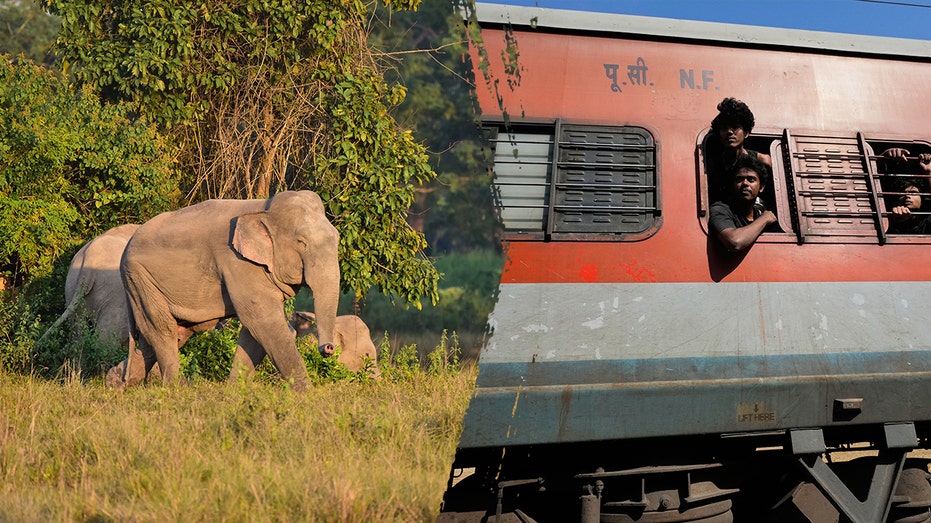
A chilling scene unfolded in the pre-dawn darkness of Assam, India, as a high-speed passenger train slammed into a massive herd of wild Asiatic elephants. Seven of the majestic creatures perished instantly, and a young calf suffered injuries in the devastating collision. The impact reverberated through the forested landscape, marking a tragic loss for this vulnerable population.
The train driver reacted swiftly, spotting the immense group – numbering around one hundred elephants – attempting to cross the tracks. Emergency brakes were engaged, a desperate attempt to avert disaster, but the train’s momentum proved too great. Despite the effort, several elephants were struck with brutal force.
The force of the impact caused five train coaches and the engine to derail, a chaotic scene of twisted metal and shattered glass. Remarkably, amidst the wreckage, no human lives were lost. Six hundred and fifty passengers were onboard, traveling from Sairang towards New Delhi, unknowingly heading into a wildlife tragedy.
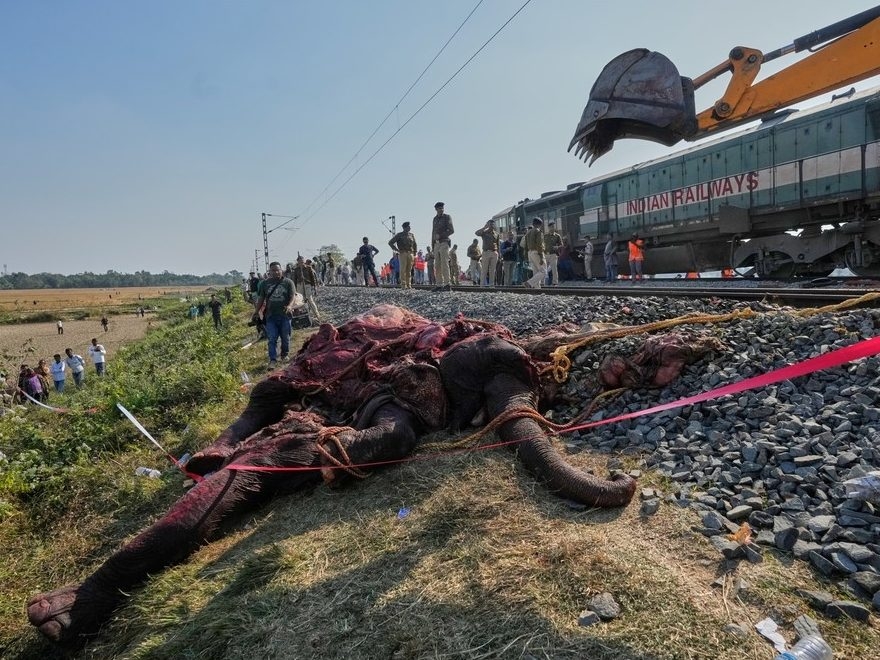
Veterinarians worked somberly at the site, conducting autopsies on the fallen giants. The task was a heartbreaking one, a stark reminder of the escalating conflict between wildlife and human infrastructure. Later that day, the elephants would be laid to rest in the very forest they once roamed.
The accident occurred approximately 78 miles southeast of Guwahati, in an area where elephants frequently cross railway lines. While authorities claim the location isn’t officially designated as an elephant corridor, the reality is that these animals often wander near the tracks, driven by instinct and the search for food and resources.
Passengers were carefully transferred, with those in the derailed coaches transported to Guwahati by a replacement train. The remaining carriages were reconnected, and the journey to New Delhi resumed, carrying the weight of the morning’s tragedy. The incident highlighted the fragility of coexistence.
This wasn’t an isolated event. Assam, home to an estimated 7,000 wild Asiatic elephants, has witnessed a disturbing pattern of train-elephant collisions. Since 2020, at least a dozen elephants have been killed by speeding trains, a grim statistic that underscores the urgent need for preventative measures.
The timing of these incidents is particularly concerning. As rice fields ripen for harvest, elephants are drawn closer to human settlements, increasing the likelihood of encounters with trains and other infrastructure. This seasonal movement creates a dangerous intersection of wildlife and human activity, demanding immediate attention and innovative solutions.