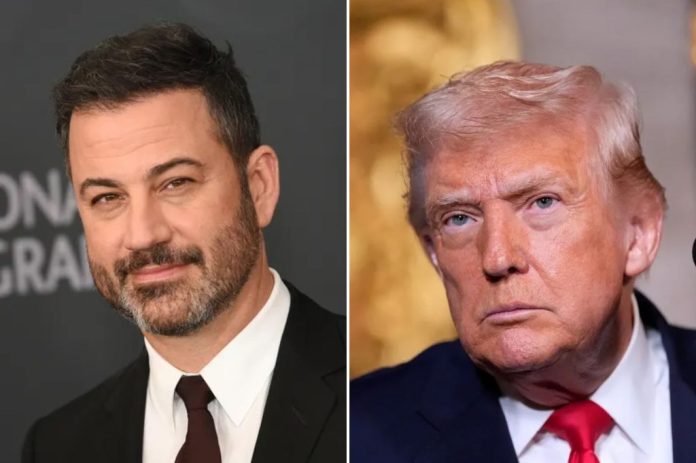
Jimmy Kimmel, the late-night host, delivered a strikingly unconventional Christmas message, not to an American audience, but to the people of Britain. Invited by Channel 4, a British public broadcaster known for its provocative programming, Kimmel seized the opportunity to deliver a pointed commentary on the state of his own nation.
He framed his remarks with a touch of self-awareness, admitting his unfamiliarity with the tradition of an alternative Christmas address. Yet, he quickly pivoted to a bold declaration: from a “fascism perspective,” the year had been remarkably positive for the United States.
Kimmel didn’t shy away from direct criticism, stating that “tyranny is booming” in America. He directly referenced the former president, labeling him “King Donny the Eighth” and highlighting a perceived regression towards monarchical tendencies, a stark contrast to the nation’s revolutionary origins.
The host’s comments arrived after a period of professional turbulence. A temporary suspension of his show, triggered by remarks concerning an individual accused of a serious crime, had thrust him into the center of a heated debate surrounding free speech.
Kimmel acknowledged the support that led to his show’s reinstatement, framing it as a victory not just for himself, but over the political forces he openly opposes. He described his current role as relentlessly scrutinizing the most powerful figure in the country.
He painted a bleak picture of the American landscape, citing widespread erosion of trust in institutions – the press, science, medicine, the judiciary, and even the White House itself. He argued that the very foundations of American democracy were under assault.
Acknowledging the ripple effect of American turmoil on the international stage, Kimmel offered a sincere apology to the British public. He urged them not to abandon hope, suggesting a timeframe of roughly three years for potential positive change, implicitly referencing the next presidential election cycle.
Channel 4’s decision to invite Kimmel aligns with its history of featuring controversial voices in its annual Christmas message. Past speakers have included figures like Iranian President Mahmoud Ahmadinejad and Edward Snowden, demonstrating a commitment to challenging conventional narratives.
The broadcaster itself noted Kimmel’s position on the “front line of America’s battle over free speech,” framing his address as a timely and relevant contribution to the national conversation. His message aired just hours after King Charles III’s traditional address, which emphasized unity and compassion.
The contrast between the two messages was stark. While the King called for reconciliation, Kimmel offered a bracingly honest assessment of a nation grappling with deep divisions and a perceived threat to its democratic principles.


