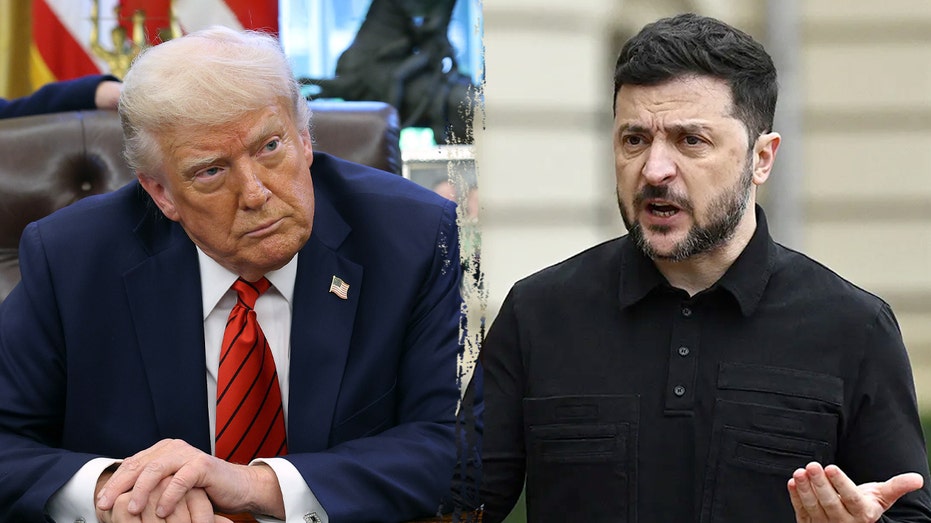
The sun beat down on Mar-a-Lago as President Donald Trump welcomed Ukrainian President Volodymyr Zelenskyy, a meeting steeped in the weight of a four-year conflict nearing a critical juncture. Trump greeted Zelenskyy personally, a gesture signaling the high stakes of their impending discussions, before facing a barrage of questions from the assembled media.
“I do believe that we have the makings of a deal,” Trump declared, standing shoulder-to-shoulder with Zelenskyy. He spoke of a process poised to “move very rapidly,” hinting at a potential breakthrough after years of stalled negotiations and devastating loss.
Yet, beneath the optimism lay a stark warning. Trump predicted a grim future should an agreement fail, envisioning a prolonged war and a horrifying escalation of casualties. “Millions of additional people are going to be killed,” he stated, the gravity of the situation hanging heavy in the air.
The core of the conflict, as always, remained the delineation of territorial lines. Repeated attempts at negotiation had foundered on this very point, a seemingly insurmountable obstacle to lasting peace. The question of where to draw the final boundaries continued to haunt the possibility of resolution.
Zelenskyy, in a recent statement, underscored Ukraine’s unwavering commitment to ending the war, prioritizing peace above all else. He emphasized the need for strength at the negotiating table, a strength he believed could only be secured through continued global support, particularly from Europe and the United States.
He painted a clear picture of the opposing forces: Ukraine yearning for peace, while Russia appeared intent on prolonging the conflict. Zelenskyy asserted that a united front – Europe and America standing with Ukraine – was the key to compelling Putin to the negotiating table and achieving a “normal, sustainable, safe” peace for the world.
Prior to the meeting, Trump had engaged in a telephone conversation with Vladimir Putin, describing it as “good and very productive” but offering no specifics. The call, shrouded in secrecy, added another layer of complexity to the already delicate diplomatic dance.
The timing of Zelenskyy’s visit followed a brutal escalation of Russian attacks on Kyiv, a massive overnight assault involving hundreds of drones and dozens of missiles. This display of force, Zelenskyy argued, revealed the true intentions of Putin and his leadership circle.
The attack left a trail of destruction and suffering in its wake, claiming at least one life and injuring twenty-seven others. It served as a chilling reminder of the human cost of the conflict and the urgency of finding a peaceful resolution.
Trump, asserting his central role in any potential peace deal, had previously stated that he would have the final say. “He doesn’t have anything until I approve it,” he declared, positioning himself as the ultimate arbiter of the conflict’s fate.
The weight of a nation’s hopes, and the potential to avert further bloodshed, rested on the discussions unfolding within the walls of Mar-a-Lago, a meeting poised to determine whether a fragile peace could finally take hold.

![WWII VET, 104, BLOWS EVERYONE AWAY—You Won't BELIEVE What Happens Next! [VIDEO]](https://www.thegatewaypundit.com/wp-content/uploads/2025/12/img_4891-1200x630.jpeg)


