A surge of departures has seen over 2.5 million individuals leave the country, coinciding with a renewed focus on immigration enforcement. This shift isn't simply about numbers; it’s about a deliberate strategy to prioritize public safety and address a critical concern for many Americans.
Department of Homeland Security officials have voiced frustration over what they describe as a tendency to downplay the criminal histories of those apprehended. They argue that focusing solely on the circumstances of their arrival obscures the very real danger some individuals pose to communities.
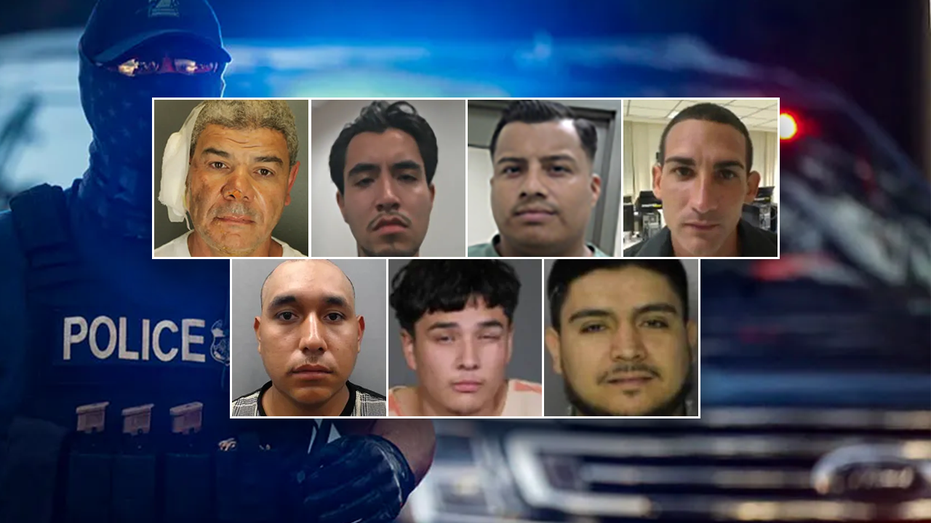
The cases emerging from this enforcement push are chilling. They reveal a pattern of violent crimes committed by individuals with precarious legal status, painting a stark picture of the risks involved. These aren’t isolated incidents, but a series of disturbing events unfolding across the nation.
In Boulder, Colorado, a pro-Israel event was shattered by an alleged act of terrorism. Mohamed Sabry Soliman, an Egyptian national, is accused of unleashing a firebomb attack, injuring thirteen and ultimately causing the death of an 82-year-old woman. Authorities believe the attack was motivated by extremist ideology.
Just days later, in Los Angeles, anti-ICE protests erupted into violence when Emiliano Garduno-Galvez allegedly threw a Molotov cocktail at law enforcement officers. The incident, captured on video, revealed a history of prior deportations and criminal offenses.
The danger extended to those sworn to protect and serve. In Nebraska, an ICE agent was brutally attacked by Gabriel Hurtado-Cariaco, a member of the notorious Tren de Aragua gang. He allegedly slammed her head into the pavement and attempted to remove her body armor, leaving her with serious injuries.
Tragedy struck on a Florida Turnpike when Harjinder Singh, an Indian national, allegedly caused a fatal crash after making an illegal U-turn with a semi-truck. Three people lost their lives, raising serious questions about the vetting process for commercial drivers.
In Texas, authorities arrested William Alexander Telles Amaya, described as a “habitual child predator” with a history of convictions for sexual offenses. His repeated offenses underscore the vulnerability of children and the potential consequences of inadequate enforcement.
The brutality escalated further in Dallas, where Yordanis Cobos-Martinez, a Cuban national, allegedly beheaded a merchant with a machete in front of the victim’s family. Disturbingly, he had a prior order of removal but was released before it could be enacted.
The threat wasn’t confined to physical violence. Eduardo Aguilar, residing in Dallas, allegedly posted a TikTok video offering a reward for the murder of ICE agents. He was found with a loaded handgun in his vehicle, highlighting the potential for targeted attacks.
In Plano, Texas, Sergio Noe de Nova Duarte allegedly attacked a woman jogging in a park with a hammer, resulting in charges of aggravated kidnapping and bodily injury. Like others, he had a prior record and had been previously released despite an ICE detainer.
Pennsylvania saw the arrest of Esteban Silva-Garcia, convicted of strangulation and endangering the welfare of a child. His case adds another layer to the disturbing pattern of violent crimes linked to individuals with uncertain legal status.
The final case, just before Christmas, involved Santos Paulino Vasquez-Ramirez, a Guatemalan national accused of strangling a taxicab driver during a fare dispute. The driver’s body was discovered in a reservoir, a grim end to a senseless act of violence.
These cases, individually horrific, collectively reveal a troubling reality. They underscore the complex challenges surrounding immigration enforcement and the critical need to prioritize public safety while upholding the rule of law.
![WWII VET, 104, BLOWS EVERYONE AWAY—You Won't BELIEVE What Happens Next! [VIDEO]](https://www.thegatewaypundit.com/wp-content/uploads/2025/12/img_4891-1200x630.jpeg)