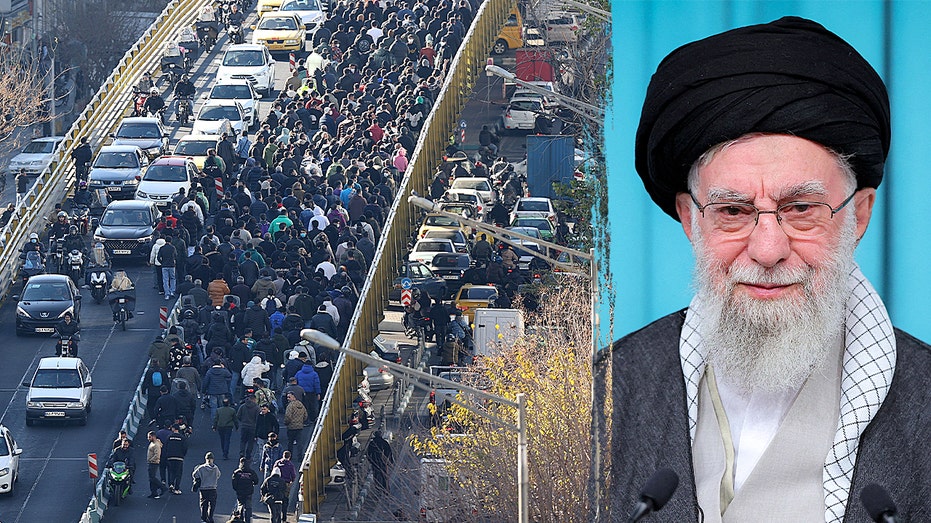
A nation held its breath Wednesday as Iran descended into near paralysis. Businesses shuttered, universities emptied, and government offices closed their doors – a sweeping shutdown ordered in a desperate attempt to quell a rising tide of protest fueled by a deepening political and economic crisis.
The streets erupted. Videos, rapidly circulating, painted a picture of intense confrontations between protesters and security forces in cities like Shiraz, Isfahan, Kermanshah, and the capital, Tehran. These weren’t isolated incidents; they were echoes of a widespread fury.
The air crackled with defiance as protesters chanted slogans against the regime, their voices echoing through crowded streets. Footage captured the raw energy of the unrest – screams, the sharp reports of what appeared to be gunfire, and demonstrators hurling objects in a desperate act of resistance.
“Death to the Dictator!” and “Proud Arakis, support, support!” – the cries resonated with a potent blend of anger and hope. Another chorus rose, aimed directly at the highest authority: “Death to Khamenei!” The discontent wasn’t simmering; it was boiling over, spreading like wildfire across the country.
The city of Fasa, in south-central Iran, became a focal point of the escalating conflict. Demonstrators, fueled by frustration, stormed the gates of a government complex, shaking them with relentless force until they yielded. The situation quickly spiraled, with reports of the Islamic Revolutionary Guard Corps opening fire.
Above Fasa, military helicopters loomed, a stark display of force intended to intimidate and contain the unrest. The message was clear: the regime was prepared to use its full power to suppress the growing rebellion.
In Kermanshah, western Iran, the heart of the resistance beat within the bazaars. Merchants confronted security forces, their voices ringing out with accusations of dishonor. The economic hardship driving the protests was palpable, etched on the faces of those risking everything to be heard.
The government-ordered shutdown encompassed 21 of Iran’s 31 provinces, including Tehran, a desperate measure by President Masoud Pezeshkian to contain the mounting public anger. Inflation, currency instability, and a relentless decline in living standards had pushed the nation to its breaking point.
For four consecutive days, demonstrations, strikes, and clashes with security forces have continued unabated. This isn’t a fleeting moment of discontent; it’s a sustained uprising, a testament to the depth of the crisis gripping the nation.
Adding to the instability, a series of high-level leadership changes have further fueled uncertainty. President Pezeshkian appointed Abdolnaser Hemmati as the new head of Iran’s central bank, following the resignation of Mohammad Reza Farzin.
The president himself acknowledged the immense challenges facing the new central bank chief, describing the role as “extremely difficult and complex.” He warned of intense pressure and criticism amid the ongoing economic turmoil, a stark admission of the severity of the situation.
Simultaneously, Supreme Leader Ayatollah Ali Khamenei appointed IRGC Brig. Gen. Ahmad Vahidi as deputy commander in chief of the Revolutionary Guards. These moves signal a tightening of control and a reliance on the military apparatus to navigate the crisis.