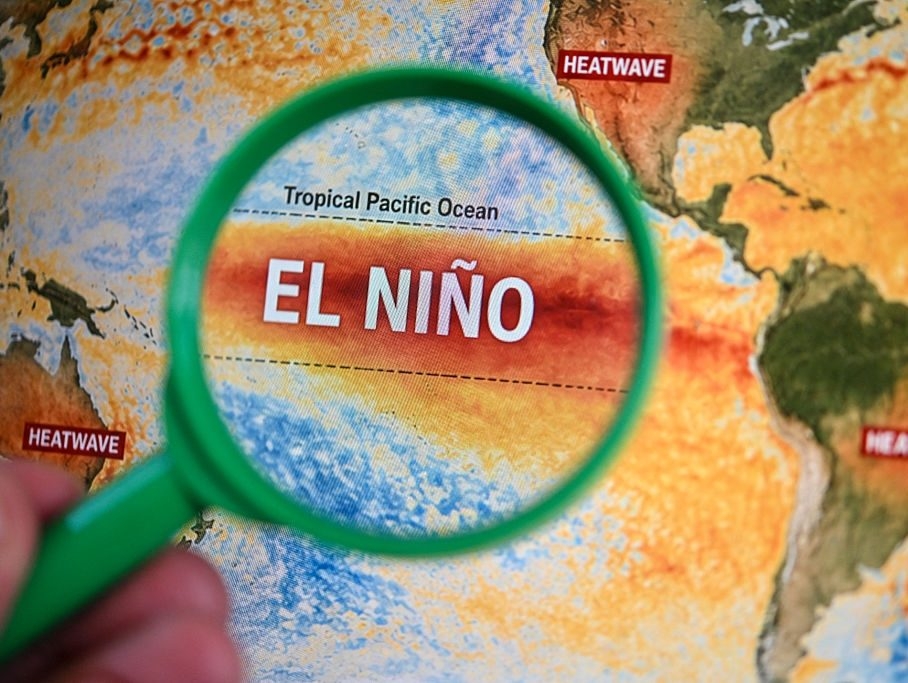
El Niño, the natural climate phenomenon that warms surface temperatures in the central and eastern equatorial Pacific Ocean, is rapidly developing into a strong event. The World Meteorological Organization had previously warned that El Niño would quickly gain strength, and now it's about time to prepare for its impact.
The WMO classifies El Niño events as weak, moderate, strong, or very strong, and this event is expected to reach the third-highest level out of four. The organization has forecasted that El Niño conditions will strengthen rapidly over the coming months, increasing the likelihood of extreme weather events in many parts of the world.
The U.S. Climate Prediction Center has also noted that water temperature anomalies in a key region around the equator are already running more than 1.0 C above average, with no signs of the warming pattern slowing down. This trend is expected to continue, with forecasters anticipating that ocean temperatures in this region will continue to warm through the end of the year.

The National Oceanic and Atmospheric Administration has concurred, issuing an El Niño advisory and confirming that warmer conditions have developed in the specific part of the Pacific Ocean known as Niño 3.4. This region is seeing temperatures that are the warmest on record at this time of year.
Climate scientist Zeke Hausfather has noted that the current El Niño conditions are already touching on very strong or "super" El Niño territory, with a 97% chance of a strong El Niño through at least next spring. Hausfather has warned that El Niño is no joke, particularly for agriculture, the natural world, and ocean ecosystems.
El Niño is expected to have a significant impact on the Atlantic basin, which may see its quietest hurricane season in years. The peak of the El Niño is currently expected to peak in October, although some models suggest it could be more likely to peak in November or December.
Hausfather has expressed concern about food security in tropical regions, which are expected to be affected by drought in the coming months. Canada, meanwhile, will likely see the effects in the winter months, with milder temperatures and drier conditions expected.
The strongest El Niño in recent years was in 2015-2016, where the ocean temperature anomaly was roughly 2.75 C. Hausfather has noted that the current models are predicting a peak of around 3.6 C, which is a truly mind-boggling possibility.