
The impossible is now within reach. Intel’s newly unveiled Core Ultra Series 3 (Panther Lake) is challenging everything we thought we knew about laptop graphics, potentially matching the performance of dedicated GPUs found in machines just two years old.
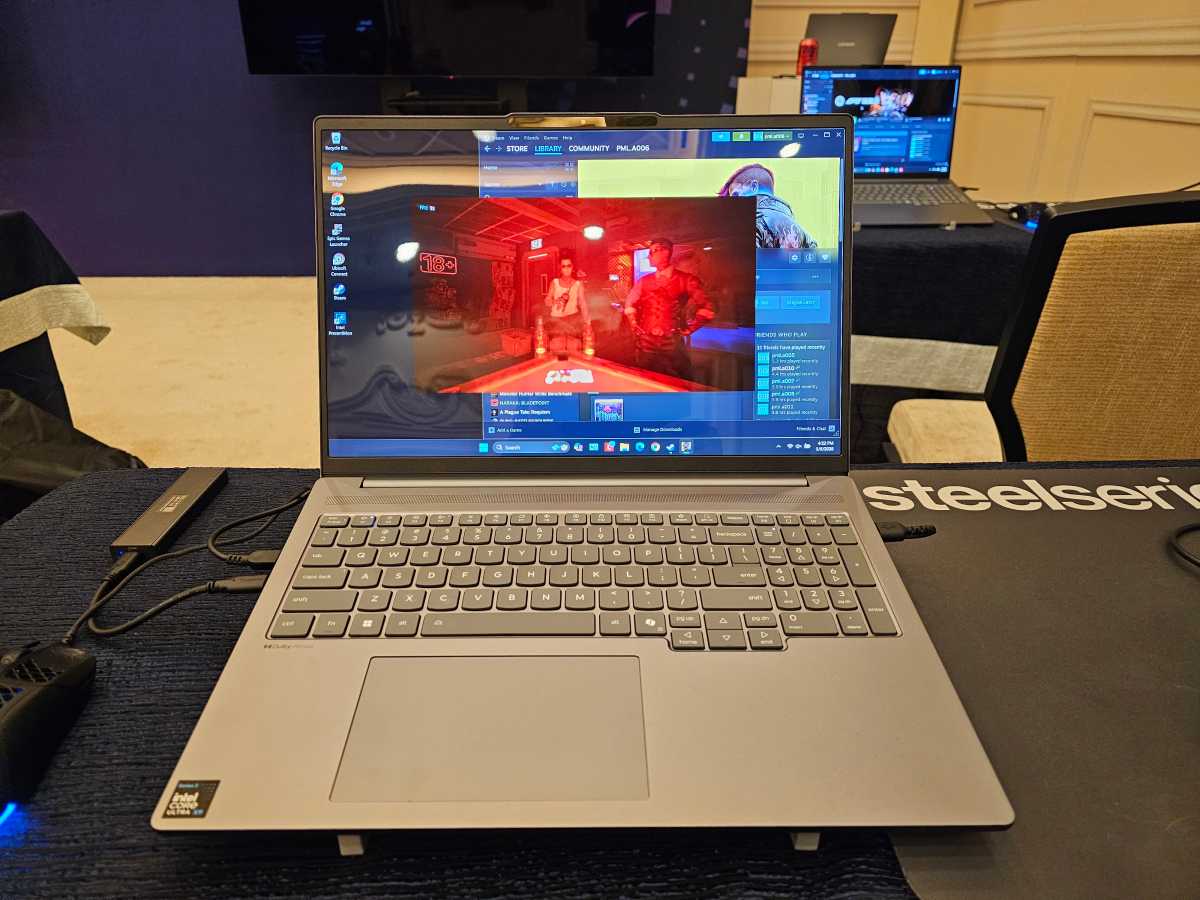
At a special benchmarking event, Intel presented a prototype Lenovo laptop powered by a Core Ultra X9 388H chip, boasting twelve integrated Xe3 GPU cores – dubbed the Intel Arc B390. The challenge was simple: push it to its limits. Reporters were given free rein to test any game, at any resolution.
The results were so compelling, the testing quickly shifted from broad comparisons to mirroring established gaming laptop benchmarks. The question wasn’t *if* Panther Lake was impressive, but *how* it stacked up against the competition.
The initial answer? Remarkably close to an RTX 4050-class laptop. But the story doesn’t end there. Intel’s XeSS technology, a combination of resolution scaling and AI-generated frames, adds another layer to the equation.
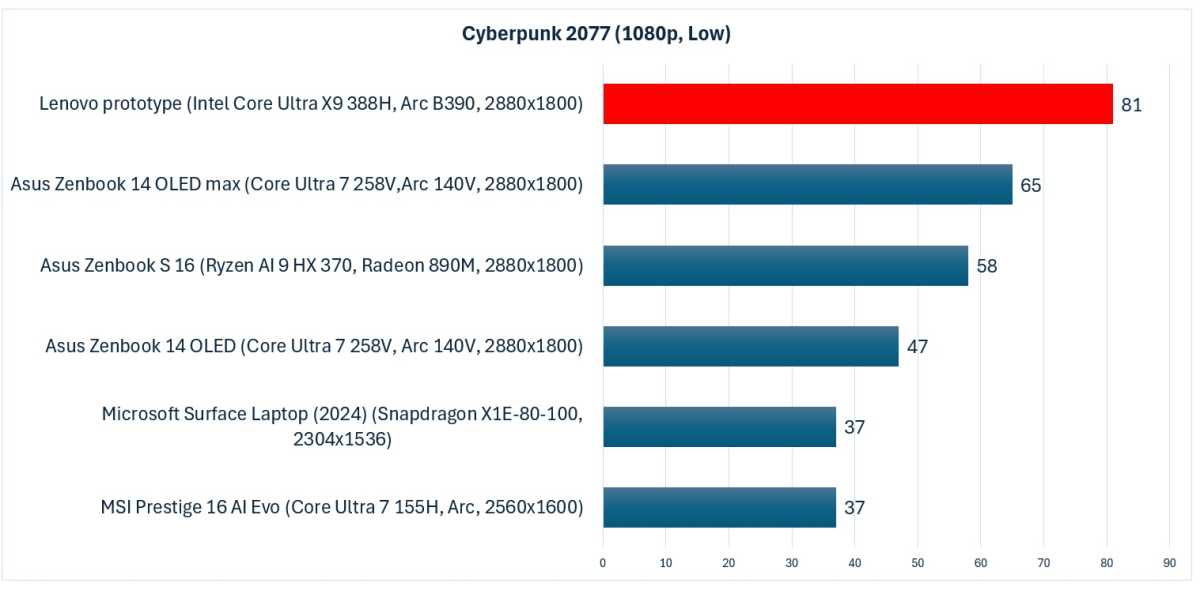
Early tests focused on Cyberpunk 2077 and Shadow of the Tomb Raider, familiar benchmarks for assessing graphical prowess. Without XeSS, Panther Lake delivered a stunning 81 frames per second in Cyberpunk at 1080p on Low settings – a massive leap from the 37 fps achieved by comparable systems just a couple of years prior.
Shadow of the Tomb Raider showcased even more dramatic gains, hitting a fluid 112 fps at 1080p on Low. These numbers aren’t just good for integrated graphics; they’re entering dedicated gaming laptop territory.
Pushing the settings to maximum in Shadow of the Tomb Raider yielded around 75 fps, comparable to laptops equipped with an RTX 3060 from a few generations ago. Even with demanding settings, Panther Lake held its own.
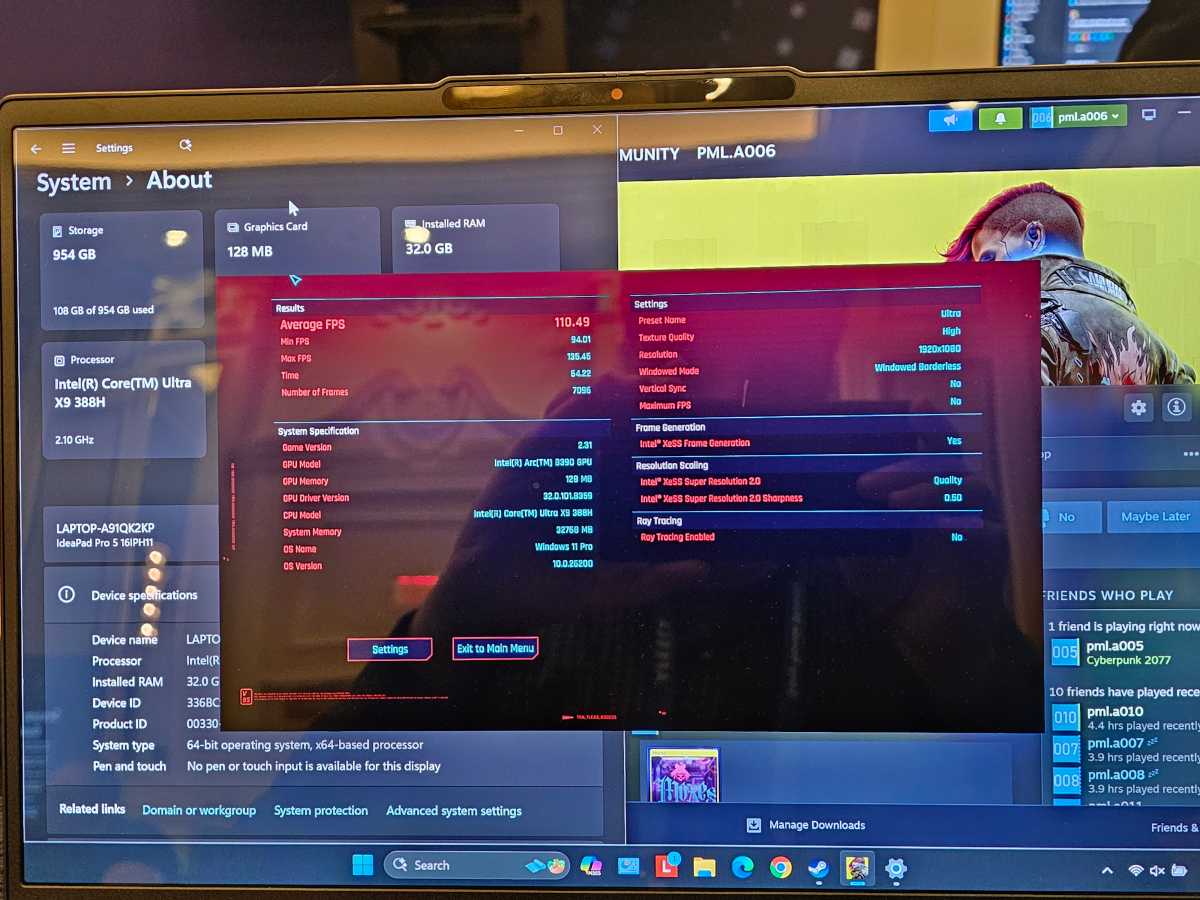
However, the true potential unlocked when Intel’s XeSS technology was activated. In Cyberpunk, the frame rate exploded from 81 fps to an astonishing 169 fps with upscaling and frame generation enabled. This performance rivals that of high-end gaming laptops with discrete GPUs.
The limits were still apparent when pushing for ultimate visual fidelity. At 1080p Ultra settings in Cyberpunk, Panther Lake managed 47 fps without XeSS – still remarkably playable for integrated graphics. Enabling XeSS boosted this to a fantastic 111 fps.
The most demanding test – Cyberpunk at 1080p Ultra with maximum Ray Tracing Overdrive – revealed the current limitations. Without frame generation, the laptop struggled at 8 fps, and even with it enabled, only reached 34 fps. This highlights that on-chip graphics aren’t yet ready to fully compete with high-end discrete GPUs at the absolute peak of visual settings.
Despite this, the evidence is clear: Intel’s claims about Panther Lake are justified. This isn’t just an incremental improvement; it’s a significant leap forward for integrated graphics, blurring the lines between integrated and dedicated solutions. A more thorough examination is undoubtedly on the horizon, but the initial results are nothing short of revolutionary.


