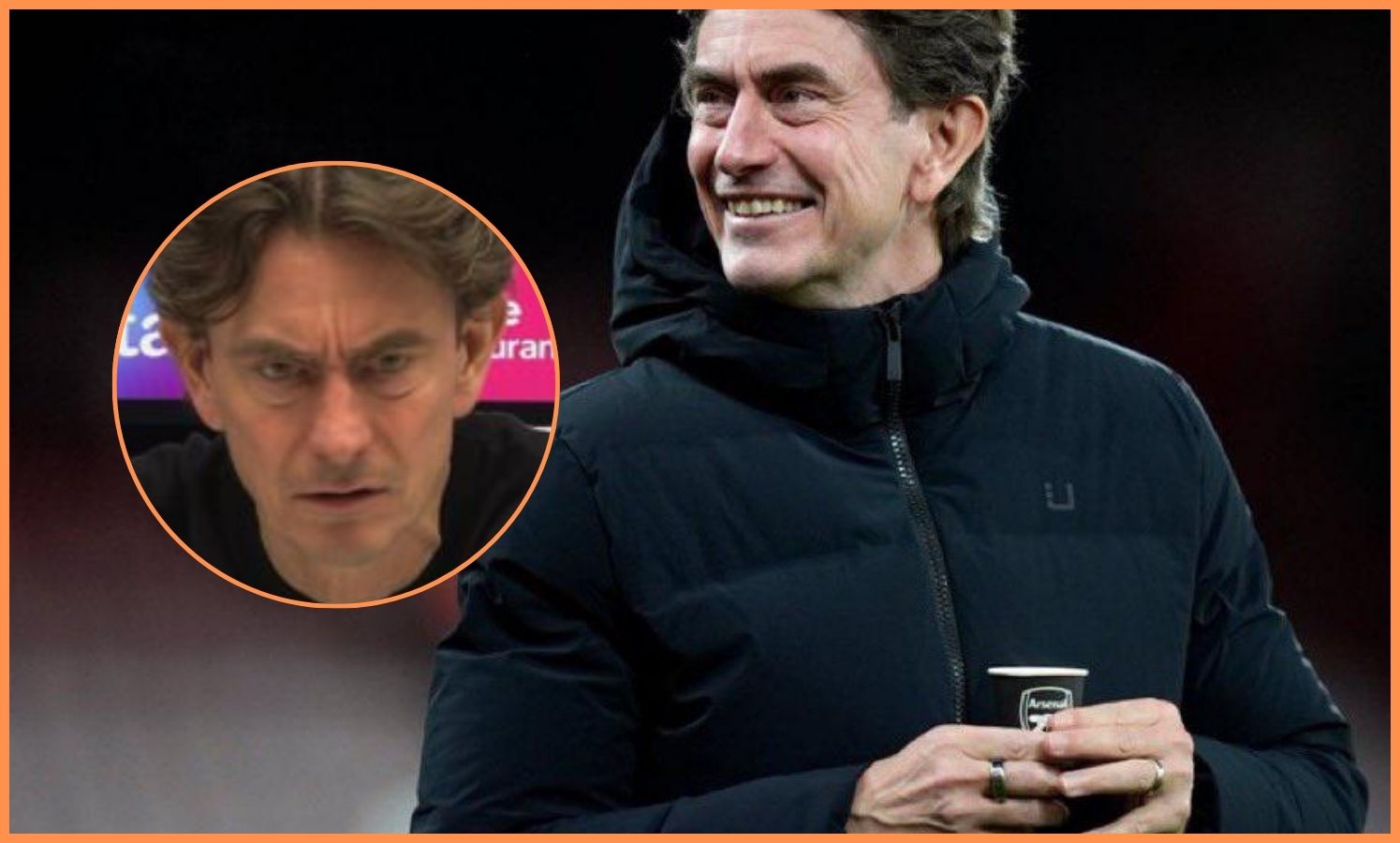
The defeat stung. A late collapse against Bournemouth left Tottenham reeling, but the post-match fallout extended far beyond the final whistle. Manager Thomas Frank found himself facing questions about a seemingly innocuous detail – a cup bearing the logo of their fierce rivals, Arsenal.
Frank vehemently denied any intentional slight. He insisted he hadn’t even noticed the branding, dismissing the suggestion he’d deliberately drink from an Arsenal-branded cup as “completely stupid.” The frustration was palpable, his voice laced with irritation as he addressed the media.
He expressed a deeper concern, a sense that the focus on such trivialities signaled a troubling shift within the game. Frank lamented the need to even address the question, calling it “sad” and a worrying indicator of where football was heading.

The incident arrived at a particularly vulnerable moment for the Tottenham manager. His team currently sits 14th in the Premier League, a stark contrast to expectations, having secured only one win in their last six matches.
The pressure is mounting. Frank, once lauded for his success at Brentford, has struggled to replicate that form in North London. Each setback, each unwanted headline, chips away at his authority.
The optics were undeniably poor. In a rivalry as heated as Tottenham versus Arsenal, even the appearance of favoritism can ignite a firestorm. Frank needed a win, a positive narrative – not a needless distraction.
The question now isn’t just about the result on the pitch, but about Frank’s long-term future at the club. The weight of expectation, coupled with the team’s struggles, creates a precarious situation for the Tottenham manager.
This isn’t simply about a cup; it’s about perception, control, and the relentless scrutiny that comes with managing a high-profile football club. Frank’s response revealed a man feeling cornered, desperate to steer the conversation back to the game itself.