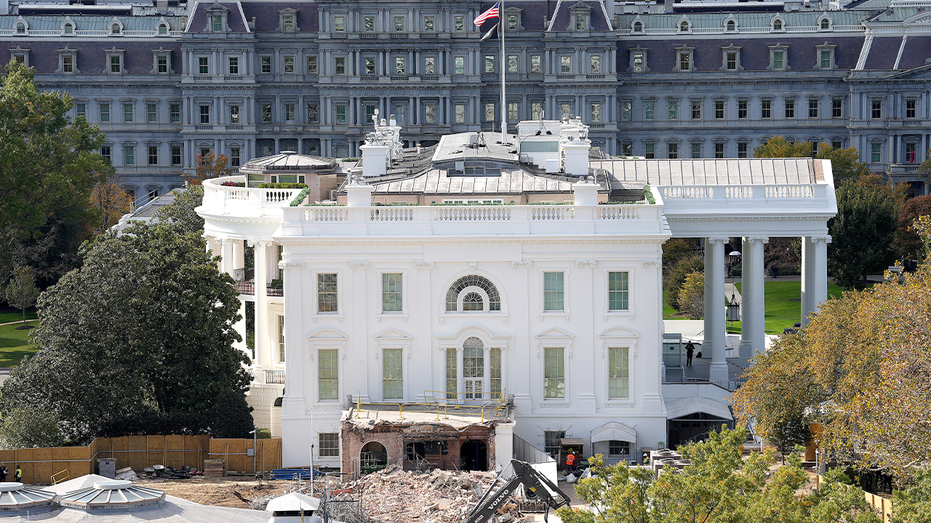
A quiet demolition occurred in October, a prelude to a grand vision now unfolding at the White House. Officials revealed plans for a $400 million ballroom, a project that necessitated the dismantling of the historic East Wing – a decision defended as economically unavoidable.
The justification, presented to the National Capital Planning Commission, centered on the East Wing’s deteriorating condition. Director of the White House Office of Administration, Josh Fisher, detailed an unstable colonnade, pervasive water damage, and significant mold contamination. Repairing these issues, he argued, proved more costly than complete reconstruction.
The commission’s chairman, also a White House official, expressed confidence in the project’s eventual approval. He painted a stark picture of current limitations, suggesting that hosting dignitaries like King Charles III often requires a temporary tent and portable restrooms on the South Lawn.
This ambitious undertaking isn’t without opposition. The National Trust for Historic Preservation filed suit in December, alleging that crucial reviews were bypassed and congressional approval was not secured before the East Wing’s demolition. They’ve called for full compliance with all legal processes.
While the White House presentation was deemed a “good first step” by the Trust’s president, a more comprehensive review is anticipated. This will include public input and formal votes following the submission of a detailed proposal.
Architect Shalom Baranes showcased renderings of the proposed ballroom, illustrating its integration into the White House complex. He even floated the idea of adding a second story to the West Wing colonnade to achieve visual harmony, acknowledging the significant impact this would have on the Oval Office’s surrounding space.
Beyond the ballroom itself, the project aims to improve visitor flow and enhance Lafayette Park across the street. However, questions remain regarding the scale and placement of the new structure.
Commission members voiced concerns about the ballroom’s immense size, particularly its proposed 38 to 40-foot ceiling, questioning whether it would overwhelm the existing architecture. The architect responded that adjustments were still possible, though plans had undergone extensive review.
A pointed question arose regarding the timing of the East Wing’s demolition. Why wasn’t the commission presented with these plans beforehand? Officials cited “top secret” aspects of the project requiring discreet handling.
Originally announced in July with an estimated cost of $200 million, the project has now doubled in scope and price. The White House maintains that funding will be entirely private.