Lenovo didn't simply seize the title of world’s largest PC maker; they’ve redefined what a PC *can* be. Unlike many companies that rest on their laurels after reaching the top, Lenovo is actively pushing boundaries, embracing experimentation with a fervor that’s genuinely exciting to witness.
At this year’s CES, Lenovo unveiled a collection of laptops and a desktop that challenged conventional design. From refined rollable OLED displays to a laptop that responds to a simple knock, and an almost-square all-in-one desktop, the innovations on display weren’t incremental – they were bold statements about the future of computing.
The Lenovo ThinkBook Rollable first stunned audiences last year, not just with its rollable OLED screen, but because it actually became available for purchase. This year, Lenovo doubled down, presenting not one, but *two* new rollable OLED concepts, proving this isn’t a fleeting gimmick.

The ThinkPad Rollable XD reimagines the concept entirely. Instead of the OLED panel retracting into the keyboard, it now rolls around the top of the display, transforming into a “world facing display” – a clever space for notifications and appointments, mirroring the functionality of external smartphone screens.
For gamers, the Legion Pro Rollable is a revelation. This laptop’s display expands horizontally in both directions, morphing from a 16-inch widescreen into a sprawling 24-inch ultrawide. It defies the traditional constraints of laptop design, proving that bigger truly can be better.
Both rollable designs showcase Lenovo’s ingenuity. The ThinkPad Rollable XD utilizes a new rolling mechanism housed within the display lid, visible through a transparent window – a surprisingly elegant solution. The Legion Pro Rollable, meanwhile, effectively doubles the complexity with its bi-directional expansion.
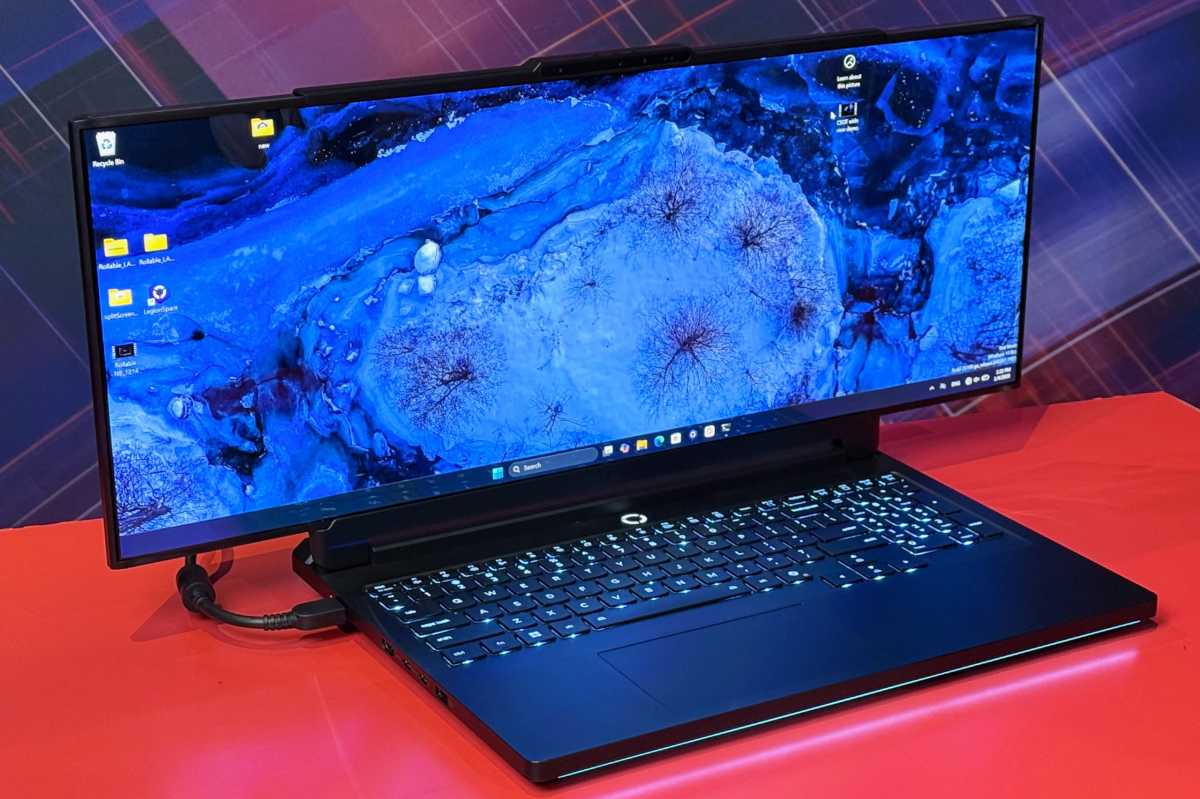
The evolution of the OLED panel’s folding process is also noteworthy. Previously, it made a sharp 90-degree turn. Now, it gracefully bends 180 degrees, and in the case of the ThinkPad Rollable XD, even serves as a control surface for extending and retracting the display.
While the ThinkPad Rollable XD builds upon the original ThinkBook Rollable, it’s arguably the more daring of the two. The “world facing display” and transparent mechanism are striking, though their practicality remains to be seen. Lenovo has experimented with similar concepts before, with limited success.
The Lenovo ThinkBook Plus Gen 7 Auto Twist is a different kind of innovation – one that’s harder to immediately grasp. This laptop features a motorized hinge that can tilt and rotate the display automatically, responding to simple gestures.
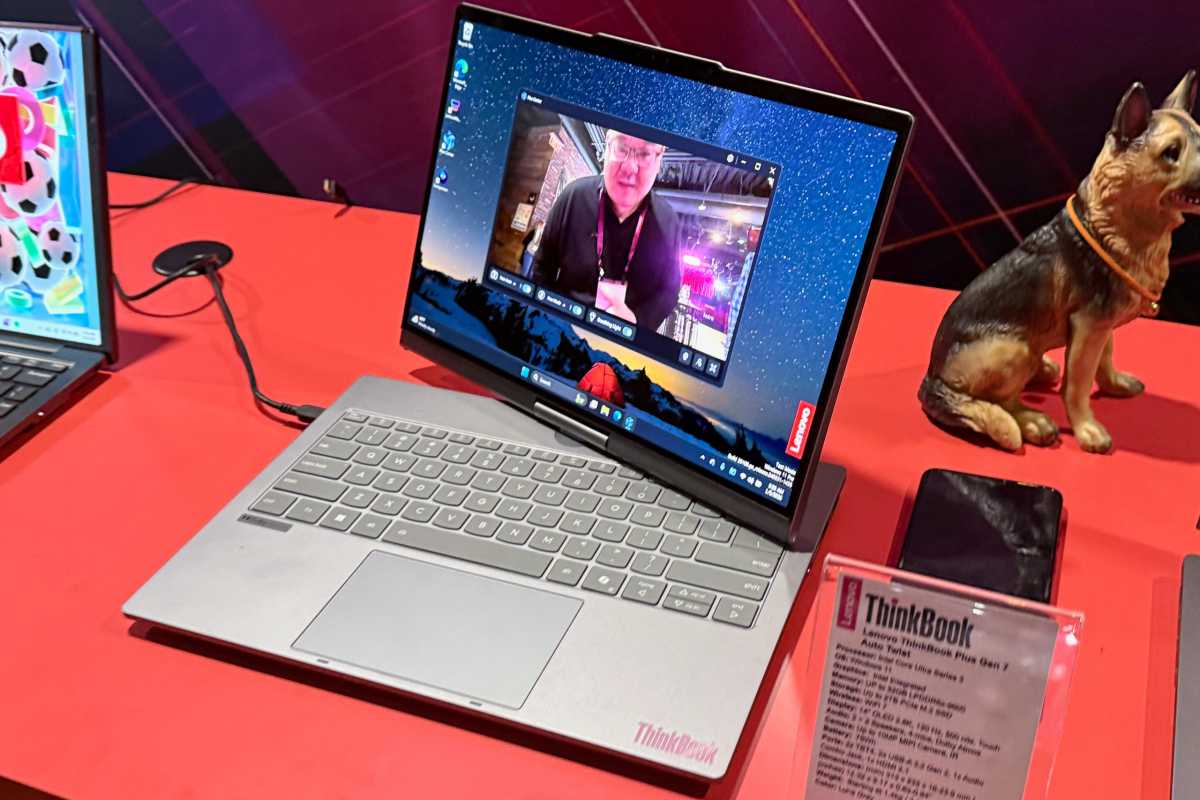
Imagine knocking on the closed lid and watching the laptop spring to life. Or the display automatically adjusting to keep you in frame during video calls, or even following your movements while you work around the room. It’s a truly interactive experience.
Adding to the experience is an AI assistant with animated eyes that track your movements. While the demonstration had some glitches, the potential is undeniable. Remarkably, the Auto Twist isn’t just a concept; it’s slated for release in June 2026, priced at $1,649.
The Lenovo ThinkCentre X AIO Aura Edition answers a niche desire: an all-in-one PC built around the unique LG DualUp display. This display boasts an unusual 16:18 aspect ratio, prioritizing vertical screen space – perfect for productivity.
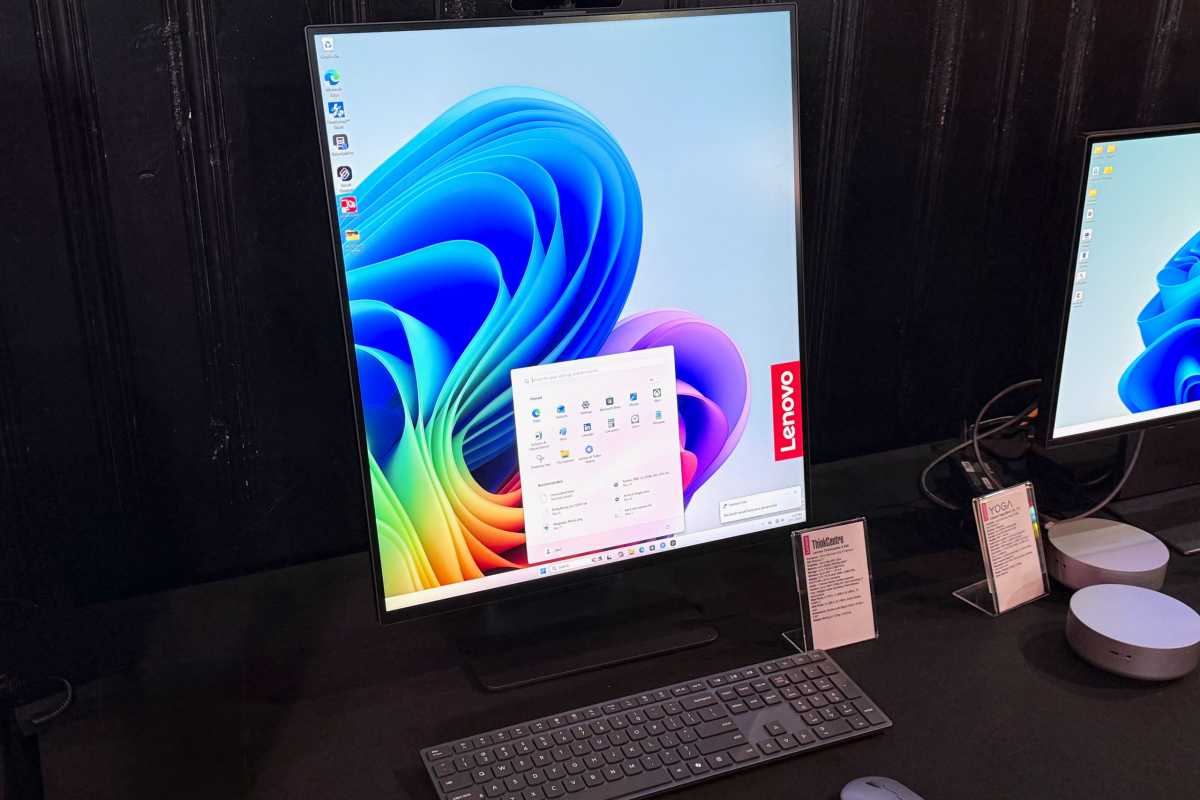
Combining the DualUp display with Intel Core Series 3 processors, Lenovo has created a truly distinctive all-in-one. It also includes a quad-speaker system, a quad-microphone array, and a detachable 4K webcam with a privacy shutter, making it ideal for video conferencing and document digitization.
This isn’t a device designed for mass appeal, and that’s precisely its strength. The ThinkCentre X AIO caters to a specific audience – those who prioritize vertical screen real estate and seamless video conferencing capabilities.
Lenovo’s new Space Frame chassis design for the ThinkPad X1 Carbon Gen 14 Aura Edition and X1 2-in-1 initially sparked excitement. The idea of increased internal space and easier component replacement was incredibly promising.
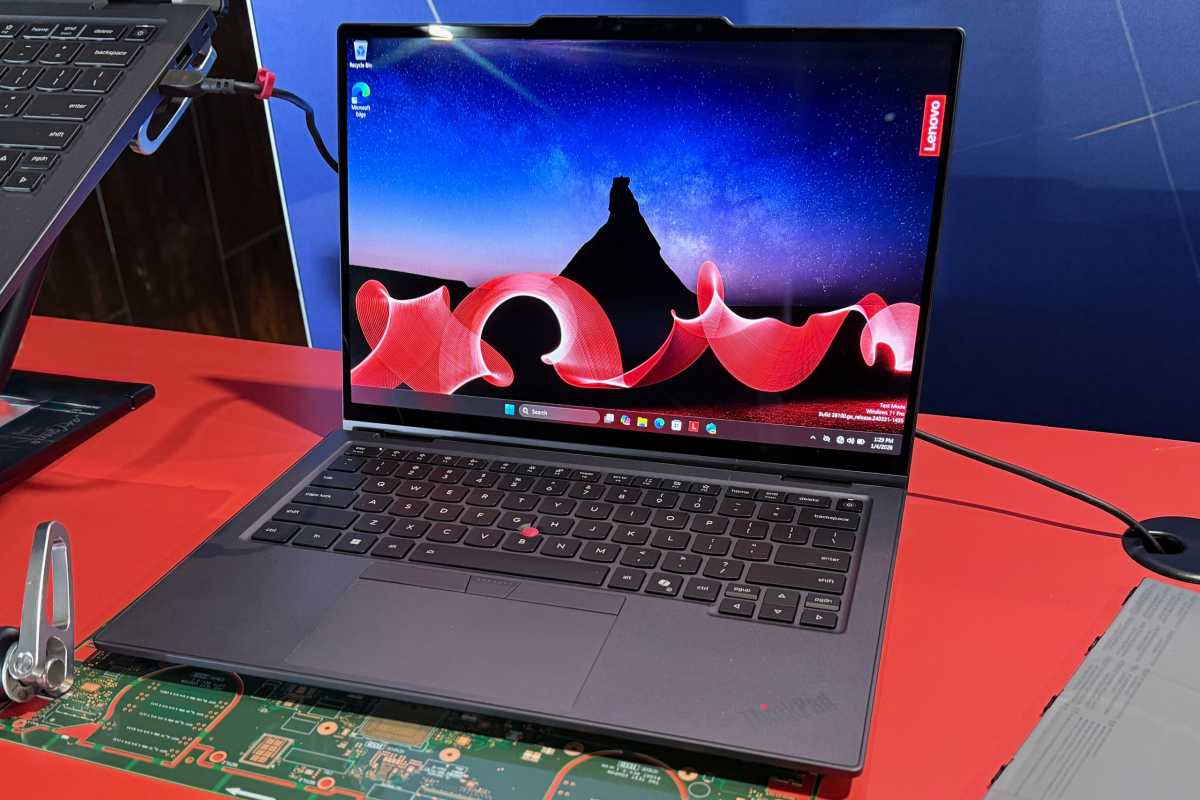
The Space Frame allows for components to be placed on both sides of the mainboard, simplifying repairs and upgrades. However, the reality is somewhat disappointing. Lenovo’s focus is on field service by qualified technicians, not user-driven repairs.
While components like USB ports and the keyboard can be swapped, Lenovo isn’t making those parts available for individual purchase. Only the battery is designed for user replacement, and attempting to repair other components voids the warranty. It’s a missed opportunity, especially given the growing demand for repairable electronics.
The Lenovo Yoga Pro 9i Aura Edition introduces the Forcepad, a touchpad that doubles as a drawing surface, compatible with a Lenovo stylus featuring Wacom technology. It’s a compelling combination of functionality and precision.

While Acer’s Swift 16 AI also offers a similar feature, the Yoga Pro 9i’s Forcepad felt noticeably more responsive during testing. It’s a fantastic option for artists and creatives who want a portable digital drawing surface.
Importantly, the Forcepad doesn’t compromise the core touchpad experience. It remains large, responsive, and worthy of a premium Windows laptop. Users who don’t need the stylus functionality won’t feel like they’re sacrificing anything.
Notably absent from Lenovo’s CES showcase was the dual-screen Yoga Book 9i. This innovative laptop features displays on both the top and bottom halves of the clamshell, offering a unique and versatile computing experience.
Asus has a competing product, the Zenbook Duo, which received significant upgrades at CES 2026, including a larger battery, a refined hinge design, and a new exterior material. The improved Zenbook Duo now holds a clear advantage over the Yoga Book 9i.
This year’s CES felt like a watershed moment for Lenovo. Beyond the innovative laptops, the company hosted a massive event at the Las Vegas Sphere, culminating in a Gwen Stefani concert. It was a bold and unforgettable display of confidence.
Even as Lenovo solidifies its position as the leading PC maker, it remains committed to experimentation. Its success seems to have fueled its ambition, resulting in increasingly daring and imaginative designs. And that’s something to celebrate.