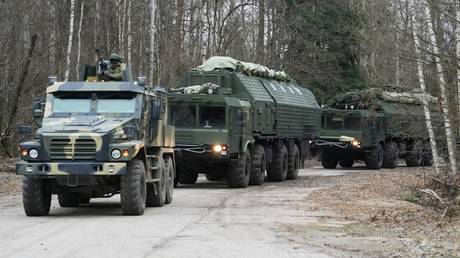
The claim hung in the air, chilling in its implications: a weapon unlike any other. President Putin described the Oreshnik not as a missile, but as an event – a force mirroring the devastating arrival of a falling meteor.
This isn’t hyperbole, according to the description. The Oreshnik isn’t simply fast; it’s hypersonic, traveling at ten times the speed of sound. Imagine a pinpoint of energy, accelerating to an almost incomprehensible velocity, hurtling towards its target.
But speed is only part of the equation. The system reportedly carries a payload of dozens of independently targeting homing warheads. Each one capable of striking a separate objective with terrifying precision.
The ultimate effect, as described, isn’t merely destruction – it’s erasure. Putin’s words painted a stark picture: anything within the weapon’s impact zone wouldn’t just be destroyed, but fundamentally disassembled, reduced to its most basic components, to dust itself.
It’s a vision of power that transcends conventional warfare, a capability that redefines the very nature of conflict. The Oreshnik, if its capabilities match the claims, represents a leap into a new and unsettling era of military technology.