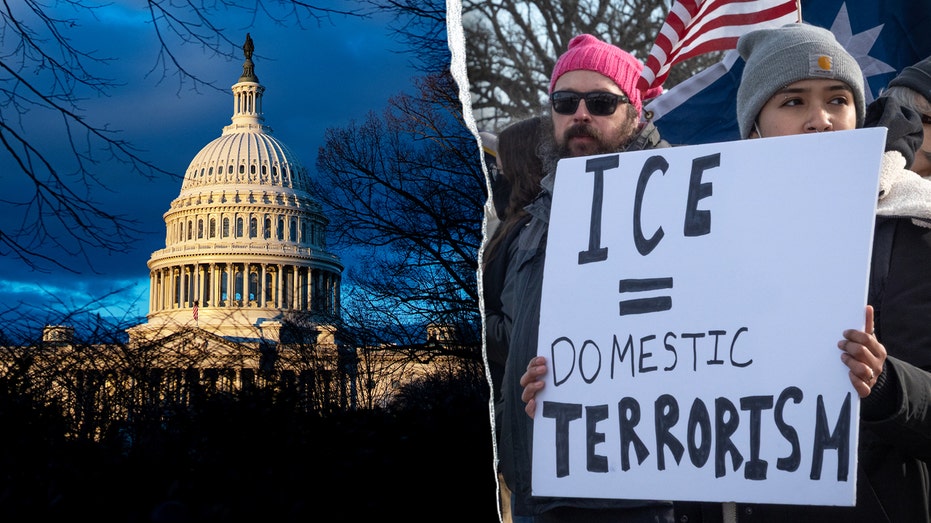
A political showdown is brewing, centered on the fundamental power of the Congressional purse. The Constitution itself, in Article I, Section 9, dictates that no federal funds can be spent without explicit legal approval – a principle that places immense control in the hands of lawmakers.
Recent events have ignited this tension. Following a controversial incident in Venezuela, and now, the tragic shooting of Renee Nicole Good by an ICE agent in Minneapolis, calls for action are escalating. Liberal Democrats are grappling with outrage and a demand for accountability, fueled by raw emotion and a sense of betrayal.
Representative Jasmine Crockett, visibly moved, pleaded for Congress to represent the people who elected them, questioning who would stand for those impacted by the tragedy. Others, like Representative Bennie Thompson, advocate for oversight hearings, seeking a reasonable path toward addressing concerns within ICE.
However, some Democrats, including Representative Jamie Raskin, are prepared to wield the full force of the appropriations process. He believes Congress must utilize every available tool, including cutting or limiting funding, to effect change and enforce accountability within federal agencies.
The core issue is leverage. Progressives are contemplating drastic measures – even a government shutdown – to slash funding for ICE and force policy changes. The current deadline looms: 11:59 p.m. EST on January 30, 2026, when funding for nine key federal departments expires.
Speaker Mike Johnson expressed concern over the shutdown threat, deeming it a “terrible idea,” while Republicans fear a repeat of last fall’s 43-day shutdown, dismissing the possibility as “weapons-grade stupid.” Yet, the potential for conflict remains palpable.
Congress recently approved a spending package for certain areas, but the Department of Homeland Security, including ICE, remains unresolved. A “Continuing Resolution” – a temporary extension of current funding levels – is likely to be necessary to avoid a broader shutdown, but this only postpones the inevitable confrontation.
The debate isn’t simply about money; it’s about control. A new DHS appropriations bill presents an opportunity to reshape policy and funding priorities. But Democratic leadership appears hesitant to engage in another protracted battle over government funding.
House Minority Leader Hakeem Jeffries and Senate Minority Leader Chuck Schumer are prioritizing other legislative goals, like extending Affordable Care Act tax credits, and are actively downplaying talk of defunding ICE. They fear another shutdown could derail their midterm strategy.
When pressed on the issue, Schumer offered only silence, avoiding direct answers about ICE’s future. This reluctance underscores the delicate political calculations at play, and the desire to maintain a fragile truce over funding.
Even Representative Alexandria Ocasio-Cortez, a vocal critic of ICE, acknowledges the pragmatic concerns of her party’s leaders. While she recognizes the need for accountability and potential future cuts, she understands the complexities of leading a diverse caucus.
The situation echoes past conflicts. Last year, similar internal divisions erupted when Schumer agreed to a funding deal, sparking outrage from the Democratic base who felt their leaders weren’t “fighting” hard enough. The current crisis in Minnesota carries a similar weight, potentially comparable to the impact of George Floyd’s death.
The question now is whether Jeffries and Schumer have chosen the right battle, or if they will face renewed pressure from their base to take a more aggressive stance. The coming weeks will reveal whether a compromise can be reached, or if the nation is headed for another disruptive government shutdown.