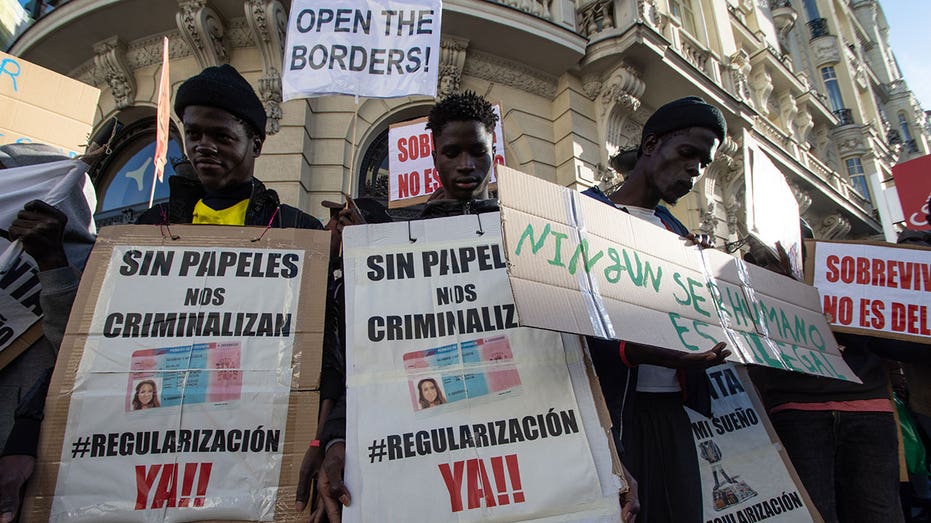
A stark contrast is unfolding across the Atlantic. While the United States grapples with a decline in net migration, influenced by recent policy shifts, Spain is charting a dramatically different course, preparing to offer legal status to hundreds of thousands.
The Spanish government recently approved a decree that could grant residency and work permits to as many as half a million undocumented immigrants. To qualify, individuals must demonstrate they entered the country before the end of 2025, have resided there for at least five months, and possess a clean criminal record. This initiative opens a potential pathway to citizenship for those who meet the criteria.
This move positions Spain as an outlier in Europe, where many nations have tightened their immigration controls, sometimes encouraged by more restrictive policies elsewhere. Prime Minister Pedro Sánchez and his cabinet consistently emphasize the economic advantages of welcoming legal migrants, particularly in addressing the challenges of an aging workforce.
“Spain will not look the other way,” declared Migration Minister Elma Saiz, framing the decision as a matter of dignity and recognition for those already contributing to the country. The government believes acknowledging the presence of these individuals is a crucial step towards effective governance.
However, the plan has ignited a fierce political debate within Spain. Conservative factions and the populist Vox party vehemently condemn the measure, labeling it an amnesty that could incentivize further irregular migration. They argue it undermines the rule of law and potentially strains public resources.
Santiago Abascal, leader of the Vox party, expressed strong opposition, suggesting the criticism stems from fear of his party’s growing influence rather than genuine concern for the policy’s consequences. He believes opponents are more worried about Vox’s ascent than the impact of the government’s actions.
Analysts suggest Spain’s decision could act as a magnet, attracting more migrants to Europe and potentially creating challenges for neighboring countries. Some propose reciprocal agreements, where other European nations could transfer their undocumented populations to Spain.
Political science experts view this as a fundamental shift in approach. Rather than solely focusing on policing and border control, Spain is framing migration as a governance issue requiring practical solutions, legal pathways, and administrative capacity. The existing system was already showing significant strain.
According to Ricard Zapata-Barrero, a professor at Pompeu Fabra University, prolonged undocumented status transforms an individual issue into a systemic one. Regularization, in this context, isn’t about leniency; it’s about effective administration and acknowledging reality.
Spain’s bold step is being watched closely across the European Union. It represents a deliberate departure from the prevailing trend of increasing restrictions, offering a pragmatic alternative that prioritizes governance over containment. Whether it will become a model for others remains to be seen, but it has undoubtedly launched a significant political experiment.