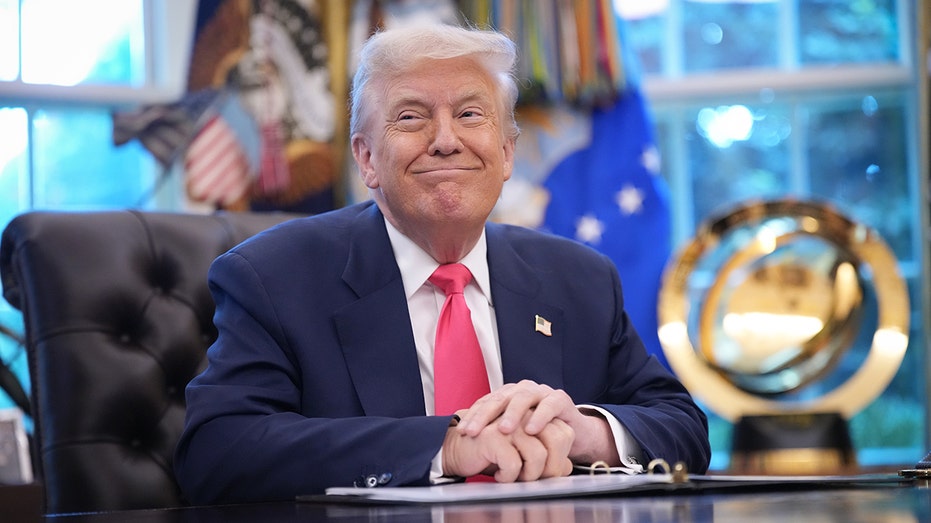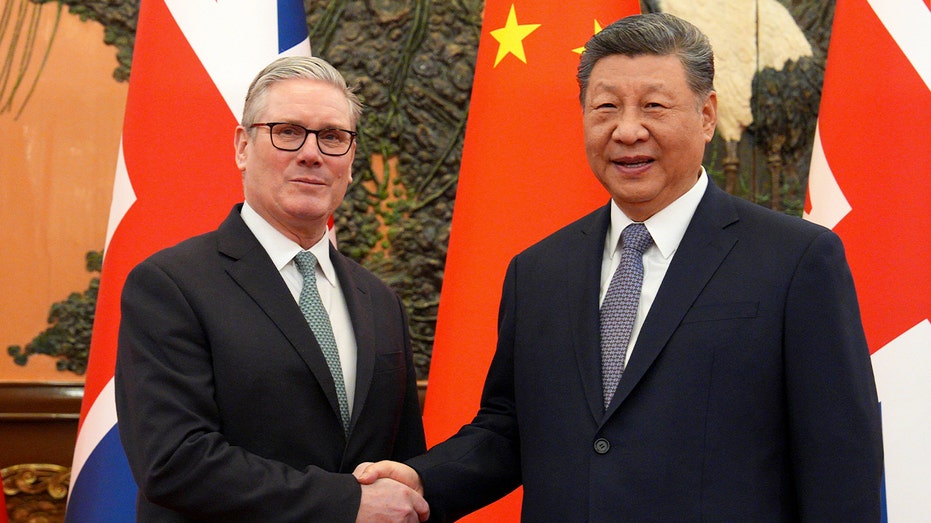
Former President Trump issued a stark warning to the United Kingdom, cautioning against deepening its relationship with China. This came just hours after the U.K.’s Prime Minister met with China’s President Xi Jinping in Beijing, aiming to mend strained relations after a period of significant discord.
The meeting between the two leaders focused on establishing a renewed “strategic partnership,” a move that underscores the mounting pressures both nations face amidst increasing global instability. Both sides acknowledged the need for collaboration in a world grappling with complex challenges.
Speaking to a news outlet while en route to Florida, Trump characterized any increased business between the U.K. and China as “very dangerous.” He extended this concern to Canada, suggesting similar engagement would be equally perilous for their economy.
Despite acknowledging a personal rapport with President Xi, Trump emphasized that China is not a viable solution for Western economic woes. He recounted his familiarity with Xi, but cautioned that overcoming inherent challenges in a partnership would be difficult.
Trump playfully alluded to potential repercussions, suggesting China might even restrict Canada’s participation in ice hockey. This lighthearted remark underscored a more serious concern about the potential for political leverage.
This wasn’t the first time Trump has voiced such concerns; he previously criticized a Canadian leader’s visit to China, warning that China could overwhelm Canada economically. His statements consistently reflect a deep skepticism about China’s intentions.
The 80-minute meeting in Beijing saw both Xi and the U.K. Prime Minister seeking to rebuild trust after years of diplomatic tension. Neither leader directly referenced Trump during their discussions, focusing instead on bilateral issues.
President Xi stressed the importance of strengthened dialogue and cooperation between China and the U.K. to maintain global peace and stability, particularly in the face of a volatile international landscape. He warned of a descent into chaos if major powers disregard international law.
The U.K. Prime Minister echoed the sentiment, emphasizing the necessity of collaboration on critical issues like climate change and global stability. He described the meeting as “very productive,” highlighting progress on trade issues like whisky tariffs and visa regulations.
A key topic of discussion involved disrupting the flow of small boat engines from China, reportedly used by smugglers crossing the English Channel. The U.K. leader also raised concerns regarding human rights and the situation surrounding Iran’s nuclear program.
This visit marks the first by a British Prime Minister to China in eight years, and is part of a broader trend of Western leaders re-engaging with Beijing. China appears to be actively seeking to rebuild relationships with its international partners.
The U.K.’s move comes at a complex time, as it simultaneously navigates trade alignment with the U.S., defense cooperation in the Arctic, and ongoing negotiations regarding territorial sovereignty. Balancing these competing interests presents a significant diplomatic challenge.
Recent developments between the U.S. and China, including an agreement to ease some tariffs and address concerns over fentanyl precursors, may have influenced the U.K.’s decision to pursue a renewed dialogue with Beijing. The global geopolitical landscape is in constant flux.