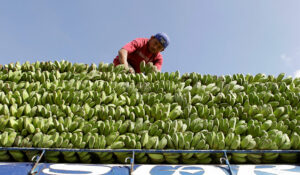
The Philippines is poised for a remarkable surge in banana exports, potentially leaping to become the world’s second-largest exporter by 2025. Preliminary data suggests a dramatic increase of over 25%, reaching an estimated 2.93 million metric tons.
While Ecuador is expected to maintain its position as the global leader with 6.41 million metric tons, this growth signifies a significant turnaround for the Philippines. It’s a shift that pushes Costa Rica, previously the second-largest exporter, down to fifth place with a projected decline in shipments.
This resurgence isn’t simply luck; it’s the result of a fortunate combination of factors. Favorable weather conditions have played a crucial role, alongside a recovery from debilitating diseases that plagued plantations in recent years.
2024 saw a slight dip in exports, falling to 2.33 million metric tons due to the devastating effects of Fusarium wilt – a fungal disease that starves banana plants. This disease blocked vital nutrients and moisture, impacting production across the nation.
However, strategic investments are revitalizing the industry, particularly in the Cagayan Valley region. These investments, including the provision of organic fertilizers and essential inputs, are fueling a renewed period of growth and productivity.
Stronger demand from key Asian markets is also driving this export boom. China, a major global buyer, is estimated to have increased its banana imports by over 17% in 2025, with a substantial portion of that growth coming from the Philippines.
Japan, another critical market, is also showing increased appetite for Philippine bananas, with projected import growth exceeding 1%. The Philippines already supplies a staggering 75% to 80% of Japan’s total banana needs.
Recognizing this opportunity, the Philippine government is actively working to secure even more favorable trade terms with Japan. Negotiations are underway to revise the Japan-Philippines Economic Partnership Agreement (JPEPA), aiming for a fixed, lower tariff rate.
Currently, Philippine bananas face seasonal tariffs in Japan, ranging from 8% to 18% depending on the time of year. The goal is to establish a consistent tariff between 5% and 8%, leveling the playing field with competitors like Vietnam, Thailand, and Mexico.
This push for lower tariffs is viewed as a temporary measure, a stepping stone towards a more ambitious goal: securing zero tariffs through accession to the Comprehensive and Progressive Agreement for Trans-Pacific Partnership (CPTPP). This free trade agreement promises even greater trade liberalization and opportunities for Philippine exporters.