For four years, a quiet dismantling occurred within the Philippines’ national budget. Billions of pesos, earmarked for vital infrastructure – airports, railways, flood defenses, climate resilience – vanished. These weren’t abandoned ideas; they were approved projects, loans negotiated, needs undeniably urgent. Yet, each year, funding was systematically stripped away, a silent erosion of progress.
This wasn’t fiscal prudence; it was a deliberate paralysis. Loans remained idle, infrastructure projects stalled, and costs spiraled upwards. Jobs were lost, and communities were left vulnerable to the very disasters these projects were designed to prevent – all while public funds were redirected elsewhere.
Since 2023, this has been the fate of the nation’s foreign-assisted projects. This isn’t simply a debate about borrowing; it’s about identifying those who actively obstructed development and understanding the price being paid for their actions.
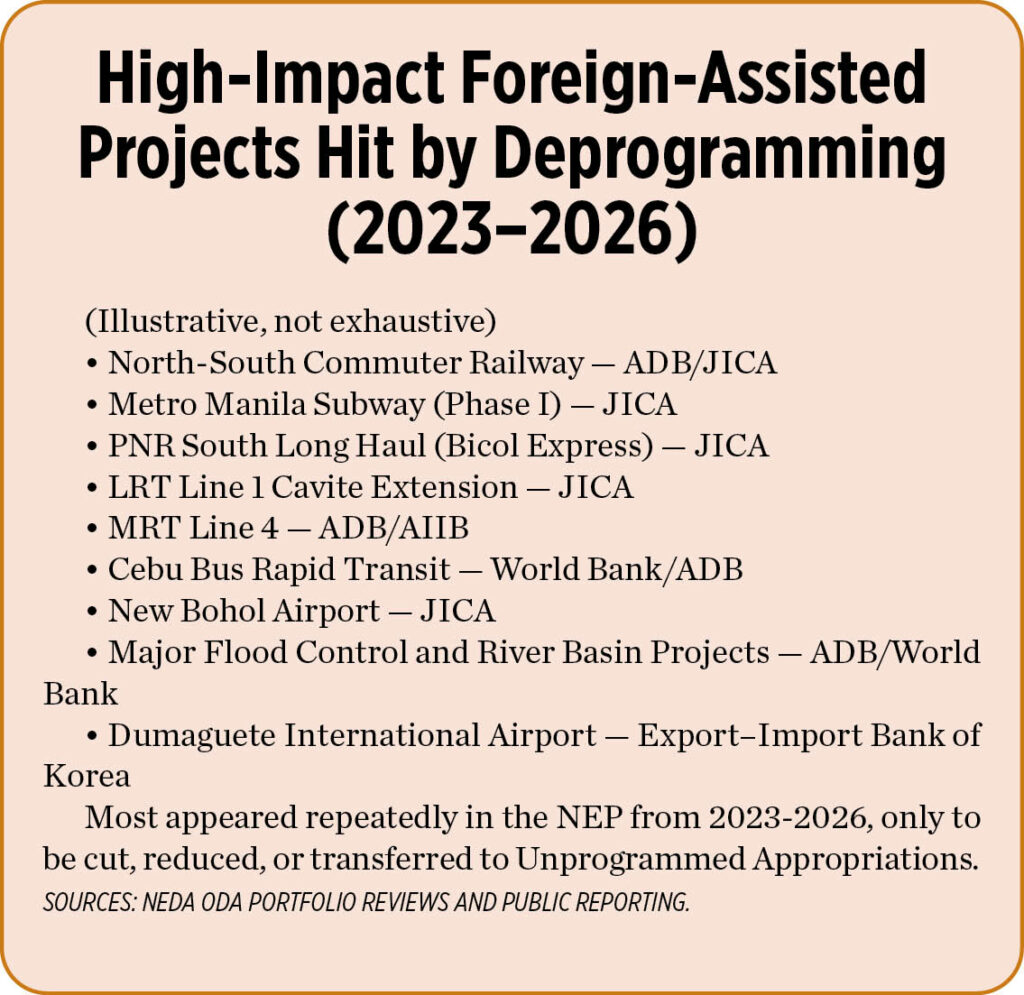
Between 2023 and 2026, the Executive branch consistently proposed between 200 and 280 billion pesos annually for these crucial projects. These weren’t mere aspirations; they were thoroughly vetted, financially sound, and environmentally assessed initiatives, negotiated with institutions like the Asian Development Bank and the World Bank.
But the budget process became a bottleneck. As projects moved from proposal to law, legislators systematically removed them from the programmed budget, relegating them to “Unprogrammed Appropriations” – a realm of uncertainty where funding became contingent, and often, unattainable.
The numbers paint a stark picture: 210 billion pesos proposed in 2023, with 158 billion removed. In 2024, 246 billion proposed, 242 billion vanished. The pattern continued in 2025 (216 billion proposed, at least 118 billion removed) and 2026 (283 billion proposed, 190 billion removed, with a further 93 billion vetoed). Nearly 800 billion pesos in development projects were effectively deprogrammed in just four years – a calculated, recurring act.
Foreign-assisted projects aren’t fueled by promises; they require a government commitment and annual authorization to access loan funds. When projects are removed from the programmed budget, that authorization – and the corresponding funds – disappear. The loans themselves remain, signed and valid, but unusable.
Construction halts. Workers remain unemployed. Communities wait. Meanwhile, the allocated peso counterpart funds aren’t lost; they’re reallocated to smaller, localized projects – often fragmented, low-priority initiatives like minor flood control repairs or multi-purpose buildings. These offer quick wins but lack the scale and rigor of nationally planned infrastructure.
Development capital is fractured and diverted into spending that is politically expedient, easier to control, and susceptible to abuse. The hidden costs are substantial. Unused loans incur commitment fees, costing the government hundreds of millions of pesos. Delays lead to price increases, rebidding processes, and potential project abandonment.
This repeated cycle of approval and obstruction sends a damaging message to investors, credit-rating agencies, and development partners: plans are unreliable. At a time when foreign direct investment is already declining, this erodes confidence in the Philippines’ infrastructure readiness, growth potential, and commitment to long-term projects.
The burden of these delays isn’t shared equally. Commuters lose valuable time and income when rail and bus projects are stalled. Rising food prices result from delayed port and logistics improvements. And when flood control is postponed, the most vulnerable communities suffer the most devastating consequences – loss of homes, livelihoods, and even lives.
Politics plays a role. Breaking down large national projects into smaller, local ones offers immediate visibility and potential electoral gains. The benefits are swift, while the costs are deferred. However, politics isn’t the sole driver.
Investigations by the Senate and the Independent Commission for Infrastructure have uncovered evidence of “ghost” and substandard projects, as well as diversions of funds to low-priority works. Unlike foreign-assisted projects, which are subject to rigorous international oversight, these smaller projects often operate with limited scrutiny, making abuse easier and oversight more difficult.
This pattern of defunding isn’t merely bad policy; it’s a systemic enabler of corruption. Congress removed the projects, but the Executive branch bears responsibility for failing to defend them adequately. True priorities are revealed not by speeches, but by what leaders refuse to sacrifice.
Defunding these projects didn’t save money; it squandered it. It froze infrastructure development, inflated costs, hindered growth, undermined investor confidence, and disproportionately harmed those least able to bear the burden. With investigations confirming widespread leakage of public funds, the issue transcends technicalities and becomes a matter of fundamental morality.
The facts are clear, the damage is evident. The crucial question remains: who will be held accountable for the costs we are now forced to bear?