A fragile compromise to end the partial government shutdown cleared a significant hurdle in the Senate late Monday, now resting precariously with the House of Representatives. The agreement, forged between Senate leaders and the White House, faces a critical test Tuesday as it moves toward a full vote.
The House Rules Committee, typically a point of contention, advanced the Senate’s deal with surprising unity among Republicans. However, the path forward remains treacherous. A procedural vote, known as a “rule vote,” looms, requiring a simple majority to even allow debate and a final vote on the funding package.
Speaker Mike Johnson faces a daunting task. With votes traditionally aligning along party lines, he needs near-perfect Republican cohesion to succeed. The current shutdown, now in its third day, impacts roughly 78% of the federal government, a consequence of stalled spending bills that failed to reach President Trump’s desk by the January 30th deadline.
Initial bipartisan efforts to fund the government through the end of fiscal year 2026 faltered after protests erupted over the administration’s immigration policies. The situation escalated following incidents in Minneapolis involving federal law enforcement and demonstrators, leading to tragic loss of life.
The resulting compromise focuses on funding critical departments – War, Health and Human Services, Transportation, Housing and Urban Development, Labor, and Education – while providing a temporary two-week extension for the Department of Homeland Security (DHS). This brief extension aims to create space for further negotiations on a long-term solution.
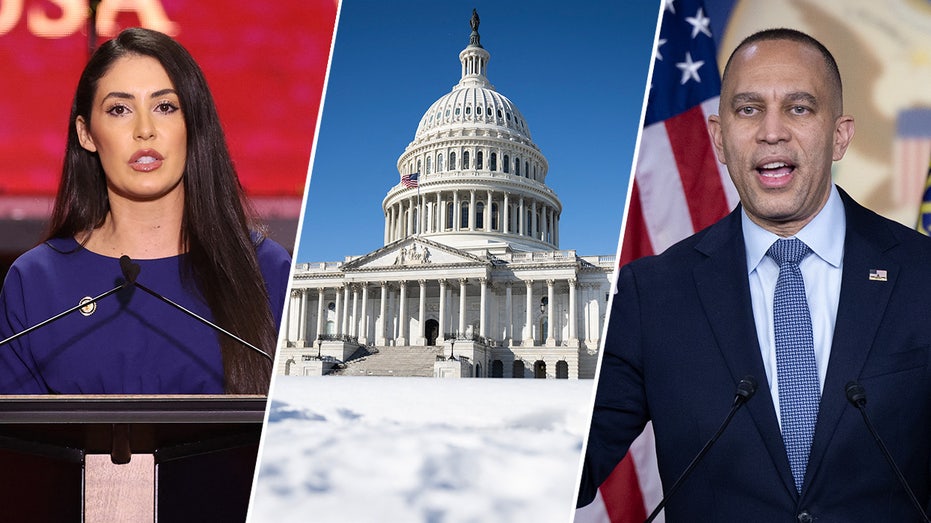
A surprising rift has emerged within the Democratic leadership. While Senate Minority Leader Chuck Schumer played a role in negotiating the deal with the White House, House Minority Leader Hakeem Jeffries has signaled he won’t rely on House Democrats’ support, leaving Republicans largely to navigate this challenge alone.
President Trump intervened to avert a potential rebellion from conservative Republicans. A group had threatened to block the rule vote over the exclusion of a measure requiring proof of citizenship for voter registration. Trump, through a post on social media, demanded “NO CHANGES” to the current agreement, effectively silencing the conservative push.
Representative Anna Paulina Luna, a key figure in the conservative group, announced a shift in position after receiving assurances from the White House. Senate Majority Leader John Thune reportedly agreed to consider a vote on the voter ID bill, easing concerns and securing their support for the rule vote.
Despite this concession, lingering discontent remains among some House Republicans, particularly those uneasy with the prospect of bipartisan discussions regarding the administration’s immigration policies. Speaker Johnson can afford to lose only a single Republican vote to secure passage of the funding deal.
The consequences of the continued shutdown are already being felt. Nearly 14,000 air traffic controllers are working without pay, and the military faces the possibility of missed paychecks. The Centers for Disease Control and Prevention (CDC) is hampered in its ability to deliver vital public health information to the nation.