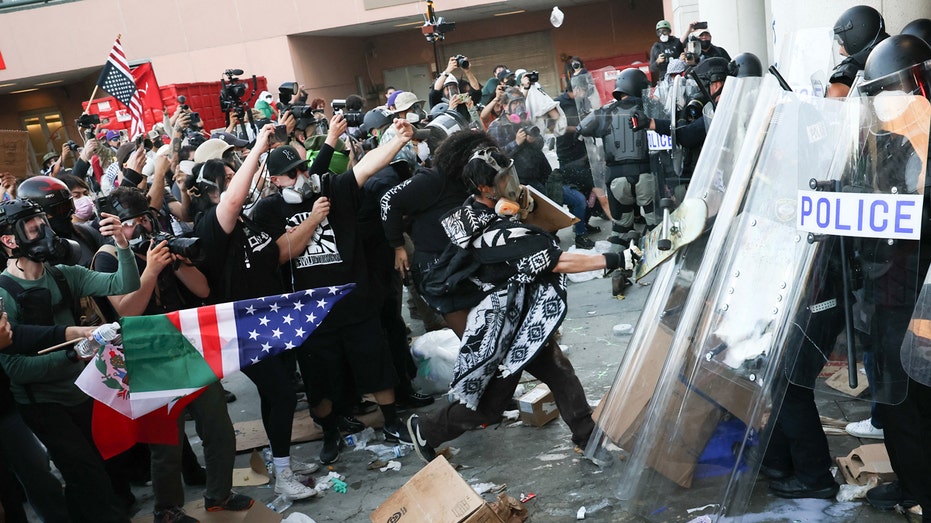
“This is time for a revolution… They can’t take us all down.” The defiant words, spoken by an actor known for portraying complex characters, now echo with unsettling resonance. A sense of revolutionary fervor is building, coinciding with the approaching 250th anniversary of the Declaration of Independence – a moment for profound reflection on the nation’s founding and its future.
The echoes of the past are remarkably clear when comparing the American and French Revolutions. Both ignited during the same era, yet followed drastically different paths. One birthed the world’s oldest continuous democracy; the other descended into the brutal Reign of Terror. The parallels between the 18th century and today are striking, a realization that took hold while researching the forces that shape – and threaten – republics.
The feeling was almost visceral. While immersed in research, a chilling scene unfolded outside a law school office. A crowd’s cries of “Guillotine! Guillotine! Guillotine!” weren’t emanating from the streets of Paris, but from the campus of George Washington University in Washington, D.C. A mock trial, fueled by protest, targeted university leadership, with chants of violent retribution filling the air. It was a stark reminder of how quickly ideals can devolve into extremism.
Today’s challenges extend far beyond traditional political divides. Emerging technologies like robotics and artificial intelligence, coupled with evolving global governance systems, present unprecedented tests for the American republic. A new wave of radical voices – “new Jacobins” – are calling for a fundamental dismantling of the Constitution and a sweeping transformation of the United States.
These voices aren’t new. History reveals a recurring pattern: journalists, professors, and politicians who seek to tear down existing structures. The calls to abandon constitutional principles are growing louder, with some openly advocating for discarding the very foundations of American governance. The rhetoric is escalating, with political opponents routinely demonized as “Nazis” or “fascists.”
The dehumanization of adversaries creates a dangerous climate, normalizing extreme responses. Threats of arrest, even targeting the president and law enforcement, are becoming commonplace. The language of violence is permeating the discourse, with disturbing incidents – assassination attempts, calls for bloodshed – reflecting a growing willingness to embrace radical action. A significant portion of the population now believes political violence is justified.
Even figures associated with violence can be celebrated. The reaction to individuals accused of extreme acts reveals a disturbing trend: a romanticization of revolutionary figures, even those who resort to unlawful means. This acceptance of extremism underscores the fragility of societal norms and the potential for escalating conflict.
While the specter of widespread upheaval may seem distant, history offers a cautionary tale. The architects of terror, like Robespierre, often began as advocates for due process and individual rights. His chilling justification – “Terror is only justice: prompt, severe and inflexible” – reveals the dangerous logic that can underpin revolutionary excess. The framers of the American republic understood the inherent risk of “democratic despotism,” the tyranny of a majority unbound by limitations.
The French Revolution serves as a stark warning: “Like Saturn, the Revolution devours its children.” The insatiable appetite for change ultimately consumes those who initiate it. The American Revolution, in contrast, prioritized liberty grounded in natural rights – a fundamental difference that shaped its trajectory. The Founders feared direct democracy, recognizing its potential to descend into “mobocracy.”
Current efforts to reshape the Supreme Court and alter the constitutional structure echo these historical struggles. The pursuit of radical change, even through legitimate means, carries inherent risks. The past demonstrates that starting a revolution is far easier than controlling its outcome. As political leaders fuel unrest, they may find themselves facing a force they cannot contain.
One figure embodies the complexities of revolution: Thomas Paine. His life intertwined with both the American and French Revolutions, offering a unique perspective on the forces at play. He challenged the cautious approach of figures like Madison, and narrowly escaped the guillotine in France. His story is a testament to the unpredictable nature of revolutionary movements.
Ultimately, survival may be the greatest victory. As Abbé Emmanuel Joseph Sieyès, a key figure in the French Revolution, reflected on his experiences, he offered a simple, profound answer: “J’ai vécu” – “I survived.” It’s a reminder that navigating the turbulent currents of revolution requires not only courage and conviction, but also a profound understanding of history’s lessons.