Kristi Noem, the nation’s 8th Secretary of Homeland Security, found herself at the epicenter of a national firestorm. Anti-ICE protests erupted across the country, triggering a partial government shutdown and igniting a fierce debate about the future of border security – and her own position.
Despite the intense scrutiny, Noem embarked on a demanding four-day tour, a deliberate display of leadership amidst the chaos. She surveyed winter storm damage in Mississippi, then journeyed to the southern borders of Texas and Arizona, and the northern border in North Dakota, seeking a firsthand understanding of the challenges facing the nation.
The timing was critical. Congress wrestled with funding for DHS, ultimately reaching a temporary agreement, but Noem remained steadfast. Her schedule didn’t waver, her focus unwavering: the vital national security functions of the department, she insisted, couldn’t be held hostage by political maneuvering.
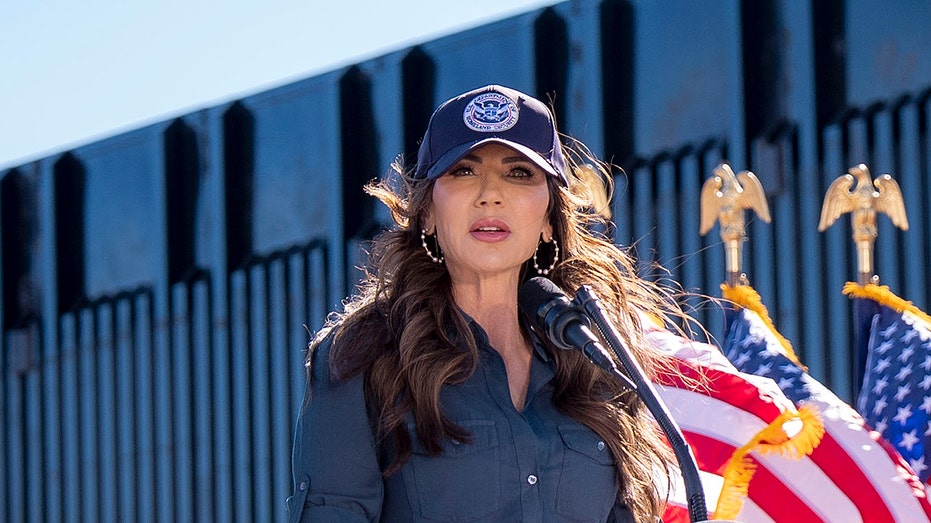
Standing along the border wall in Nogales, Arizona, Noem emphasized the breadth of DHS’s responsibilities. Beyond the 11% allocated to ICE, the agency encompassed FEMA, the TSA, the Coast Guard, and even weapons of mass destruction defense. “We have a lot of responsibilities that we absolutely need to fund,” she stated, “in order to do them properly.”
The heart of the conflict lay with ICE and its operations in Minneapolis, a city with limited cooperation regarding federal immigration enforcement. Operation Metro Surge had led to the apprehension of 4,000 individuals suspected of criminal activity, largely stemming from a fraud scheme within the Somali community.
But the operation spiraled into violent clashes, resulting in the deaths of two U.S. citizens, Renee Good and Alex Pretti, at the hands of federal agents. Noem’s swift labeling of both as “domestic terrorists” ignited further outrage, fueling calls for her resignation from both sides of the political spectrum.
President Trump, however, publicly defended Noem, stating he had no intention of removing her. He later highlighted the successes achieved under her leadership, citing historically low crime rates and a strengthened border.
When pressed on the public’s reaction to the escalating conflict, Noem offered a simple message: “I think people would want less conflict.” She asserted that Americans want secure borders and the removal of dangerous criminals, not their release onto the streets.
Her trip wasn’t without direct opposition. A protest erupted outside a dinner she hosted for CBP officers in Tucson, Arizona, a cacophony of drums, megaphones, and pre-made signs. The reaction from passing motorists was a mixed chorus of honks, their intent unclear.
Polls reflected the divided public opinion, with a Quinnipiac University survey revealing that 58% believed Noem should not remain in her position. Some observers pointed to her relative inexperience on the national stage as a contributing factor.
Despite the criticism, the numbers told a different story. Under Noem’s leadership, DHS reported over three million deportations, including 700,000 detentions and removals. Furthermore, over 2.3 million individuals had voluntarily departed the country, incentivized by a program offering financial assistance and travel arrangements.
The appointment of Tom Homan, a veteran of both the Trump and Obama administrations, as border czar initially sparked speculation of a power struggle. However, Noem credited Homan with facilitating negotiations with Minneapolis leaders, bringing a measure of order to the volatile situation.
Noem ultimately framed the debate as a clash of ideologies. “Democrat policies were destroying our country,” she asserted, “and President Trump came in and said, ‘I’m going to protect the American people.’” She argued that her policies had saved lives by preventing migrants from falling victim to exploitation.