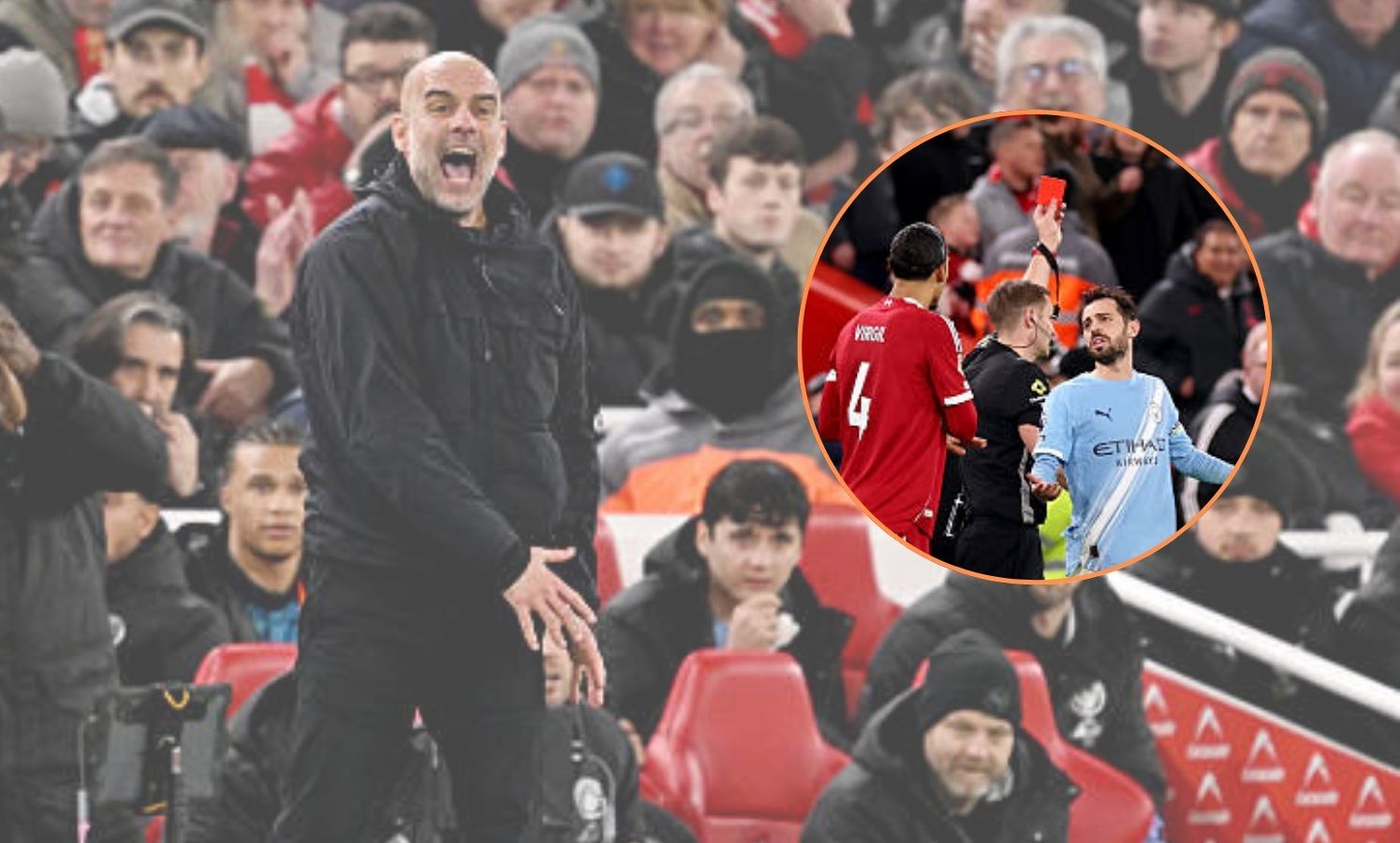
The roar of Anfield died a sudden, agonizing death in the 100th minute. Manchester City had just seemingly sealed a 3-1 victory against Liverpool, a goal that should have been the final, emphatic word in a thrilling contest. But silence descended as the referee, guided by the unseen hand of VAR, made a decision that ignited a firestorm of controversy.
Liverpool, desperate for an equalizer, had thrown everything forward. Goalkeeper Alisson Becker joined the attack for a corner, leaving their net vulnerable. When City cleared, substitute Rayan Cherki unleashed a breathtaking counter-attack, a long-range shot hurtling towards the unguarded goal from the halfway line.
A frantic race ensued between Liverpool’s Dominik Szoboszlai and Manchester City’s Erling Haaland, both sprinting to reach the ball as it neared the goal line. A tangle of legs, a tug of shirts – a desperate struggle for supremacy in the dying seconds of a captivating match.

The ball crossed the line. The stadium erupted, then froze. VAR intervened, not to confirm the goal, but to dissect the preceding chaos. Instead of allowing play to continue and the goal to stand, the referee was instructed to rewind the clock and punish Szoboszlai.
The decision: a straight red card for denying a clear goal-scoring opportunity, and the goal wiped from the scoreboard. A free-kick awarded to City, but the momentum, the energy, the sheer joy of the moment, irrevocably lost.
Pep Guardiola, the Manchester City manager, stood on the touchline, visibly bewildered. He couldn’t comprehend how a moment of such raw, compelling drama could be extinguished by a rigid adherence to the letter of the law. His post-match reaction was blunt: “Come on referee, give goal and go home!”
The backlash was immediate and fierce. Pundits and fans alike condemned the decision, arguing that it prioritized technical correctness over the spirit of the game. The incident wasn’t just about a goal; it was about robbing the sport of a truly unforgettable moment.
Gary Neville, a respected voice in the game, lamented the “killjoy” nature of VAR, stating that it had destroyed the entertainment value of a spectacular match. Fans echoed his sentiment, flooding social media with outrage and frustration, lamenting the loss of a glorious, unpredictable moment.
The core complaint wasn’t about whether the referee’s decision was technically correct, but about whether it was the *right* decision. Was it worth sacrificing a moment of pure footballing magic for the sake of absolute precision? The debate raged on, fueled by a growing sense that VAR, intended to enhance the game, was instead slowly eroding its soul.
The incident at Anfield served as a stark reminder of the delicate balance between upholding the rules and preserving the inherent drama and unpredictability that makes football so captivating. It raised a fundamental question: is the pursuit of perfect justice worth the cost of a truly great moment?