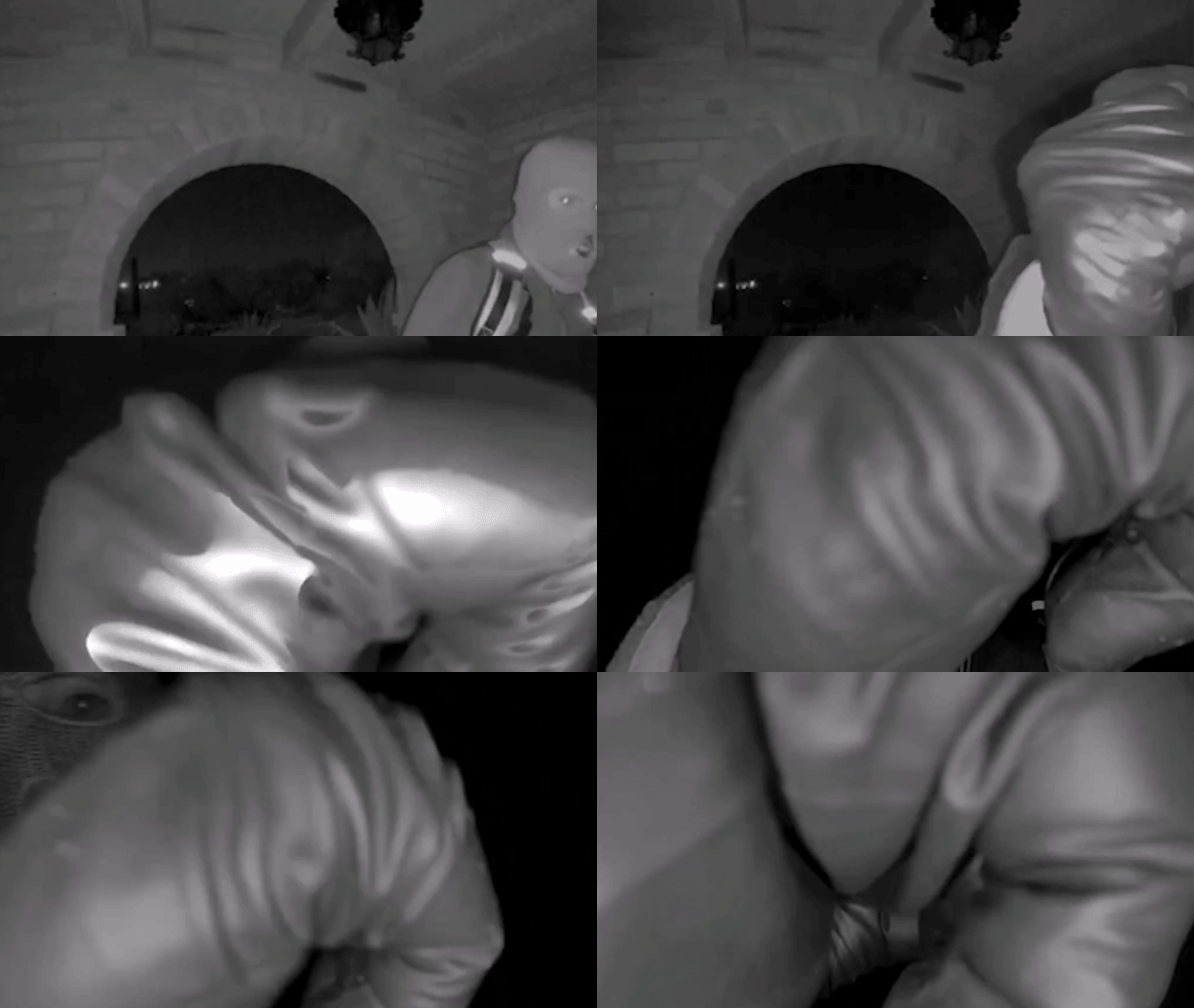
The FBI’s recent release of surveillance images in the Nancy Guthrie disappearance represents a critical turning point in the investigation. This isn't a routine step; it signals a focused pursuit and a desperate need for the public’s help in identifying a key individual.
Jonathan Winfrey, a veteran producer from “America’s Most Wanted,” believes the decision to publicize these images speaks volumes. He suggests investigators are remarkably confident they’re on the trail of the right person and are now leveraging the power of public awareness to accelerate the search.
Winfrey emphasizes the urgency, stating this case embodies the spirit of “America’s Most Wanted” – a relentless pursuit of a suspect authorities are determined to apprehend swiftly. The release isn’t about casting a wide net; it’s about honing in on a specific target.
The need for public assistance isn’t simply about identifying a face. Winfrey explains the FBI is seeking corroborating details, hoping that someone will recognize something that confirms the subject’s identity and provides a crucial lead.
A particularly unsettling detail has emerged: the suspect appears to possess a sophisticated understanding of surveillance technology. Reports indicate tampering with a doorbell camera at Guthrie’s Tucson home, suggesting a deliberate attempt to evade detection.
Winfrey, drawing on years of experience with fugitive cases, asserts that such calculated actions rarely point to random acts of violence. He believes a pre-existing connection or deep-seated resentment likely fueled this crime.
Investigators are now meticulously examining potential links between the suspect and the victim, scrutinizing whether prior access to the property or a personal relationship existed. Every detail, no matter how small, is being dissected.
Initial speculation leaned towards the possibility of cross-border criminal activity, given Tucson’s proximity to Mexico and Winfrey’s past experience with kidnapping-for-ransom cases. However, the focus on a single individual has shifted that assessment.
The question now is motive. Is this a hastily planned abduction for quick financial gain, or does a more complex and sinister purpose lie beneath the surface? The FBI is grappling with these possibilities.
Both the FBI and the Pima County Sheriff’s Department are operating with a high degree of secrecy, carefully controlling the flow of information to the public. This tight-lipped approach is a testament to the case’s sensitivity and the need to protect the investigation.
Winfrey describes a relentless, all-hands-on-deck effort, emphasizing the dedication of law enforcement to locate the suspect and prevent further harm to Guthrie or anyone else. Time is of the essence.
He believes authorities are holding back crucial information, strategically managing what is revealed to avoid compromising the investigation. A wealth of knowledge likely exists behind the scenes, carefully guarded.
Modern surveillance and biometric technology are dramatically changing the landscape of these investigations. Winfrey points to the power of retinal identification, stating, “The eye is your total ID now.” Concealing one’s identity is becoming increasingly futile.
Attempts to evade detection are proving less and less effective in the face of these advancements. The ability to identify individuals with precision is transforming the pursuit of fugitives.
Despite the challenges, Winfrey remains optimistic, believing the case is progressing steadily. He predicts it’s only a matter of time before the suspect is identified and apprehended, bringing a measure of relief and justice.