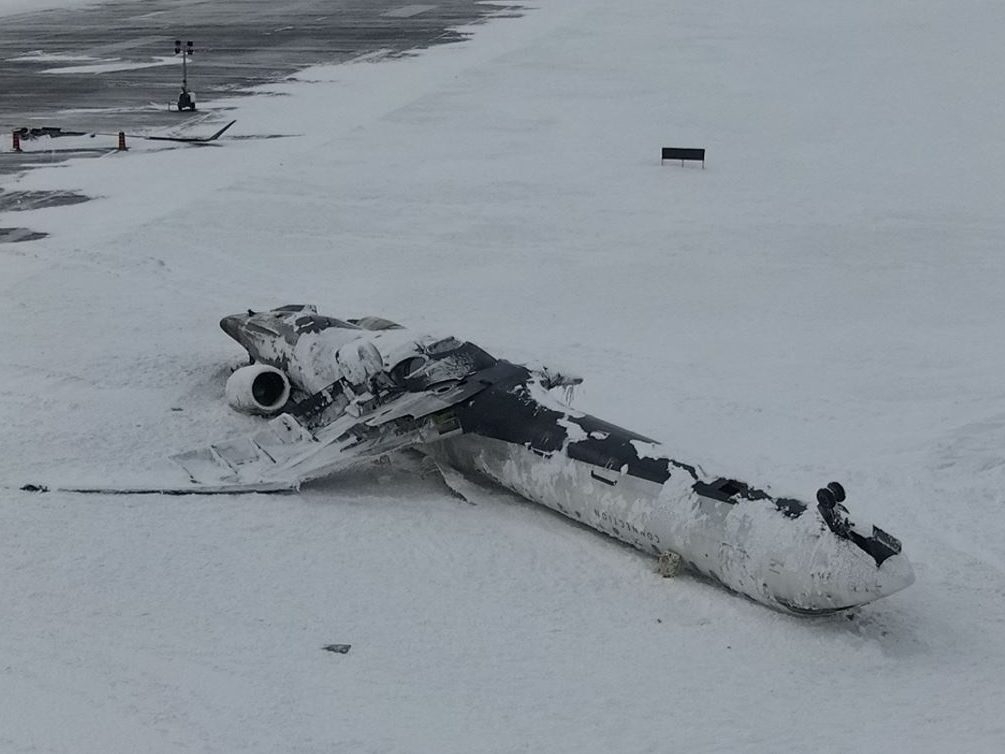
The afternoon of February 17th began like any other at Toronto Pearson Airport, but quickly descended into chaos. An Endeavor Air flight, arriving from Minneapolis, slammed onto the tarmac, erupting in flames and spinning violently until it faced the opposite direction – a terrifying scene unfolding before horrified onlookers.
Nearly a year later, the investigation continues, a meticulous process of piecing together fragmented evidence. Investigators are relentlessly pursuing the sequence of events that led to the crash, seeking a definitive explanation for the dramatic impact.
The aircraft, a Bombardier model carrying 76 passengers and four crew members, endured a brutal impact. Despite the violence of the crash, a swift evacuation through a single door and two emergency windows saved lives, though not without injury.
Twenty-one people were hospitalized, many suffering significant wounds. Delta Air Lines, the parent company of Endeavor Air, confirmed the extent of the injuries, highlighting the severity of the incident and the fortunate outcome of a potentially far greater tragedy.
A massive collaborative effort is underway, involving experts from both sides of the border. Representatives from the Transportation Safety Board of Canada, the U.S. National Transportation Safety Board, and numerous aviation authorities are pooling their resources and expertise.
The wreckage was painstakingly removed from the runway and transported to a hangar for detailed examination. Critical components – the right wing, landing gear, and the wing box structure – were dispatched to the safety board’s Ottawa lab for rigorous testing and analysis.
Preliminary findings reveal completed analysis of fracture surfaces on the wing and landing gear, with a deeper, more comprehensive analysis still in progress. Investigators have also meticulously downloaded and scrutinized hours of flight data, comparing it to information recorded during the moments of the crash.
Airport surveillance footage, data from NAV CANADA, and detailed weather reports from that day are all under review. Investigators are recreating the flight’s final moments through sophisticated flight simulator exercises, analyzing the results to understand the forces at play.
Beyond the mechanical and operational aspects, investigators are examining the human factors involved. A thorough assessment of survivability factors – restraint systems, evacuation routes, crew coordination, and the effectiveness of the emergency response – is ongoing.
The investigation isn’t confined to this single incident. Officials are also studying similar crashes worldwide, seeking patterns and insights that could shed light on the cause of the Toronto accident.
The next phase will focus on finalizing the analysis of all collected data – technical, operational, and laboratory results. This painstaking process is crucial to building a complete and accurate picture of what transpired.
Ultimately, investigators will compile a final report, detailing the circumstances that led to the crash. While the release date remains uncertain, the pursuit of truth and the commitment to preventing future incidents drive this complex and vital investigation.