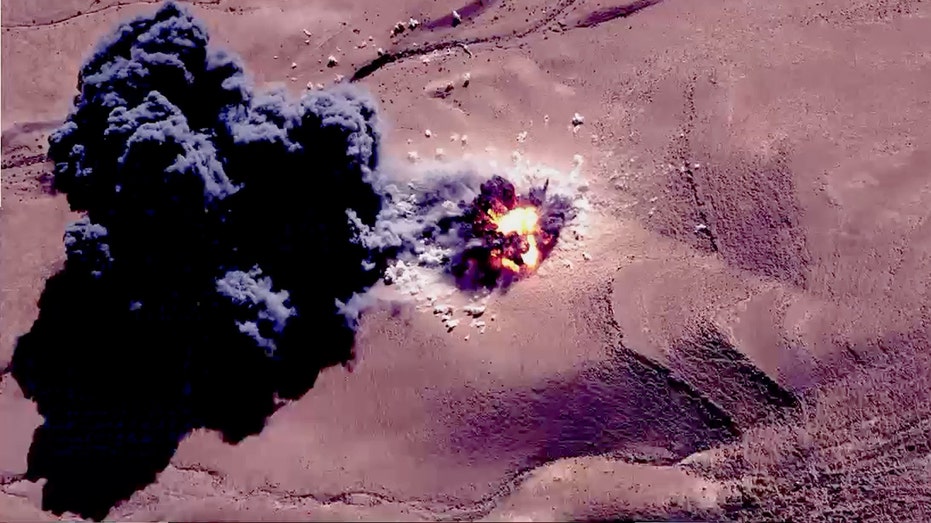
A new weapon has entered the fray in the nearly four-year-old conflict, dramatically shifting the landscape of Ukraine’s long-range strike capabilities. Recent video footage confirms the deployment of the FP-5 “Flamingo” cruise missile, a domestically produced system designed to reach deep into Russian territory.
The first confirmed use of the Flamingo came in an overnight attack targeting a critical Russian military facility near Kotluban, in the Volgograd Oblast. Ukrainian officials identified the site as a major ammunition and explosives storage hub belonging to Russia’s Main Missile and Artillery Directorate, known as GRAU – a key component of their war machine.
Reports from the ground describe a scene of intense destruction. Powerful explosions and cascading secondary detonations ripped through the facility, suggesting a significant impact. The full extent of the damage remains under assessment, but the initial reports paint a picture of a devastating blow.
Russian authorities acknowledged an incident, claiming their air defenses intercepted incoming missiles and that a fire broke out at a Defense Ministry facility due to falling debris. An evacuation of nearby residents was ordered as a precaution against further explosions, highlighting the inherent danger of the situation.
This isn’t the first time Russia has taken note of the Flamingo. The Russian Defense Ministry has publicly stated its air defenses destroyed five of the long-range cruise missiles in a recent 24-hour period, though independent verification of this claim remains elusive.
Ukrainian officials have been quietly showcasing the FP-5’s capabilities, boasting a range of approximately 1,864 miles and pinpoint accuracy within just 14 meters. While battlefield performance is difficult to confirm independently, the potential impact of such a weapon is undeniable.
Meanwhile, diplomatic efforts continue, though shadowed by ongoing violence. Former President Trump recently stated that Ukraine’s President Zelenskyy must seize the opportunity for a deal, suggesting Russia is open to negotiations.
A new round of U.S.-brokered talks is anticipated in Geneva next week, even as fierce fighting persists along the extensive 1,200-kilometer front line. The urgency of these talks is underscored by the escalating attacks on both sides.
The conflict’s brutal reality was starkly illustrated by recent Russian strikes. A drone assault on port infrastructure near Odesa claimed one life and injured six, while a separate attack near the eastern front line tragically killed three brothers, including an eight-year-old child, and wounded their mother and grandmother.
As Ukraine develops and deploys its own advanced weaponry, and as diplomatic channels remain open but fraught with tension, the war enters a new and increasingly complex phase. The stakes remain incredibly high, with each strike and each negotiation shaping the future of the region.