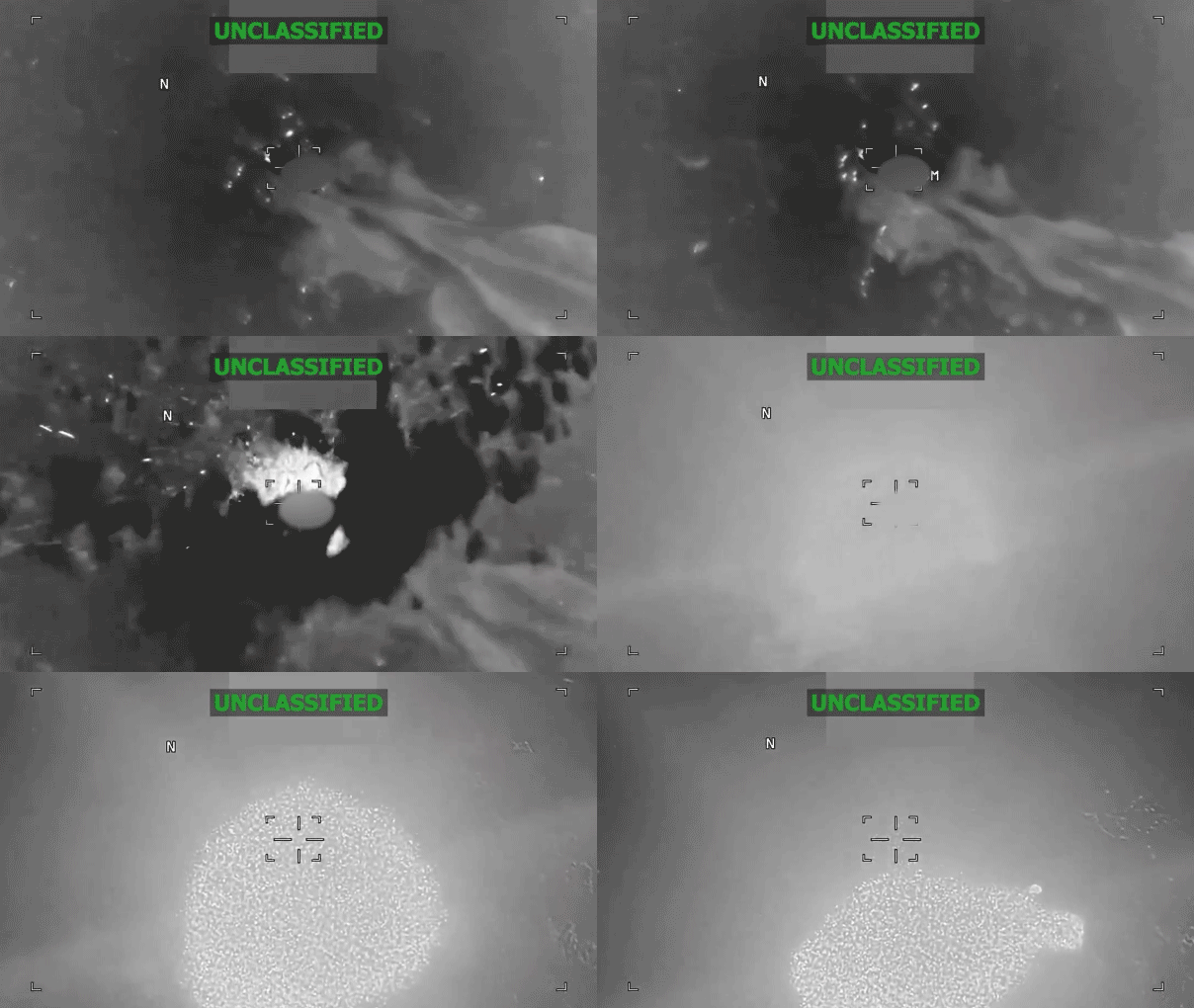
The capture of a Venezuelan leader and his wife, brought to the United States to answer for serious drug trafficking allegations, involved a surprising ally: an artificial intelligence named Claude.
U.S. special operations forces reportedly deployed Claude during the operation, leveraging its capabilities alongside tools from data analytics firm Palantir Technologies – a company already deeply integrated within the Defense Department and federal law enforcement agencies.
The AI’s involvement marks a significant milestone, as it represents the first instance of a classified operation utilizing technology from Anthropic, the developer of Claude.
Anthropic maintains strict usage policies, explicitly prohibiting the AI’s application in areas like violence, weapons creation, or intrusive surveillance. The company asserts it has oversight into both classified and unclassified deployments of Claude.
Despite these safeguards, concerns regarding the potential misuse of Claude by the military surfaced previously, even prompting discussions within a prior administration about potentially terminating a substantial contract – valued at up to $200 million – awarded the previous year.
The range of Claude’s potential applications is vast, extending from efficiently summarizing complex documents to potentially controlling unmanned aerial vehicles. This versatility underscores the growing importance of AI in modern military strategy.
Officials have openly acknowledged the transformative power of artificial intelligence in warfare, stating that the future of American conflict is inextricably linked to its development and implementation.
The acknowledgment of this shift isn’t simply about embracing new technology; it’s a recognition that global adversaries are also rapidly advancing their AI capabilities, demanding a proactive response.
This pursuit of AI dominance isn’t a passive endeavor, but a deliberate strategy to maintain a critical edge in an increasingly complex and technologically driven world.