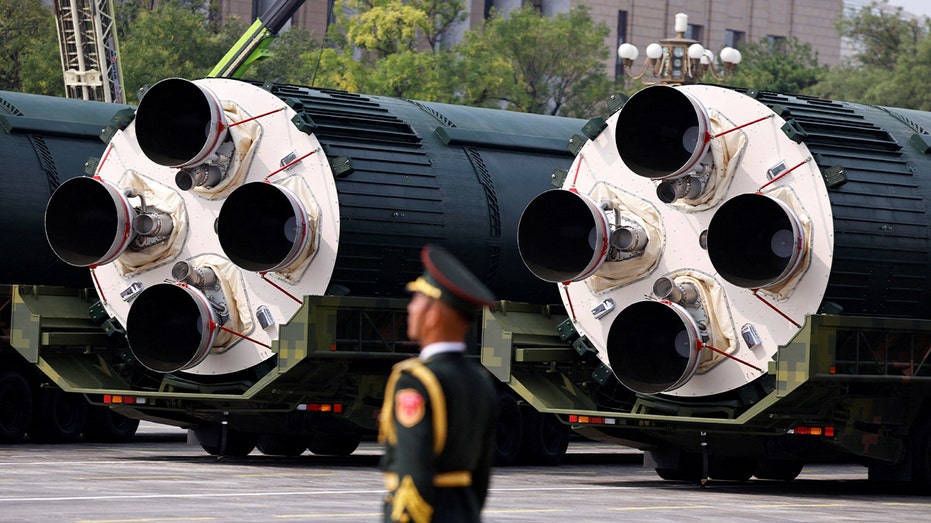
A chilling accusation from the State Department has ignited a fierce debate within Washington’s corridors of power: did China secretly conduct a nuclear test in 2020? The allegation, that Beijing detonated a device yielding “hundreds of tons” of explosive force, throws decades of carefully maintained assumptions about nuclear restraint into question.
U.S. officials now suggest China may be actively concealing its nuclear advancements, employing sophisticated “decoupling” techniques to mask seismic signals from potential tests. This isn’t simply about numbers; it’s about a growing concern that Beijing isn’t playing by the established rules, and a fundamental challenge to the principles of arms control.
China vehemently denies the claims, dismissing them as politically motivated. Yet, the accusation strikes at the heart of a decades-long U.S. moratorium on nuclear testing, forcing a painful reevaluation of America’s strategic posture in a rapidly changing world.
For years, the United States has relied on the Stockpile Stewardship Program – a complex system of computer modeling and simulations – to guarantee the reliability of its nuclear arsenal without resorting to live detonations. But is this approach still sufficient when facing a potential adversary actively pursuing real-world testing?
Detecting these clandestine tests is a monumental challenge. Modern nuclear tests are conducted deep underground, and techniques like “decoupling” can dramatically reduce the seismic footprint, blurring the line between natural tremors and deliberate detonations. This vulnerability has long plagued efforts to establish a comprehensive, verifiable ban on nuclear weapons testing.
Experts warn that a return to live testing isn’t a simple decision. It’s not a matter of flipping a switch. The U.S. conducted over a thousand tests during the Cold War, building an immense database that currently underpins the Stockpile Stewardship Program. Rebuilding that knowledge base would be a costly and time-consuming undertaking.
The debate isn’t about being “for” or “against” nuclear weapons, but about technical necessity and economic reality. Some within the U.S. nuclear complex believe advanced simulations are enough, while others insist on empirical validation and preserving the option of live testing to maintain a credible deterrent.
The stakes extend far beyond Washington and Beijing. The credibility of “extended deterrence” – the U.S. commitment to defend its allies – hangs in the balance. If allies like Japan and South Korea begin to doubt America’s resolve or capability, the entire regional security architecture could unravel.
Currently, U.S. lab directors maintain that the American arsenal remains safe and reliable without explosive testing. However, sustained testing by Russia and China, conducted in secrecy, could force a reassessment of that confidence. Transparency, or the lack thereof, is now a critical factor.
The question confronting policymakers isn’t simply *whether* to test, but *under what conditions* testing would genuinely strengthen deterrence without triggering a dangerous new arms race. The implications are profound, and the path forward remains uncertain.
Past suggestions from previous administrations to test “on an equal basis” with competitors highlight the growing pressure to respond. Any return to explosive testing would mark a dramatic shift in U.S. policy, signaling a new era of nuclear competition and potentially destabilizing the global security landscape.