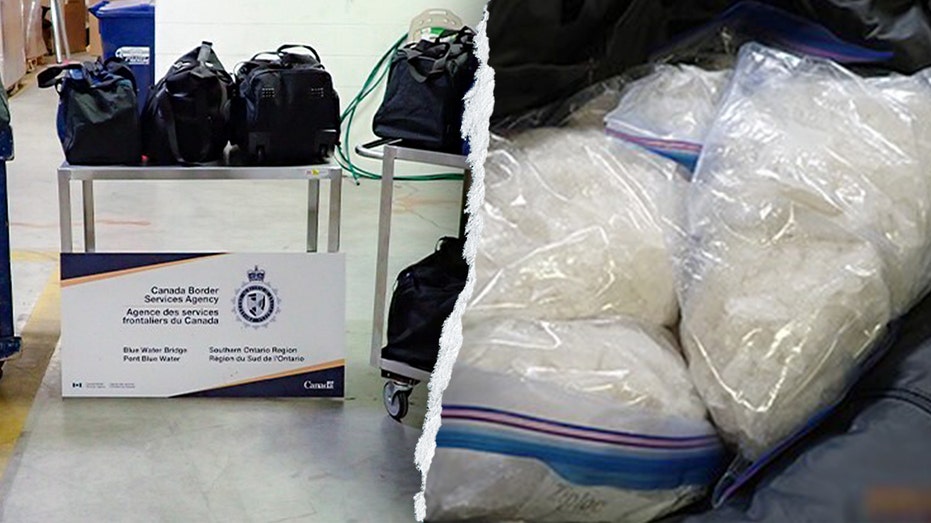
A massive haul of methamphetamine – nearly 600 pounds – was intercepted at the U.S.-Canada border earlier this month, revealing a significant flow of narcotics across the international line. The discovery, made on February 4th, underscores the ongoing challenges faced by border security agencies in combating illegal drug trafficking.
The seizure unfolded at the Blue Water Bridge port of entry, where a commercial truck crossing from the United States was flagged for a more thorough inspection. A keen-eyed Canada Border Services Agency officer, aided by a highly trained detector dog, identified 16 duffle bags concealing the suspected methamphetamine within the trailer.
The sheer quantity of the drug is staggering: 266.4 kilograms, equivalent to just over 587 pounds. This represents a substantial attempt to introduce a dangerous substance into Canada, highlighting the scale of the illicit trade.
Kulbir Singh, a 29-year-old Canadian national driving the truck, now faces serious criminal charges. He’s accused of both importing methamphetamine and possessing it with the intent to traffic, offenses carrying severe penalties under Canadian law.
This recent bust isn’t an isolated incident. Since January of last year, Canadian authorities in Southern Ontario have seized a total of 616.5 kilograms of methamphetamine originating from the United States, painting a picture of a consistent and concerning trend.
The situation is further complicated by strained relations between Canada and the United States. Recent rhetoric from President Trump has introduced a new layer of tension, focusing on trade imbalances and perceived unfairness.
In a move that directly impacts infrastructure projects, President Trump declared he would block the opening of the Gordie Howe International Bridge – a vital link between Detroit and Windsor, Ontario – until the U.S. receives what he deems adequate compensation and “fairness and respect” from Canada.
Trump specifically cited the removal of U.S. alcohol products from Ontario liquor stores and alleged a lack of American content in the bridge’s construction as justification for his stance, reigniting accusations of Canada exploiting U.S. trade policies. He even suggested the U.S. should own a portion of the bridge itself.
The Gordie Howe International Bridge, named in honor of the legendary hockey player, represents more than just a transportation route; it symbolizes cross-border cooperation and economic ties. Its delayed opening would have significant repercussions for both nations.
The convergence of a major drug seizure and escalating political disputes underscores a period of heightened scrutiny and potential conflict at the U.S.-Canada border, demanding careful navigation and a commitment to resolving underlying issues.