Gemma Sheehan was practically born with a fighting spirit – a destiny almost woven into her very name. For over a decade, she relentlessly honed her skills in Brazilian jiu-jitsu, wrestling, and kickboxing, achieving a gold medal at the 2016 Pan Am Games and a dominant 5-1 record in MMA. She rose to become Ontario’s top-ranked female fighter, even earning international recognition as a rising star, all while pursuing a degree in international relations.
The UFC felt within reach, a glittering future of fame and fierce competition. But a concussion abruptly altered her trajectory. Witnessing a close friend grapple with the lasting consequences of head injuries forced Sheehan to confront a difficult truth and re-evaluate her ambitions.
The decision to step away from the cage was agonizing, a perceived loss of purpose. Yet, from that challenge emerged an extraordinary idea: Girls Who Fight. Sheehan envisioned a space where she could empower girls and women through the discipline and skill of MMA and self-defense – a path that ultimately proved more fulfilling than she could have imagined.
“The first year was tough, grappling with the idea that my fighting career was over,” Sheehan confessed. “It felt like a path cut short before I could reach my full potential.” But her extensive training had instilled a different kind of strength – the ability to adapt and forge a new course.
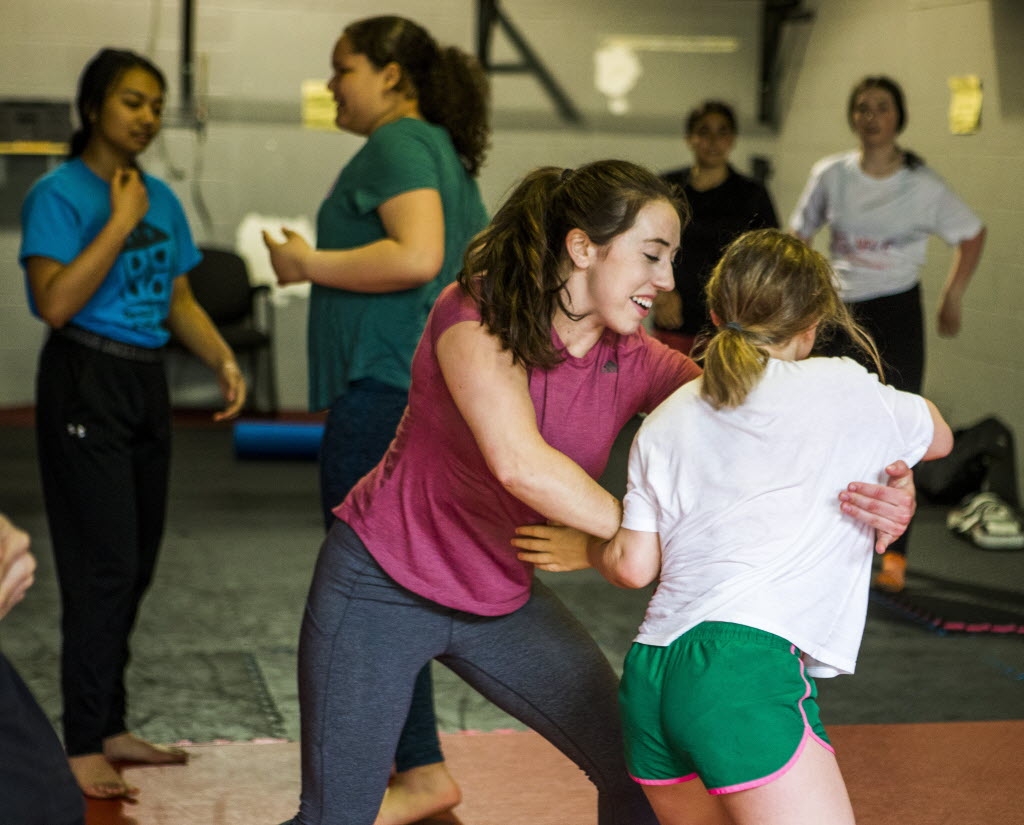
Founded in early 2018, Girls Who Fight quickly blossomed, offering both introductory self-defense workshops and ongoing MMA training. Sheehan recognized a critical gap in the city: limited opportunities for girls to learn from qualified female instructors in a supportive, all-female environment.
The workshops focus on practical self-defense, equipping participants with techniques to counter grabs, strikes, and takedowns. But Sheehan’s instruction extends beyond physical skills, emphasizing assertive communication, confident body language, and heightened situational awareness.

Often, these workshops ignite a passion for MMA in young women who might otherwise feel intimidated by traditional gym settings. The weekly classes provide a safe and encouraging space to delve deeper into the sport, learning to embrace discomfort and push personal boundaries.
“Stepping into a gym full of sweaty boys can be incredibly intimidating,” Sheehan explained. “Girls might feel it’s too rough or simply not for them.” Surrounded by peers and guided by a female mentor, her students flourish, discovering a newfound confidence and resilience.
“I look like someone they can relate to, but I also demonstrate the power and skill that comes with being a fighter,” Sheehan said. “It shows them that this is something they can achieve too.” At 24, she’s not just an instructor, but a role model, fostering a sense of empowerment that extends far beyond the training mat.

Discipline and respect are cornerstones of her program, but Sheehan also prioritizes open communication, creating a space where students can explore their potential and develop crucial life skills. She believes martial arts cultivate mental toughness, resilience, and a healthy perspective on both success and failure.
Years of rigorous training have instilled in Sheehan a remarkable sense of calm and self-assurance. “I think we’ve become too focused on shielding people from discomfort,” she observed. “The real world doesn’t offer that protection. You either rise to the challenge or you don’t.”
She challenges the notion of superficial self-esteem, arguing that true confidence is earned through effort and overcoming obstacles. “Hashtagging self-love won’t magically make you feel better,” she said. “It’s about how you respond when life inevitably knocks you down.” Sheehan also encourages her students to appreciate their bodies for their strength and capability, rather than focusing on appearance.

The impact of Girls Who Fight is evident in the experiences of her students and their families. Joanne Di Nardo credits the program with building her daughter Julia Teixeira’s “confidence” during a particularly “awkward” stage of adolescence.
“Sometimes girls feel judged, but in this class, there’s no judgment,” Di Nardo shared. Teixeira, 14, echoed this sentiment, describing the training as “fun” and empowering. “I’ve improved so much, and I’m picking up the techniques faster,” she said. “I feel stronger and more confident, and I’ve made amazing friends.”