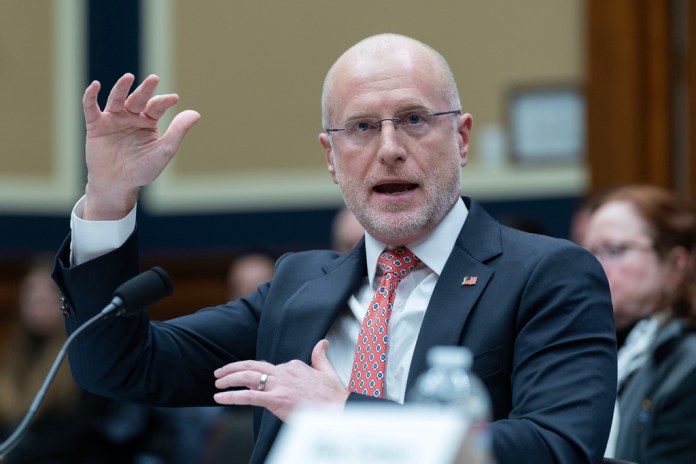
The unfolding drama surrounding Stephen Colbert’s interview with Texas state Representative James Talarico captivated even those at the highest levels of media regulation. Federal Communications Commission Chairman Brendan Carr admitted to being “highly entertained” by the entire affair, a rare public acknowledgement of amusement from a typically reserved regulator.
The core of the controversy stemmed from CBS News’s decision not to air the interview onThe Late Show. Colbert and CBS offered conflicting explanations – a direct ban versus “legal guidance” – leaving the public to speculate about the reasons behind the cancellation.
Talarico, currently vying for a U.S. Senate seat in Texas, ignited the firestorm with a claim on social media. He asserted that the FCC under the Trump administration had actively prevented the interview from airing, framing it as a deliberate suppression of information that threatened Donald Trump’s chances of retaining control of Texas.
Carr swiftly and emphatically dismissed Talarico’s accusation as a “hoax.” He argued that the situation was a calculated maneuver by a Democratic candidate exploiting media preconceptions to generate fundraising and online attention.
Talarico and Colbert maintained that the interview’s shelving was due to the FCC’s equal time rule, a regulation requiring broadcasters to offer equal opportunity to opposing candidates. This rule, they claimed, triggered CBS’s reluctance to air the segment.
The FCC isn’t solely focused on the Colbert interview. Carr confirmed the agency is pursuing an “enforcement action” againstThe Viewfor also airing an interview with Talarico, further highlighting the sensitivity surrounding equal time regulations during election season.
Interestingly, Colbert’s show is already slated to end its run in May, a decision CBS attributes to financial considerations. This adds another layer of complexity to the narrative, raising questions about whether the controversy accelerated an already planned departure.
Despite the controversy, Talarico reported a significant fundraising surge, claiming his campaign raised $2.5 million within 24 hours of the interview’s release on YouTube. The incident demonstrably amplified his visibility and financial resources.
Talarico faces a competitive Democratic primary against Representative Jasmine Crockett, with recent polls offering conflicting results. One poll showed Talarico with a slight lead, while another favored Crockett, indicating a fiercely contested race.
The Republican primary is equally tight, pitting incumbent Senator John Cornyn against Attorney General Ken Paxton, with Representative Wesley Hunt also in the mix. Early polling suggests a potential runoff election between Cornyn and Paxton, promising a prolonged and potentially divisive battle for the Republican nomination.