A former South Korean president, already imprisoned, is now challenging a life sentence handed down for actions taken during a tumultuous period in December 2024. The charge: rebellion, stemming from a brief but explosive imposition of martial law.
The conservative leader, defiant even in confinement, has denounced the conviction as illogical. He insists his actions were motivated solely by a desire to protect the nation and its people, leveling accusations of bias against the presiding judge.
His legal team is preparing a robust appeal, focusing on what they describe as factual errors and misinterpretations of the law within the original ruling. The case is now headed to a specialized panel at the Seoul High Court, established to handle matters of rebellion, treason, and subversion.
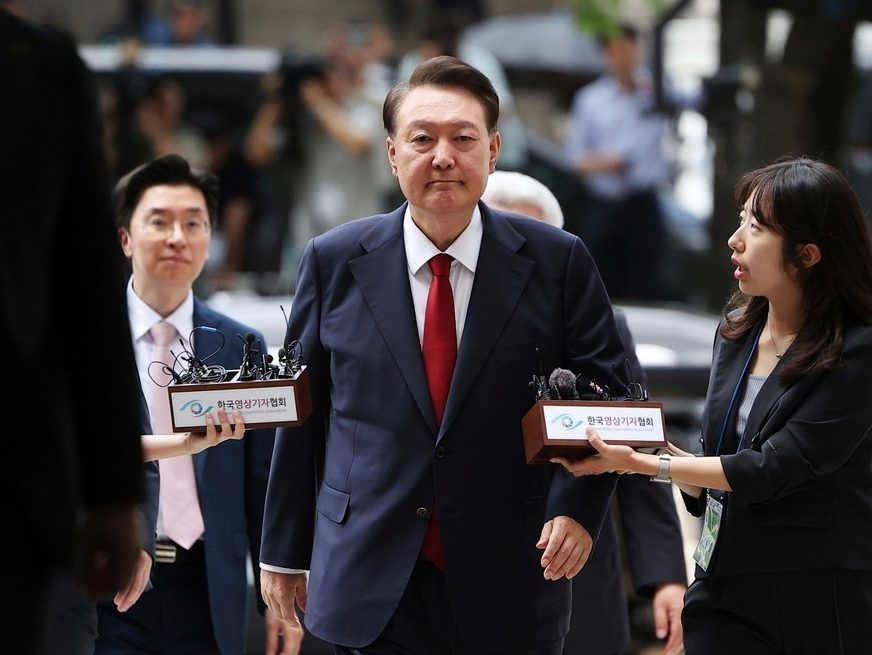
The core of the controversy lies in a late-night decree issued on December 3, 2024, placing the country under martial law. This lasted only six hours, dramatically ended when lawmakers physically breached a military and police blockade surrounding the National Assembly.
Within the Assembly, a vote swiftly overturned the decree, forcing the president’s cabinet to rescind it. This act ignited a political firestorm, ultimately leading to impeachment in December 2024 and formal removal from office by the Constitutional Court in April 2025.
The fallout didn’t end there. Re-arrested in July, the former president now faces eight separate criminal trials, with the rebellion charge carrying the most severe potential penalty. The brief martial law period plunged the nation into its most significant political crisis in decades.
Financial markets faltered, diplomatic efforts stalled, and the nation’s political landscape was thrown into chaos. Stability only began to return after a rival candidate, Lee Jae Myung, won a snap presidential election last June.
The former president has consistently defended his actions, framing the martial law decree as a necessary measure against what he characterized as “anti-state” forces within the legislature. He alleges these forces were deliberately obstructing his agenda through impeachment and budget cuts.
However, the Seoul Central District Court painted a starkly different picture, concluding that the president orchestrated a rebellion. The court found he unlawfully mobilized troops and police in an attempt to seize the legislature, arrest opponents, and consolidate unchecked power.
Prosecutors initially sought the death penalty, arguing the severity of his actions demanded the harshest punishment possible given the threat to South Korea’s democratic foundations. Even with the life sentence, the prosecution team has indicated potential for further appeal, citing reservations about specific findings.
Despite the severity of the sentence, South Korea has maintained a de facto moratorium on capital punishment since 1997, with no executions carried out and growing public calls for its complete abolition.
This case marks a historic moment, as the former president is the first in South Korean history to receive a life sentence since the late military dictator Chun Doo-hwan. Chun, initially sentenced to death in 1996 for a 1979 coup and subsequent atrocities, later had his sentence reduced to life imprisonment and was eventually pardoned.