Just sixty minutes. That’s all the time that passed between a man’s release from jail after a conviction for assaulting his partner, and his blatant violation of a court order designed to protect her. He went directly to her home, a chilling demonstration of the relentless cycle of abuse.
Windsor police were ready. They knew, with a grim certainty born of experience, that this scenario was tragically predictable. The 27-year-old was apprehended at the victim’s residence, charged with breaching his probation – a probation order meant to keep a dangerous distance between him and the woman he’d already harmed.
This wasn’t an isolated incident. Police describe these violations as an “epidemic,” a relentless wave of breaches that overwhelm resources and endanger lives. Last year alone, Windsor officers responded to approximately 450 probation breaches linked to intimate partner violence – a staggering number that underscores the systemic challenges.
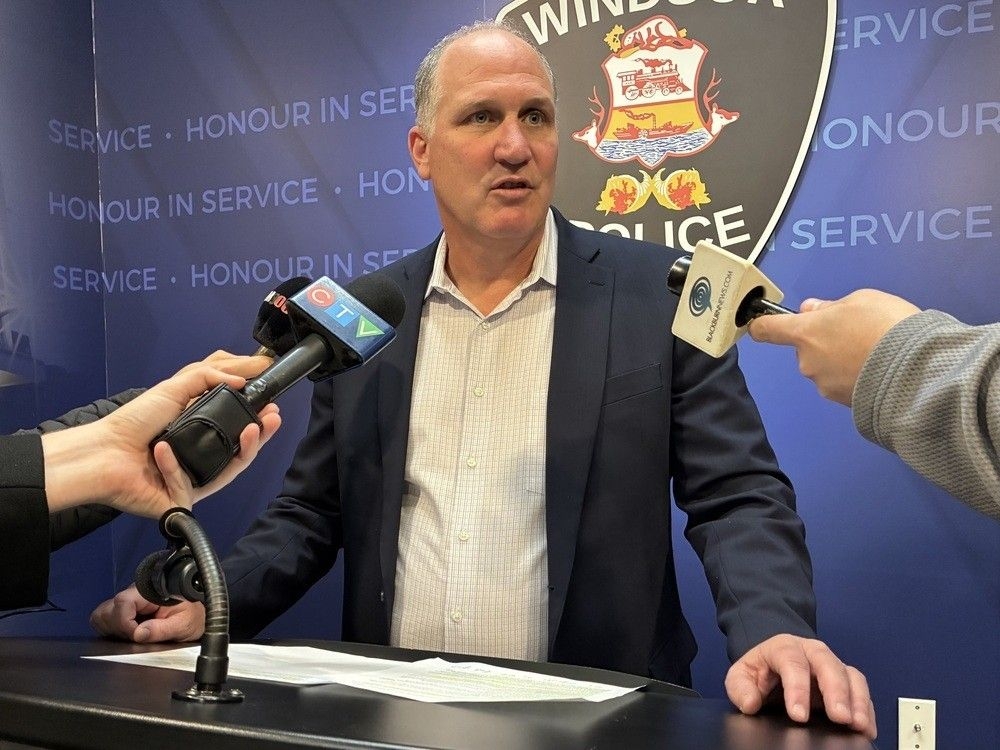
The police didn’t simply issue a statement this time. They held a press conference, a deliberate act to expose the sheer volume of these violations and demand a critical conversation about victim safety. The victim in this case had suffered serious physical injuries, and the court had explicitly forbidden the offender from approaching her home, workplace, or school.
Intelligence gathered by the special victims unit allowed officers to anticipate the offender’s actions. They discreetly moved the victim to a secure location, then strategically positioned themselves, waiting for the inevitable. As officers watched, he stepped out of a taxi and headed straight for her back door.
The arrest was swift and without incident, but the underlying message was stark. Even with clear conditions of release, even with the knowledge that a breach was likely, the system often struggles to prevent harm before it occurs. The suspect’s name was withheld, a crucial step to protect the victim’s identity and safety.
Police acknowledge the uncertainty inherent in these situations. They can’t guarantee an offender will comply, even with strict conditions. “That’s why they are released with probation orders with strict conditions,” explained Staff Sgt. Rich Sieberer. “We make sure, as a police service, that we enforce those conditions, and we want to do it before harm occurs, if possible.”
The call for change is growing louder. Officers are urging the justice system to impose tougher release conditions, recognizing that current measures often fall short. They envision a future where technology plays a more significant role, specifically advocating for increased use of GPS tracking to monitor offenders and provide victims with a greater sense of security.
“Why does the victim have to make these changes and look around, look over their shoulder all the time?” Sieberer questioned, highlighting the imbalance of responsibility. “We have the technology…where, if they go in a certain area, we would be notified.”
Recent statistics showing a slight decrease in reported intimate partner violence cases – a four percent drop – have been met with cautious skepticism by local advocates. They fear a false sense of progress, emphasizing that the issue remains deeply entrenched and underreported.
Police acknowledge this reality, recognizing that reported numbers only represent a fraction of the true scope of the problem. They credit the work of victim assistance coordinators and partnerships with local organizations like Hiatus House and Victim Services for providing crucial support to those affected, referring over 700 people to Hiatus House last year alone.
The message is clear: intimate partner violence is a hidden crisis, shrouded in silence and fear. Breaking that silence, making that first phone call, is the first step towards safety and healing. Support is available, and courage is the key.