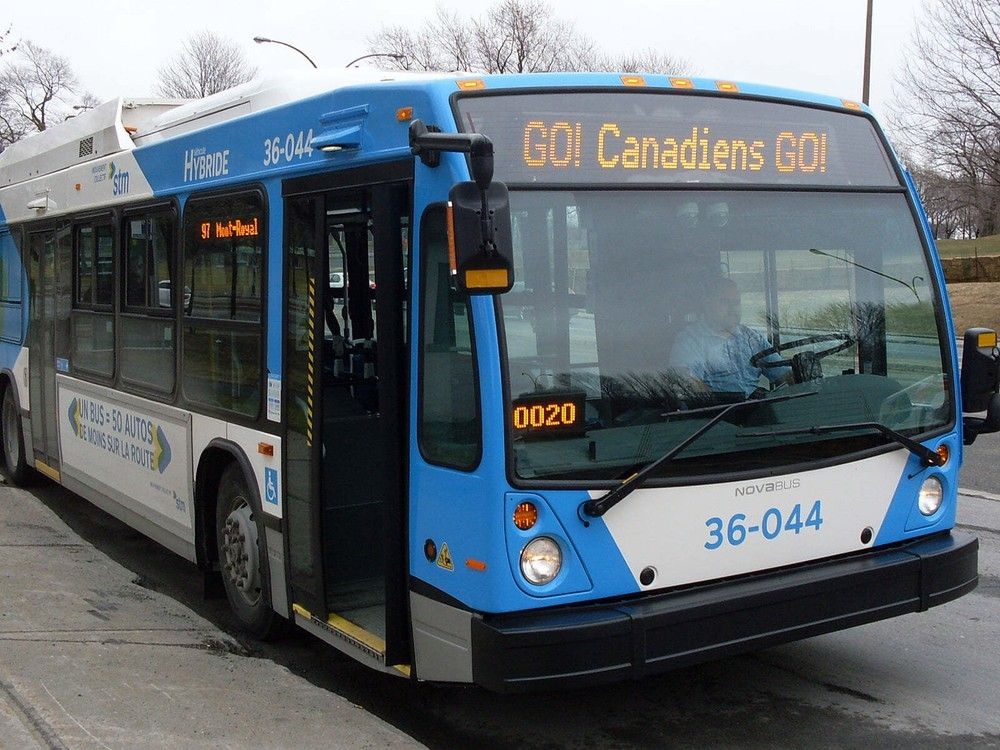
A city’s heartbeat pulsed with a quiet frustration. For ten months, the familiar rallying cry echoing through Montreal’s streets had been silenced – a single English word deemed unacceptable on the city’s buses.
The Société de transport de Montréal, the city’s transit agency, had quietly removed “Go” from its electronic message boards, responding to a formal language complaint. Messages like “GO! Canadiens GO!” vanished, replaced with the French equivalent, “Allez! Canadiens Allez!”
The decision, initially a response to the Office québécois de la langue française – Quebec’s language watchdog – ignited a surprising wave of public discontent. It wasn’t simply about a word; it was about a tradition, a shared expression woven into the fabric of Montreal’s hockey culture.
The outcry reached the ears of Jean-François Roberge, Quebec’s Minister of French Language. He publicly defended the use of “Go Habs Go,” declaring it “an expression that’s part of our DNA, our identity.” The sentiment resonated deeply with many Montrealers.
Behind the scenes, the language watchdog reconsidered its position. A review of the Grand dictionnaire terminologique, the official French-Canadian dictionary, revealed a surprising validation: the use of “Go” as an encouragement was, in fact, acceptable.
Now, the city is poised to restore a piece of its spirit. In the coming weeks, the familiar “Go” will once again illuminate the electronic displays on Montreal’s buses, a small victory for tradition and a testament to the power of collective voice.
The return of the word isn’t merely a linguistic shift; it’s a symbolic gesture, a reaffirmation of a shared identity. It’s a reminder that sometimes, the most powerful expressions transcend language itself.