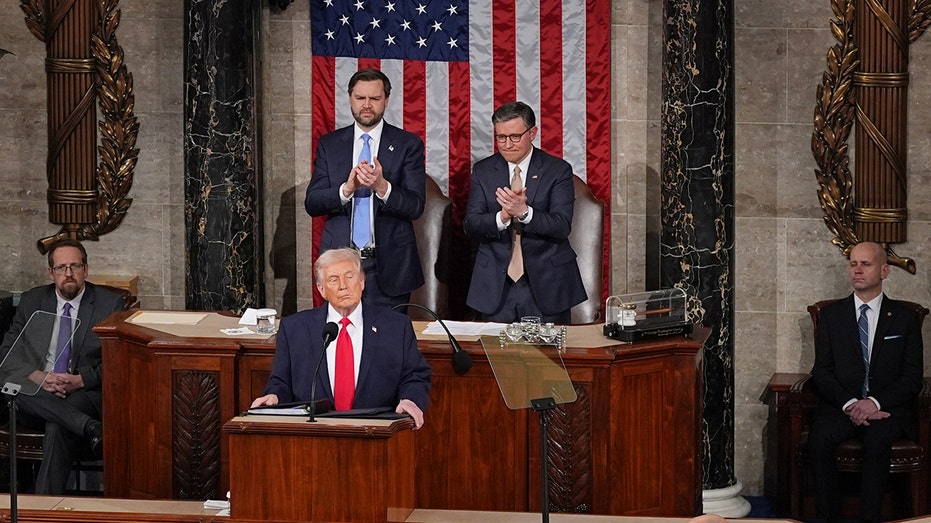
The State of the Union is, at its core, a declaration of intent. Every president, from Reagan to the present day, uses the platform to articulate what they hope to achieve – and what they want Congress to accomplish alongside them. These aspirations, however, are always tethered to a larger, undeniable truth: the pursuit of political power.
This year, President Trump laid out a clear agenda, comprised of two significant requests and a firm warning. He urged Congress to approve the SAVE Act, a measure demanding proof of citizenship for voting, and to enact a ban on stock trading for members of Congress. Simultaneously, he cautioned against any Congressional interference in his tariff policies.
Trump boldly presented his new tariffs as a potential replacement for the nation’s income tax system, a sweeping claim reflecting his willingness to leverage executive authority. He essentially directed lawmakers to relinquish their control over trade, stating that Congressional action would be “not necessary.” This assertion, however, directly challenges the constitutional authority granted to Congress.
The Supreme Court recently affirmed Congress’s power to impose tariffs, yet Trump proceeded to implement new ones under a different legal justification. This move underscores a familiar pattern: a president seeking to control the legislative agenda. But within his own party, resistance is brewing. Some Republicans, facing economic hardship in their districts due to the tariffs, are eager to reclaim that power – or at least publicly oppose the President’s actions.
The House recently attempted to dismantle a rule blocking the reversal of these tariffs, even passing a plan to undo tariffs with Canada. These actions, however, represent the aspirations of a minority, as most Republicans remain supportive of the tariffs, aligning with Trump’s wishes despite the Court’s ruling.
Of the two legislative requests, the SAVE Act holds the most significance for Trump. It directly reinforces his narrative surrounding illegal immigration, his claims of a stolen election, and accusations of widespread voter fraud. He painted a picture of rampant cheating, alleging that Democrats can only win through dishonest means.
However, evidence of widespread voter fraud remains remarkably scarce. A study by the conservative Heritage Foundation found only 39 instances of voting fraud in the swing state of Pennsylvania over the last three decades. Despite this, the SAVE Act has already passed the House, leaving its fate in the hands of the Senate.
Speaker Johnson believes every Republican Senator favors the Act, framing its passage as a matter of common sense. He suggests Democrats opposing it would be out of touch with public opinion. But the path forward is far from certain, particularly given the Senate’s procedural hurdles.
Notably, Trump did not call for an end to the Senate filibuster to expedite the SAVE Act’s passage. While fifty GOP senators currently support the bill, reaching the crucial 60-vote threshold needed to overcome a filibuster remains a significant challenge. Senate Majority Leader Thune has consistently resisted altering Senate rules to facilitate its passage.
Some Republicans advocate for a “talking filibuster,” requiring senators to actively debate and hold the floor to sustain an objection. This would force a vote, eliminating silent obstruction. However, a unified Republican stance on this issue is lacking, and maintaining party unity on every vote is a constant struggle.
Tensions are also simmering between House and Senate Republicans, with some Senators bristling at pressure from the House to abandon the filibuster. The right to filibuster is a deeply cherished privilege in the Senate, and subjecting the chamber to prolonged debate could expose vulnerable senators to uncomfortable votes on contentious issues, potentially harming their re-election prospects.
Thus, while passing the SAVE Act is a key aspiration for Trump, his position on the filibuster remains ambiguous. He also called for a ban on Congressional stock trading, a proposal that even garnered applause from Senator Elizabeth Warren. Speaker Johnson is committed to moving the bill forward, but acknowledges the need for sufficient votes – a hurdle that currently exists.
The House has yet to address the stock trading ban due to a lack of guaranteed support. For now, it remains an aspiration. This dynamic embodies the age-old adage that the president “proposes” and Congress “disposes.” Even with a supportive Congress, Trump’s legislative wishes may face obstacles. But even in the face of potential setbacks, a president is always free to dream.