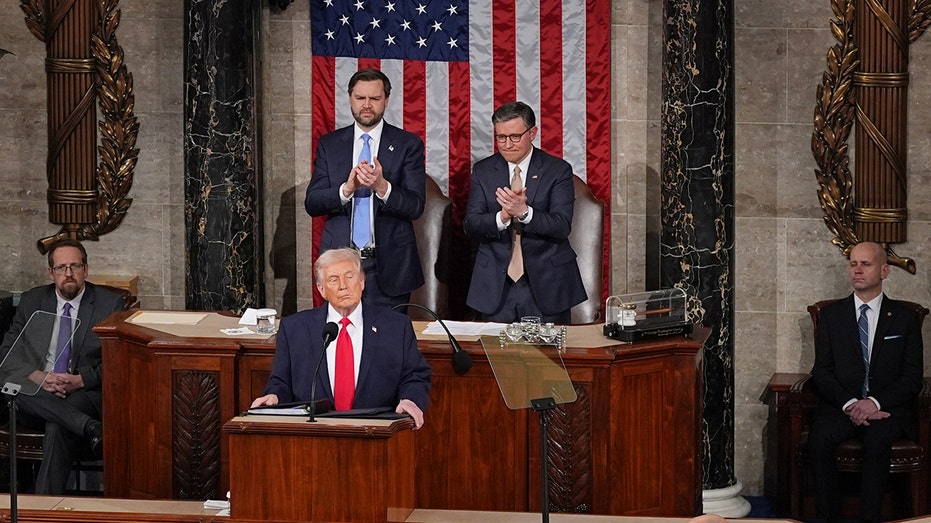
California Governor Gavin Newsom ignited a political firestorm during a recent interview, declaring that Vice President J.D. Vance poses a greater threat to the nation than former President Trump. The statement, made to Jen Psaki, immediately reverberated through the political landscape, raising eyebrows and sparking debate.
Newsom didn’t mince words, describing Vance as “dangerous” and suggesting a disturbing transformation. He claimed Vance had “put a mask on and his face grew into it,” a chilling metaphor hinting at a perceived lack of authenticity and a willingness to abandon previous principles.
This sentiment echoes a familiar pattern within Democratic circles. A recurring theme emerges: the current Republican adversary is always painted as more menacing than their predecessor. Once out of power, former Republican figures are often recast as “reasonable” alternatives, a stark contrast to the vitriol they faced while in office.

The examples are numerous. Figures like George W. Bush and Mitt Romney, once vilified by the left, are now viewed with a degree of acceptance by some, their past transgressions seemingly softened by the passage of time and the emergence of a new political foe. This dynamic suggests a shifting focus rather than a genuine change in perspective.
Newsom further labeled both Vance and Secretary of State Marco Rubio as “frauds” and “phonies,” specifically criticizing their apparent reversals on past criticisms of the former president. He singled out Vance, however, as uniquely dangerous, implying a more insidious form of political maneuvering.
The governor, widely considered a potential frontrunner for the 2028 presidential election, has consistently positioned himself as a staunch opponent of the previous administration’s policies. His recent comments, delivered shortly after the State of the Union address, underscore his growing concern about the future of American democracy.
Newsom issued a stark warning, describing the state of election security as a “code red” and expressing apprehension about the possibility of a third term for the former president. These anxieties fuel his increasingly visible campaign to establish himself as the inevitable Democratic candidate in the upcoming election cycle.
Beyond the political maneuvering, Newsom’s actions reveal a calculated strategy. He is actively seeking to embed himself in the minds of voters, particularly within his own party, through a relentless series of interviews and public appearances. This concerted effort aims to solidify his position as the leading contender for the nation’s highest office.
While Newsom presents himself as a defender of democratic values, his own record faces scrutiny. Critics point to challenges within California, particularly the slow pace of recovery following last year’s devastating wildfires, questioning his leadership and effectiveness as a governor.