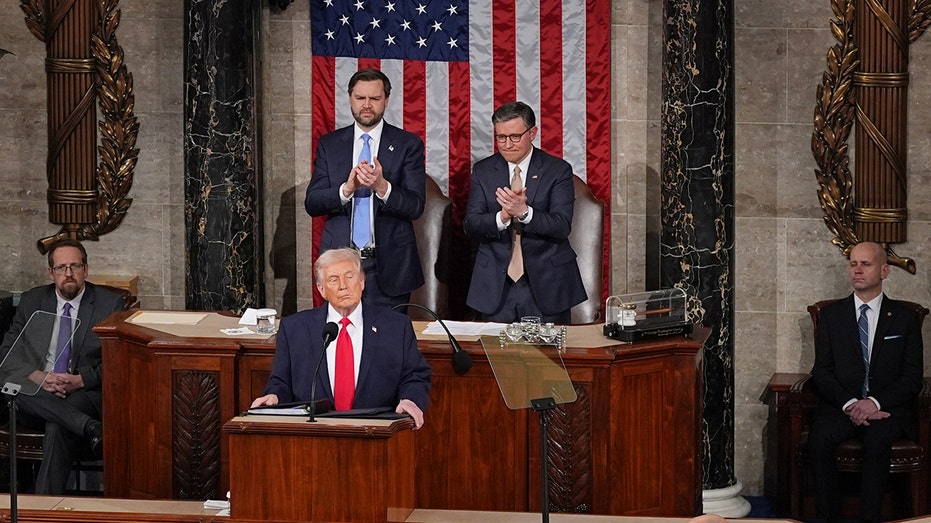
The State of the Union is, at its core, a declaration of intent. Every president, from Reagan to the present day, uses the platform to articulate what they hope to achieve – both for the nation and through the cooperation of Congress. These aspirations, however, are always tethered to a more fundamental goal: securing and maintaining political power.
President Trump’s recent address laid bare this dynamic. He issued two significant requests to Congress: passage of the SAVE Act, mandating proof of citizenship for voting, and a ban on stock trading for lawmakers. Simultaneously, he issued a firm directive – a rejection of any Congressional interference in his tariff policies.
Trump framed his new tariffs as a potential replacement for the income tax, a bold assertion of executive authority. He essentially instructed Congress to cede its constitutional power over tariffs, declaring, “Congressional action will not be necessary.” This move, though recently affirmed by the Supreme Court regarding Congress’s power, was executed unilaterally, leveraging a different legal justification.
The tension is palpable. While Trump seeks to control the legislative agenda, many Republicans, particularly those representing districts negatively impacted by the tariffs, are quietly considering a reclamation of that power. A recent House vote demonstrated this resistance, attempting to dismantle a rule blocking the reversal of existing tariffs, and even proposing a rollback of tariffs with Canada.
However, this represents the aspirations of a minority. The majority of Republicans remain aligned with Trump’s stance, regardless of the Supreme Court’s decision. The SAVE Act, however, is where Trump’s focus truly lies, aligning perfectly with his narrative surrounding immigration, election integrity, and accusations of widespread voter fraud.
Trump vehemently asserted that Democrats are actively attempting to “cheat” their way to victory, claiming that cheating is “rampant.” Yet, even conservative analysis, like that from the Heritage Foundation, reveals that instances of actual voter fraud are remarkably rare – a mere 39 cases identified in the swing state of Pennsylvania over three decades.
The SAVE Act has already passed the House, but its fate in the Senate remains uncertain. While a majority of Republican senators reportedly support the bill, securing the necessary 60 votes to overcome a potential filibuster presents a formidable challenge. The key question is whether enough Democrats will cross the aisle.
Interestingly, Trump did not call for an end to the filibuster in his plea for the SAVE Act’s passage. A growing number of Republicans advocate for a “talking filibuster,” requiring senators to actively debate and hold the floor, rather than silently objecting. This would force a vote, but lacks unified support within the party.
Senate leaders express concerns about the potential for amendment votes on controversial issues, which could prove damaging to vulnerable senators facing re-election. The delicate balance of power within the Senate, and the inherent value placed on the filibuster as a procedural tool, complicates the path forward.
Alongside the SAVE Act, Trump also called for a ban on Congressional stock trading – a proposal that even garnered applause from Senator Elizabeth Warren. However, House leadership acknowledges that the necessary votes for this legislation are not yet secured, leaving it, for now, as another aspiration.
The dynamic between the President and Congress is an age-old one: the President proposes, and Congress disposes. While Trump’s ambitions are clear, the ultimate outcome remains uncertain. Even in the face of potential roadblocks, a president is always free to dream of what could be.