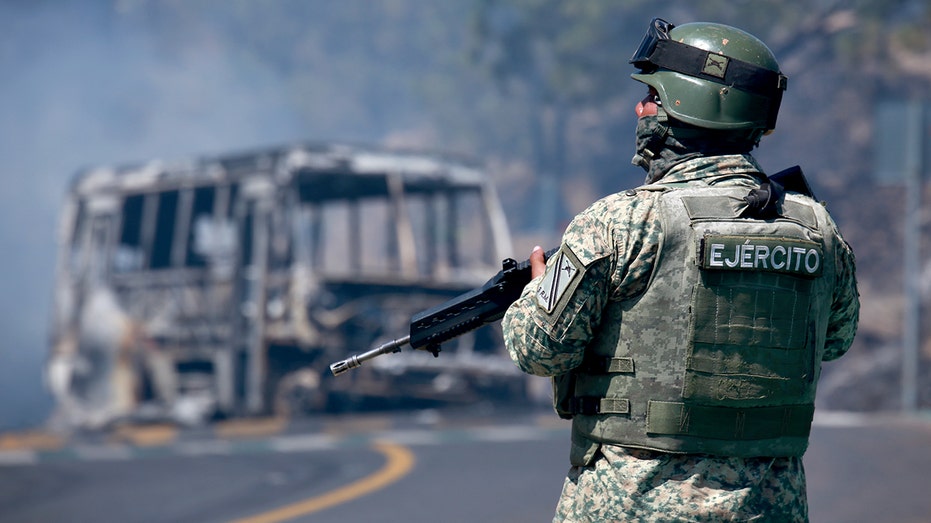
A shadow falls across Puerto Vallarta and the state of Jalisco. It isn’t a natural darkness, but one cast by the ruthless grip of powerful cartels, a siege unfolding on Mexican soil with chilling implications for the United States.
For forty years, these criminal organizations haven’t simply trafficked drugs; they’ve orchestrated a silent invasion. Tens of thousands of individuals, many armed with weapons of unimaginable devastation like fentanyl, have crossed our borders, not as migrants seeking opportunity, but as instruments of a calculated assault.
The situation demands a stark realization: the president isn’t merely authorized, but obligated to defend the nation. These cartels aren’t simply criminal enterprises; they effectively control a third of Mexican territory, wielding a terrifying quasi-sovereignty through extortion, intimidation, and the subversion of legitimate governance.
Recent administrations have struggled to contain the flow, but a previous president demonstrated the power of a secured border, halting the surge of illegal crossings and the influx of deadly narcotics. But can America truly afford to wait for the enemy to reach our shores before acting in self-defense?
History provides compelling precedent. Consider Thomas Jefferson, who, in 1801, dispatched Marines to the shores of Tripoli to confront Barbary pirates preying on American ships. Congress wasn’t in session, yet Jefferson acted decisively, authorizing a naval squadron to neutralize the threat – even sinking a pirate vessel off the coast of Malta without formal approval.
The echoes of decisive action resonate again in 1916, when Pancho Villa’s raiders launched a brutal attack on Columbus, New Mexico, leaving death and destruction in their wake. Major Frank Tompkins led his men fifteen miles into Mexico, engaging and decimating Villa’s forces, a “hot pursuit” justified by an 1882 treaty.
President Woodrow Wilson, facing a Mexican government unable to bring Villa to justice, deployed 4,800 soldiers on a punitive expedition, a bold move ultimately supported by Congress. The cartels, however, have inflicted far greater casualties on American citizens than either the Barbary pirates or Pancho Villa ever managed.
The DEA has repeatedly confirmed the grim reality: the drugs devastating American communities overwhelmingly originate south of the border. This isn’t a matter of border security alone; it’s a direct threat to the lives and well-being of American citizens.
Some argue that intervention would violate the War Powers Act, passed in 1973. Yet, even if such a challenge were to succeed – a feat never accomplished in court – the law simply mandates notification to Congress and limits initial military action to ninety days without further authorization.
The Founding Fathers, acutely aware of the dangers of a weak central government, intentionally granted the president broad authority to respond swiftly to national security threats. They understood that decisive action is often required to protect the nation, a lesson learned from the failures of the Articles of Confederation and the British refusal to relinquish American territory.
Recent operations, like “Southern Spear,” demonstrate a willingness to confront the problem directly, targeting drug smuggling vessels even before they reach American waters. This proactive approach mirrors the spirit of Jefferson and Wilson, refusing to passively await an attack on our soil.
For decades, the cartels have profited from addiction, flooding our nation with deadly drugs, and facilitating the entry of individuals who pose a clear and present danger. Whether they operate within our borders or beyond, the president possesses the legal foundation to pursue justice and safeguard the American people.