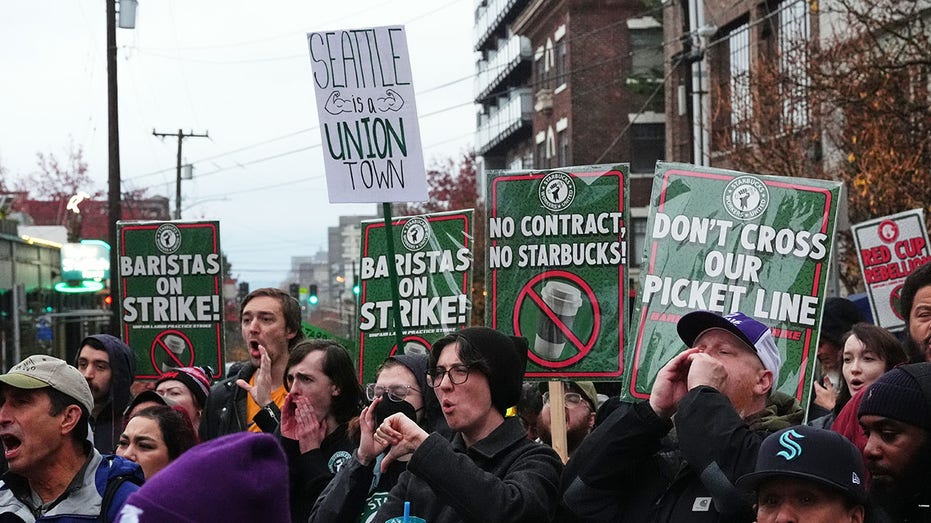
A quiet frustration echoes across the American workforce: “I like unions… I just don’t like *my* union.” It’s a sentiment heard repeatedly, a disillusioned whisper from employees who feel let down by the very organizations meant to protect them. Many describe officials who are unresponsive, even detrimental, to the needs of those they represent, and a sense of powerlessness when attempting to enact change from within.
This isn’t a fringe opinion. Polling reveals a broad approval of the *idea* of unions – roughly two-thirds of Americans view them favorably. Yet, actual membership remains strikingly low. Only 9% of American workers currently belong to a union, a figure that has remained stubbornly stagnant for decades.
Recent data from the Bureau of Labor Statistics confirms this disconnect. Union membership hovers around a mere 10%, a slight uptick from the previous year, but still historically low. The private sector, in particular, shows little enthusiasm, with a record-low 5.9% membership rate – a stark contrast to the over 20% seen in 1980.
Even the number of workers actively attempting to unionize is declining. The National Labor Relations Board oversaw 30% fewer union elections in the last year, and participation in those elections dropped by a staggering 42%. This suggests a growing apathy, a sense that the effort simply isn’t worth the struggle.
The public sector paints a different, though equally complex, picture. Government employees – teachers, state workers, and city staff – boast a significantly higher unionization rate of 32.9%. This represents a small increase, the first in years, driven primarily by gains in federal and state employee membership.
However, this higher rate doesn’t necessarily indicate superior representation. Increasingly, the same union officials operate in both the private and public sectors. The United Auto Workers, for example, now represents more graduate student workers than autoworkers, a significant portion of whom are employed by public institutions.
The core issue lies in the fundamental differences between the sectors. In the private sector, aggressive union tactics can, paradoxically, contribute to a company’s downfall. The Teamsters’ recent victory at UPS, securing substantial pay increases and benefits, was followed by the announcement of 78,000 job cuts – a stark illustration of the long-term consequences of “monopoly bargaining.”
Economic factors certainly play a role, but research indicates a clear pattern. Studies show that union-negotiated gains often increase employer costs, leading to reduced output and, ultimately, workforce reductions. Fewer workers mean fewer union members – a self-defeating cycle.
Public employers, however, rarely face the same existential threat. They don’t go out of business, and service cuts are often politically unpalatable. When government unions secure raises or benefits, the burden falls directly on taxpayers. A recent 13% wage increase for school staff in Los Angeles, for instance, contributed to a projected $877 million deficit.
The difference is power. Private sector union officials negotiate with individuals driven by profit and survival. Public sector officials negotiate with politicians, often beholden to the very unions that fund their campaigns. This creates a dangerous dynamic, prioritizing political influence over the needs of individual workers.
Ironically, it’s often public school teachers who express the deepest dissatisfaction with their unions. And their frustration is fueling a growing trend: declining membership, even within the public sector. The peak unionization rate for public employees was 38.7% in 1994 – a significant drop from today’s figures.
The problem isn’t simply about money; it’s about a betrayal of core principles. Government unions are increasingly consumed by ideology and political maneuvering, spending vast sums – $650 million collectively by the four largest in 2024 – on activism and electioneering, funded directly by member dues.
Workers are losing patience. They’re voting with their feet, choosing to forgo union representation rather than remain within systems they perceive as ineffective or self-serving. Until unions prioritize the genuine needs of their members over short-term gains and political power, this trend will continue, eroding both membership and trust.