Nearly three decades after a moment that gripped the nation, former President Bill Clinton is facing renewed scrutiny. He is scheduled to provide a deposition connected to the Epstein scandal, a date eerily close to February 28, 1997 – a day forever etched in history.
That 1997 date marks the alleged encounter with White House intern Monica Lewinsky, an event initially met with a firm public denial. The details, as documented in the report by independent counsel Kenneth Starr, centered around a navy blue dress, a garment that would become a pivotal piece of evidence.
Lewinsky, under an immunity agreement, revealed she wore the dress during a sexual encounter with the President. Subsequent analysis of stains on the fabric led investigators to request a DNA sample from Clinton himself, collected within the White House Map Room.
The results were conclusive: the President’s DNA was found on the dress, with genetic markers so rare they appeared in only one in 7.87 trillion Caucasian males. This evidence directly contradicted Clinton’s sworn testimony in a separate legal matter, the Paula Jones case, where he had unequivocally denied any sexual contact with Lewinsky.
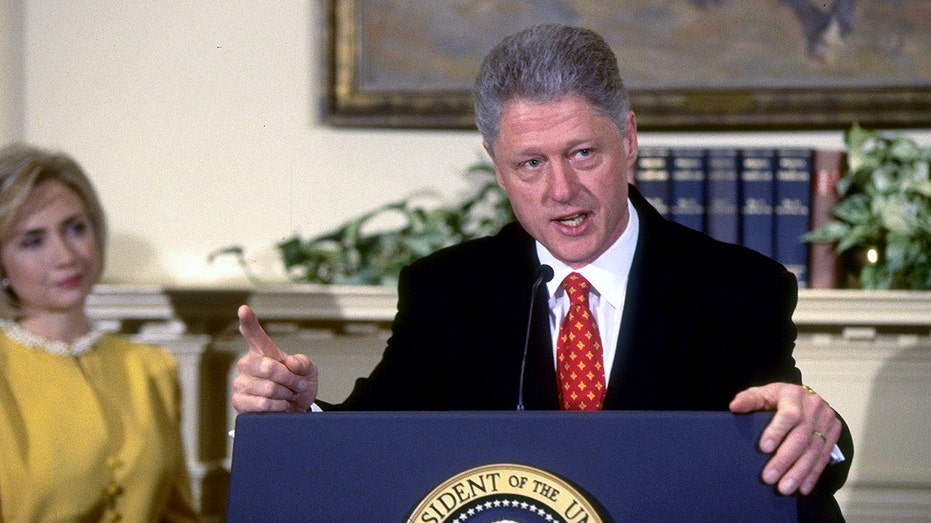
“I did not have sexual relations with that woman, Miss Lewinsky,” Clinton declared publicly, a statement that would later be challenged by the weight of forensic evidence. He vehemently maintained his innocence, insisting no one had been instructed to lie on his behalf.
The fallout was immense. The House of Representatives impeached Clinton, though the Senate ultimately voted against his removal from office. The scandal left an indelible mark on his presidency and American political history.
Adding another layer of intrigue, a disturbing painting surfaced within the Justice Department’s Epstein Files. The artwork depicts Clinton in a provocative pose, seemingly wearing Lewinsky’s blue dress. Clinton has stated he had no knowledge of the painting’s existence and did not commission it.
The significance of February 28th extends beyond the Lewinsky affair. In 1989, federal authorities effectively shut down Madison Guaranty Savings & Loan, a financial institution owned by Clinton ally Jim McDougal. This action would ultimately trigger the Whitewater investigation, a probe that would later encompass the Lewinsky scandal.
The Whitewater investigation, initially focused on real estate dealings in the Ozarks, began in 1994. While the Clintons were ultimately exonerated of wrongdoing related to the land transactions, the investigation unearthed the affair with Lewinsky and the subsequent accusations of perjury.
The roots of the impeachment proceedings, therefore, trace back over a decade to the scrutiny of a resort community project and the financial dealings of politically connected individuals. Rising interest rates in the late 1970s had initially stalled the development, setting in motion a chain of events that would dramatically reshape the political landscape.
Jim McDougal’s control of Madison Guaranty Savings & Loan became central to Starr’s investigation, raising questions about potential improper connections between loans and the Whitewater project. While the Clintons faced intense scrutiny, they were never charged, but McDougal and others were ultimately convicted of related crimes.