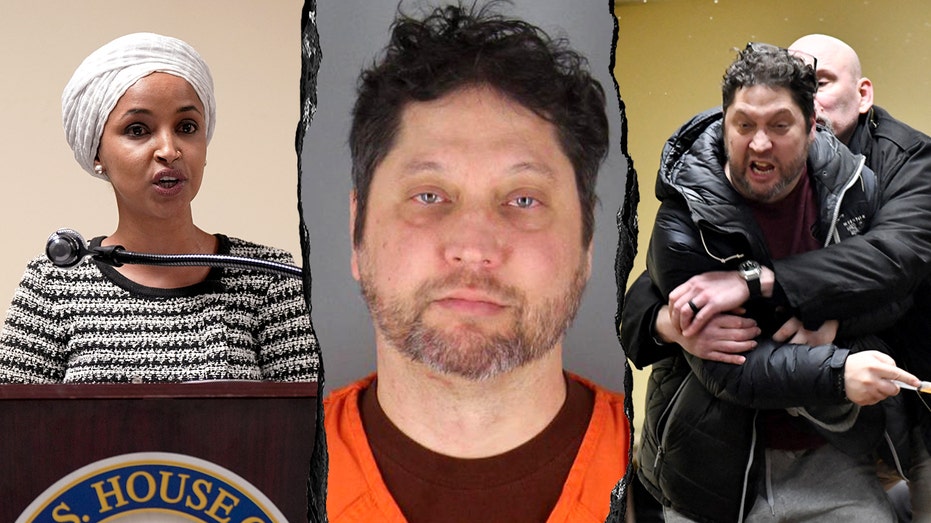
A man accused of a startling attack on Representative Ilhan Omar during a public town hall meeting will remain jailed as he awaits trial. The incident, involving a syringe filled with apple cider vinegar, unfolded as Omar addressed her constituents in Minneapolis last month, leaving many shaken and raising serious questions about political safety.
Magistrate Judge David Schultz deemed the circumstances “exceedingly serious and dangerous,” ordering 56-year-old Anthony Kazmierczak held without bail. The judge explicitly stated that no set of release conditions could guarantee public safety should Kazmierczak be freed before facing a jury.
The alleged assault occurred while Omar was passionately discussing immigration policy, calling for accountability within U.S. Immigration and Customs Enforcement and even suggesting the agency’s abolition. She had also publicly demanded the resignation, or impeachment, of Homeland Security Secretary Kristi Noem at the time of the incident.
According to police reports, Kazmierczak confessed to squirting the vinegar at Omar immediately following his arrest. He now faces felony charges of terroristic threats and fifth-degree assault, carrying potentially significant penalties.
During his initial court appearance, Kazmierczak was notably dressed in a yellow jumpsuit, a detail highlighted by his court-appointed attorney, John Fossum. Fossum revealed this attire indicated his client was being held in solitary confinement, raising concerns about Kazmierczak’s well-being.
Fossum also voiced anxieties regarding Kazmierczak’s mental state, though details remain limited. The accused waived his right to a hearing to challenge the probable cause for his arrest, moving the case directly toward trial preparation.
Kazmierczak’s past reveals a history of legal trouble, including two convictions for driving while intoxicated in 2009 and 2010. The 2010 conviction resulted in a brief jail sentence and five years of supervised probation, while the earlier offense led to 30 days of home detention.
The case has sparked widespread discussion about the increasing polarization of political discourse and the potential for violence directed at elected officials. The focus now shifts to the upcoming trial and the pursuit of justice for both Omar and the community impacted by this unsettling event.


