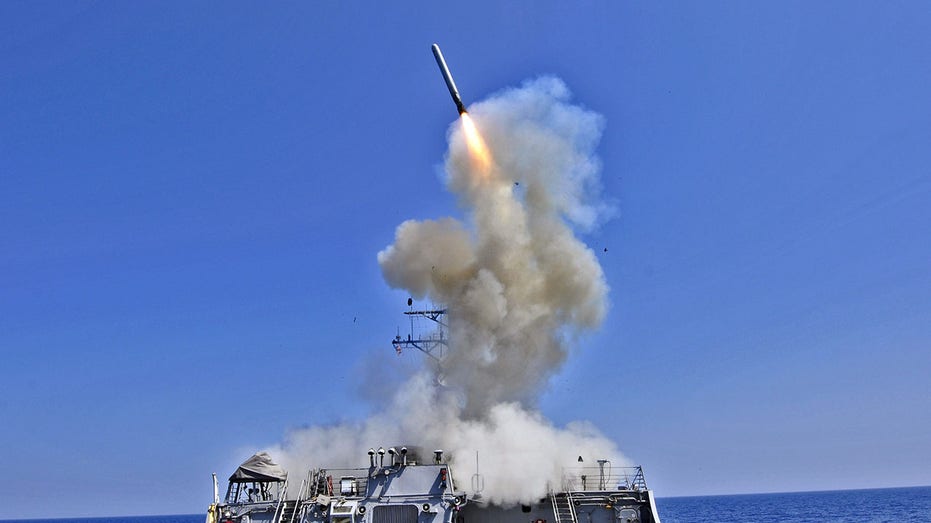
The first strike in a recent operation against Iranian targets began with the Tomahawk missile, a weapon that has become synonymous with American rapid response. Launched from hidden positions aboard Navy ships and submarines, this long-range cruise missile represents a unique capability in the U.S. arsenal.
Imagine a missile roughly half the length of a telephone pole, silently traversing the skies at the speed of a commercial airliner. The Tomahawk carries a devastating 1,000-pound warhead, capable of reaching targets nearly the distance between Washington, D.C., and Miami. This incredible range allows for decisive action without risking pilots or deploying large ground forces.
For decades, presidents have turned to the Tomahawk when a firm, yet limited, response is required. Its precision targeting minimizes collateral damage and reduces the potential for wider conflict, making it a preferred option for sending a clear message. From the 1990s strikes in Iraq to recent operations in Syria, the Tomahawk has consistently been the first choice.
Military analysts point to the missile’s reliability and the reduced risk to American personnel as key factors in its frequent deployment. It offers a way to demonstrate resolve quickly, while carefully avoiding the escalation of a crisis into a full-scale war. This combination of speed, distance, and accuracy has cemented its place in U.S. military strategy.
Introduced in the 1980s and first used in combat during the 1991 Gulf War, the Tomahawk has been deployed over 2,350 times. Each missile carries a hefty price tag of approximately $1.4 million, yet its value lies in the strategic advantage it provides – a range of 800 to 1,553 miles launched from over 140 ships and submarines.
However, consistent use has created a growing concern. The demand for Tomahawks has consistently outpaced production, raising questions about maintaining a sufficient stockpile for future contingencies. This reliance on a proven weapon is now facing the reality of dwindling numbers.
The recent strike was not an isolated event, but part of a larger, carefully orchestrated military posture. A significant U.S. naval presence has been building in the region, a display of force intended to exert pressure and demonstrate a credible threat. This deployment speaks volumes about the seriousness of the situation.
At the heart of this presence are two powerful aircraft carrier strike groups – the USS Abraham Lincoln and USS Gerald R. Ford – each supported by a fleet of destroyers and cruisers. These groups are capable of sustained air and missile operations, providing a formidable deterrent. Dozens of additional warships further bolster the U.S. presence in the area.
While the immediate response from Iran remains uncertain, past statements suggest potential retaliation in the event of direct U.S. military action. The situation remains volatile, with the potential for further escalation hanging in the balance. The world watches, awaiting the next move in this complex and dangerous game.