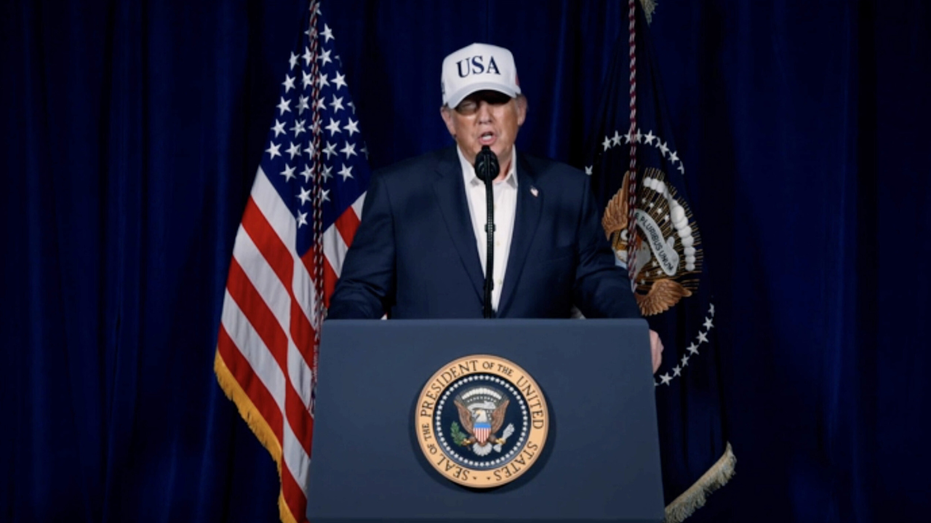
The first light of dawn found President Trump in the war room at Mar-a-Lago, a silent observer as a meticulously planned operation unfolded thousands of miles away. Operation Epic Fury had begun, targeting key strategic locations within Iran. The atmosphere was thick with anticipation, the weight of the world pressing down on the shoulders of those present.
Images released revealed a focused President, surrounded by his closest advisors, their faces illuminated by the glow of monitors displaying real-time intelligence. Every detail was scrutinized, every movement analyzed as the operation progressed with swift precision. The room was a hub of controlled intensity, a stark contrast to the quiet elegance of the estate surrounding it.
Confirmation arrived in the early hours: Ayatollah Ali Khamenei, Iran’s Supreme Leader, was confirmed deceased. Intelligence reports indicated his location had been successfully targeted, a pivotal moment in the unfolding events. The news reverberated through the war room, a collective exhale of tension and relief.

Israeli officials swiftly verified the reports, confirming the discovery of Khamenei’s body. This development marked a significant turning point, the culmination of years of escalating conflict and strategic planning. The operation’s success signaled a dramatic shift in the geopolitical landscape.
The strikes were not merely military actions; they represented a calculated response to years of escalating aggression and destabilizing influence. Operation Epic Fury was designed to dismantle the infrastructure supporting Iran’s most dangerous capabilities, aiming to restore a fragile balance of power in the region. The world watched, holding its breath, as the consequences of this bold move began to unfold.