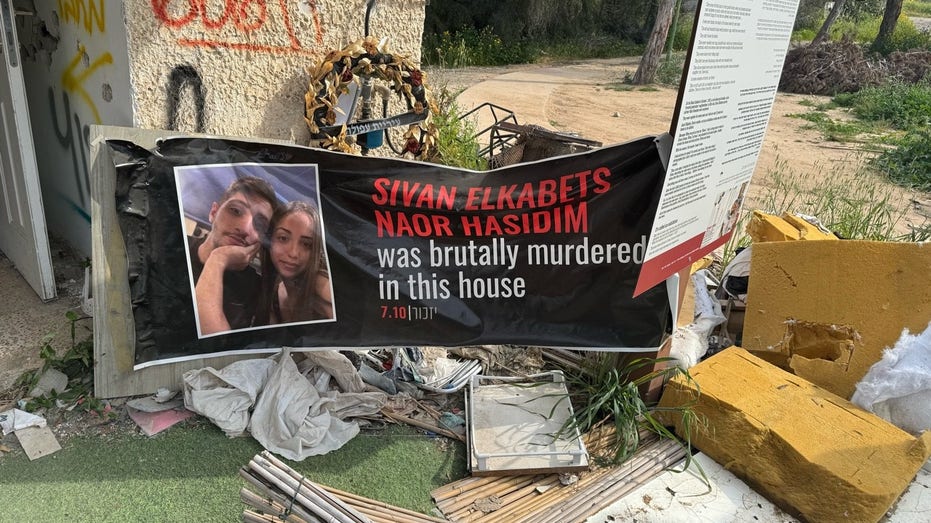
The “Return to October” exhibition recreates the Hamas‑led assault of October 7, 2023, using video, declassified Israel Defense Forces intelligence and planning materials recovered in the Gaza Strip.
Organized by the Israel Intelligence Heritage & Commemoration Center, a nonprofit dedicated to honoring fallen intelligence personnel, the 600‑square‑meter display includes vehicles used in the attack, a film on hostage abductions, a replica Hamas tunnel and excerpts from a 47‑minute compilation of raw IDF footage.
According to Yossi Kuperwasser, head of the Institute for the Research of the Methodology of Intelligence, the exhibition demonstrates that Hamas prepared the invasion over an extended period with a high degree of organization and professional intelligence‑gathering.
Seized documents reveal that Hezbollah refrained from fully joining the operation out of fear of a major Israeli response, and they shed light on the extent of Tehran’s involvement with Hamas.
The presentation emphasizes that hostile groups continuously plan large‑scale terrorist attacks and that complacency regarding their preparations is a grave miscalculation.
The opening room features a map marking 114 border breach points, red circles indicating attacked communities and a dotted line tracing where the assault was halted; roughly 4,300 Hamas, Palestinian Islamic Jihad and affiliated operatives entered Israel, followed by an additional 1,500‑1,700 Gazans described as uninvolved civilians.
Weapons on display include Egyptian, North Korean, Russian, Chinese and Iranian models, alongside arms supplied to Hamas by Hezbollah.
A guide presented a kidnapping kit containing handcuffs, electric shock devices and sedatives, as well as a “spiritual kit” with a miniature Quran and a religious ruling calling for the killing of Israelis.
Military gear belonging to former Hamas leader Yahya Sinwar is exhibited together with a handwritten directive recovered from the European Hospital in Gaza, instructing operatives to attack, burn villages, kidnap, humiliate soldiers and document actions with GoPro cameras for social media.
Additional materials include aerial photographs used to map Kibbutz Be’eri, an operational plan dated October 6 shared only with senior Hamas commanders, and a booklet translating Arabic phrases into Hebrew.
Shelves hold books recovered from Gaza, among them copies of Mein Kampf found in schools, while photographs show children posing with weapons after attending Hamas summer camps, illustrating the early indoctrination of youth.
One room focuses on the exploitation of journalists and UNRWA facilities, presenting claims that a majority of reporters killed in Gaza were affiliated with Hamas, a photo of a UNRWA school allegedly used as a combat headquarters, and a map labeling Israeli towns with Arabic names.
A garage‑like space displays a white Toyota pickup and numerous motorcycles used in the assault; officials noted that 153 pickups and 350 motorcycles entered Israel that day, many imported into Gaza through Ashdod Port.
Excerpts from the IDF’s raw footage compilation are shown in a dedicated room, where the graphic content prompted strong emotional reactions from visitors.
A corridor lists the names and photographs of the 1,224 victims—soldiers, police officers, civilians of diverse faiths and backgrounds—arranged alphabetically.
The final room features video of Israeli hostages reuniting with their families and concludes with an optimistic painting depicting a thriving southern Israel.