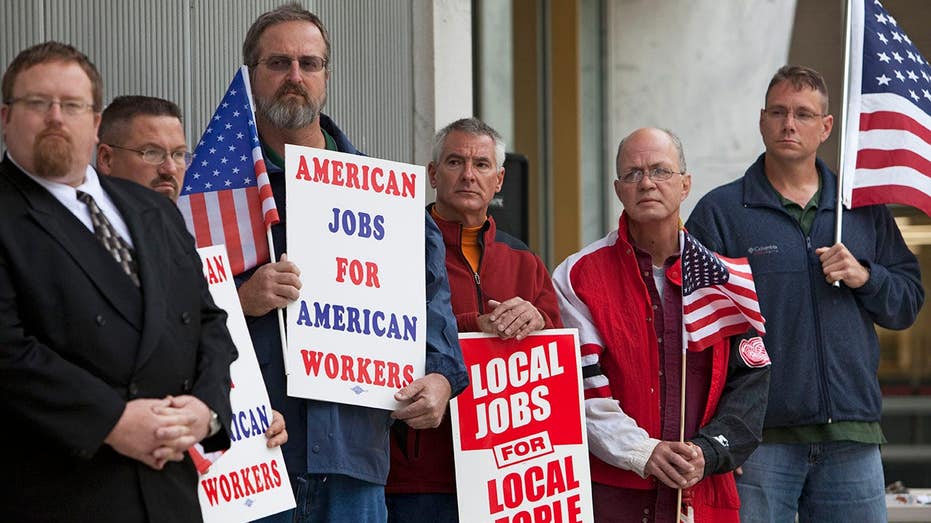
The H‑1B visa program has long been presented as a merit‑based gateway for highly skilled foreign workers. In practice, many positions granted under the program are entry‑level roles with salaries well below local median wages.
Data from recent years show that 83% of H‑1B petitions were for entry‑ and junior‑level employees, highlighting a mismatch between the program’s intended purpose and its actual use.
Labor authorities have also found that the minimum wages required for H‑1B workers are, on average, $19,000 lower than wages earned by U.S. workers in comparable occupations and locations.
The Optional Practical Training (OPT) program permits foreign students to remain in the United States for up to three years after graduation, provided they report employment. The program imposes no cap on participants, requires no prior attempts to hire Americans, and does not enforce a minimum salary threshold.
Because OPT participants can stay on a student visa, employers often avoid payroll taxes, creating an incentive to favor foreign workers over domestic candidates.
Foreign students may transition from OPT to an H‑1B visa with the same employer, and a legal provision allows them to pursue permanent residency while working.
Investigations have uncovered thousands of cases in which foreign students claimed employment with nonexistent or suspect employers, and a network of universities sold counterfeit degrees to secure visas.
Analysis of census data indicates that over 11 million working‑age Americans holding STEM degrees remain unemployed in STEM fields, underscoring a surplus of qualified domestic talent.
Large employers have been observed replacing domestic workers with foreign workers obtained through these visa programs, often citing cost and skill gaps as justification.
The structure of the H‑1B and OPT programs facilitates the large‑scale entry of foreign workers with minimal oversight, a design that has been maintained without significant reform.
A comprehensive overhaul of the legal immigration framework is necessary to address systemic issues and align visa policies with labor market realities.
Eliminating the H‑1B and OPT programs could serve as a long‑term solution, ensuring that employment opportunities are allocated based on domestic labor needs and merit.