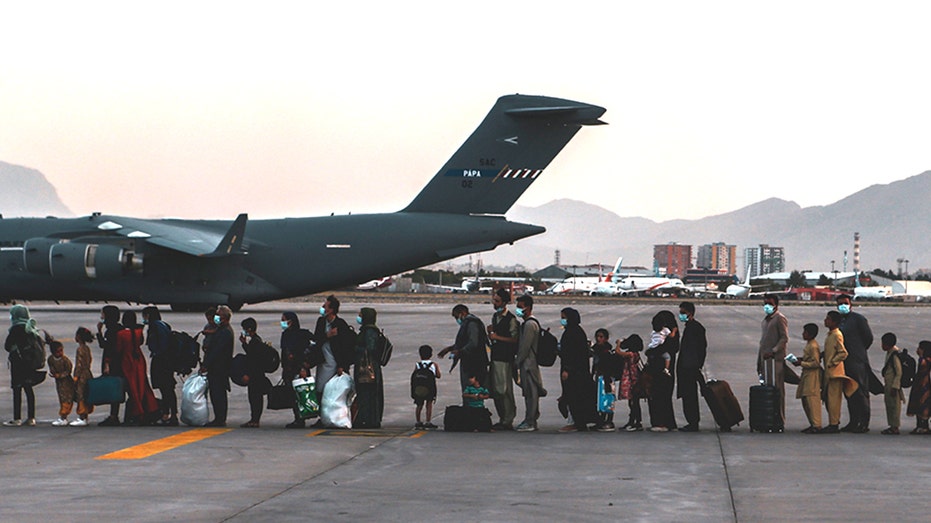
A wave of arrests has been carried out by U.S. Immigration and Customs Enforcement, targeting Afghan nationals who entered the country following the tumultuous withdrawal from Afghanistan. These individuals arrived under Operation Allies Refuge and Operation Allies Welcome, programs intended to provide safe haven to those who assisted the U.S. mission.
However, authorities have discovered a disturbing reality: among those admitted were individuals with serious criminal histories. The charges are deeply troubling, ranging from violent assaults to heinous acts against children, raising profound questions about the vetting process.
The Department of Homeland Security has characterized the situation as a significant national security crisis, asserting that inadequate background checks and vetting procedures were implemented during the initial influx of Afghan nationals. Concerns are mounting over the potential risks posed to public safety.
This revelation follows the recent ambush in Washington, D.C., where a National Guard member was killed and another wounded. The suspect, also an Afghan national who had undergone CIA vetting, further intensified scrutiny of the screening protocols.
In response, the Department of State has temporarily halted the processing of visas for individuals traveling on Afghan passports, signaling a heightened level of caution and a reassessment of security measures. A comprehensive review is underway to address the vulnerabilities exposed.
On August 29th, ICE arrested Qesmat Din Zafran, who entered the U.S. under Operation Allies Refuge. His past includes a conviction for lewd and lascivious acts with a minor, a crime that sent shockwaves through the system.
Mansour Walizada, arrested on October 2nd, also arrived through Operation Allies Refuge and carries a history of sexual battery convictions, alongside an arrest for child fondling. The details of his case are particularly disturbing.
Mohammad Tabesh Rasoli, apprehended on June 8th, faced charges for a hit-and-run incident resulting in serious bodily harm. Reports indicate he struck a pedestrian while traveling at a dangerous speed of 50 mph.
Javid Ghamgeen, taken into ICE custody on May 8th, had previously been held by the Iowa Department of Corrections. His criminal record includes convictions for methamphetamine possession, burglary, and aggravated assault against a public officer.
The arrests continued with Asirullah Khalid-Khan, detained on October 9th, who is accused of kidnapping and faces an arrest for rape. His case underscores the gravity of the security lapses.
Said Mohammad Tanai, arrested on July 21st, has a conviction for assault with intent to commit sex abuse. Each arrest paints a grim picture of the potential consequences of insufficient vetting.
Authorities are now working tirelessly to identify and remove these individuals, deemed public safety threats, from the country. The focus is on mitigating the risks and ensuring the safety of American citizens.
The unfolding situation has ignited a fierce debate about national security protocols and the balance between humanitarian efforts and public safety. A thorough investigation is expected to reveal the full extent of the failures and lead to critical reforms.