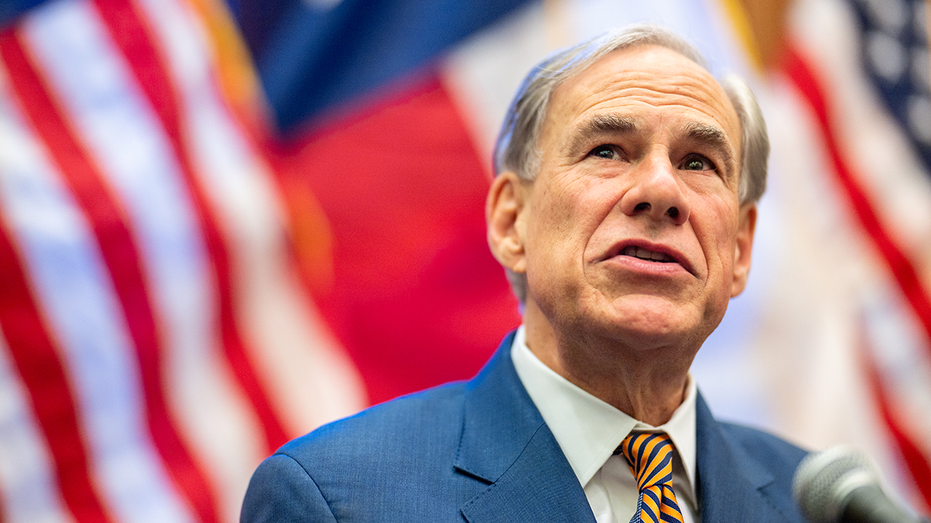
The Supreme Court has delivered a significant signal, suggesting Texas will likely succeed in defending its newly redrawn congressional map. The decision rebukes a lower court for what the Justices deemed a misinterpretation of evidence and a failure to adhere to established legal principles, as the state rapidly approaches critical 2026 election deadlines.
In a concise order, the Court maintains the map crafted under Governor Greg Abbott’s direction, at least for the immediate future. The core of the Court’s concern centered on two key errors by the District Court: failing to presume good faith from the state legislature when evaluating disputed evidence, and refusing to accept a clear inference against those challenging the map who offered no alternative that fulfilled Texas’s partisan objectives.
While the stay is currently temporary, pending a full review of the case, Justice Elena Kagan issued a stark dissent. She warned that the ruling effectively cements the contested district boundaries for the 2026 midterms, given the pressing deadlines within the state. Kagan argued the Court prematurely inserted itself into a role typically reserved for lower courts.
Kagan’s dissent powerfully asserted that the Court’s action guarantees the implementation of a map designed to maximize partisan advantage for the upcoming House of Representatives elections. She further contended that the decision unjustly places citizens into districts based on their race, a clear violation of constitutional principles, in her view.
This ruling unfolds against a backdrop of an unprecedented national battle over redistricting, fueled by former President Donald Trump’s strategic effort to solidify the GOP’s control of the House heading into 2026. This campaign originated in Texas and has quickly expanded to numerous other states.
Driven by the memory of losing the House majority during his first term in 2018, Trump initiated the idea of a mid-decade congressional redistricting – a rare but legally permissible maneuver. The goal was straightforward: to redraw district lines in states with Republican majorities, bolstering the GOP’s slim House advantage and safeguarding control of the chamber in the challenging 2026 midterms.
Texas was identified as the prime target. Following Trump’s initial proposal, Governor Abbott convened a special session of the state legislature, dominated by Republicans, to enact the new map. Democratic lawmakers responded by temporarily breaking quorum, fleeing the state in a desperate attempt to delay the bill’s passage.
Despite the Democrats’ efforts, the legislature ultimately passed the bill, and Governor Abbott signed it into law in late August. The new map immediately faced legal challenges, and the actions of the fleeing lawmakers galvanized Democrats nationwide.
The fight against Trump’s redistricting efforts quickly gained momentum, drawing in Democratic governors like Gavin Newsom of California. California voters recently approved Proposition 50, temporarily shifting the power to draw congressional maps from the state’s nonpartisan commission back to the Democratic-controlled legislature.
This move is expected to create five additional Democratic-leaning districts in California, directly countering Texas’s efforts to redraw its maps in favor of the GOP. However, the battle extends far beyond these two states.
Missouri, North Carolina, and Ohio, all leaning right, have also adopted new maps as part of Trump’s broader strategy. Indiana’s legislature is currently considering redistricting, while Florida and Kansas are also exploring the possibility. Trump himself publicly emphasized the urgency, stating, “We must keep the Majority at all costs.”
Even some blue states are taking action. Illinois, Maryland, and Virginia, where Democrats hold legislative control, are either implementing or seriously considering redistricting plans. However, Republicans have faced setbacks as well; a Utah judge recently rejected a map drawn by the state’s GOP legislature, approving an alternative that will create a Democratic-leaning district.

![WALZ TARGETED: Sickening Harassment & Vile Screams at Governor's Home! [VIDEO]](https://www.thegatewaypundit.com/wp-content/uploads/2025/12/img_0606-1-1200x630.jpg)