Nearly a billion dollars. That’s how much the nation’s largest public-sector unions channeled into elections and political activism during a single election cycle. A staggering $915 million, quietly drawn from the pockets of everyday workers.
The vast majority – a remarkable 86% – of this immense sum didn’t go towards negotiating better wages or improving working conditions. Instead, it fueled a broad progressive political agenda, shaping policy debates far beyond the workplace.
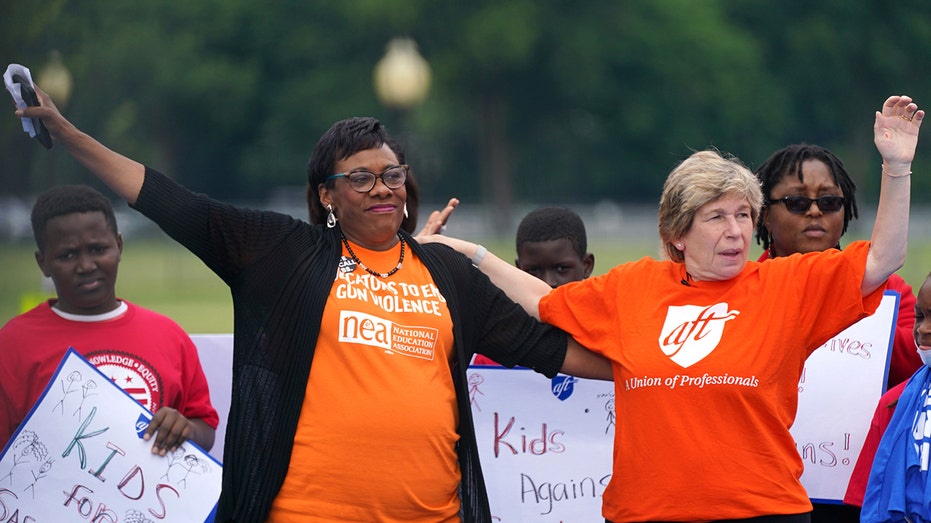
An in-depth analysis revealed the scale of spending by four major unions: the National Education Association, the American Federation of Teachers, the Service Employees International Union, and the American Federation of State, County and Municipal Employees. Their combined political investments dwarfed previous cycles, exceeding $708 million just two years prior.
The core question emerging from this data isn’t simply *how much* was spent, but *where* the money originated. For many union members, the realization that their dues are funding political campaigns and ideological causes may come as a shock.
Historically, union dues were primarily intended for essential member services – contract negotiations, grievance support, and advocating for workplace improvements. Now, a significant portion is diverted to support candidates and causes that may not align with every member’s personal beliefs.
The financial flow reveals a clear pattern. These unions aren’t simply seeking better conditions for their members; they’re actively working to expand the size and scope of government, often through increased taxation. This strategy, experts suggest, is a decades-long playbook.
Unlike private-sector unions, which are often tied to a company’s financial performance, public-sector unions benefit directly from a larger government and increased tax revenue. More government means more employees, and more employees mean a larger union membership – and more dues.
The breakdown of spending is particularly revealing. While roughly 25% of funds went towards direct representational activities, a full 33% was absorbed by overhead, administration, and staff benefits. But it was the $755 million dedicated to federal elections and national progressive politics, plus another $160 million at the state level, that truly captured attention.
Beyond the direct spending from dues, unions also collect voluntary contributions through Political Action Committees (PACs). However, the report highlights a concerning practice: the “laundering” of dues money through Super PACs and other political organizations, obscuring the true source of funding.
This lack of transparency and accountability raises a critical issue. How many union members are truly aware of how their hard-earned money is being used to influence the political landscape? And what recourse do they have to change the system?
The report underscores a growing disconnect between union leadership and the rank-and-file members they represent. A disturbing trend is emerging: a reliance on member dues, rather than voluntary PAC contributions, to fuel a political agenda.
The implications are far-reaching, potentially reshaping the role of unions in American society and sparking a crucial conversation about member rights and financial transparency.



![WALZ TARGETED: Sickening Harassment & Vile Screams at Governor's Home! [VIDEO]](https://www.thegatewaypundit.com/wp-content/uploads/2025/12/img_0606-1-1200x630.jpg)