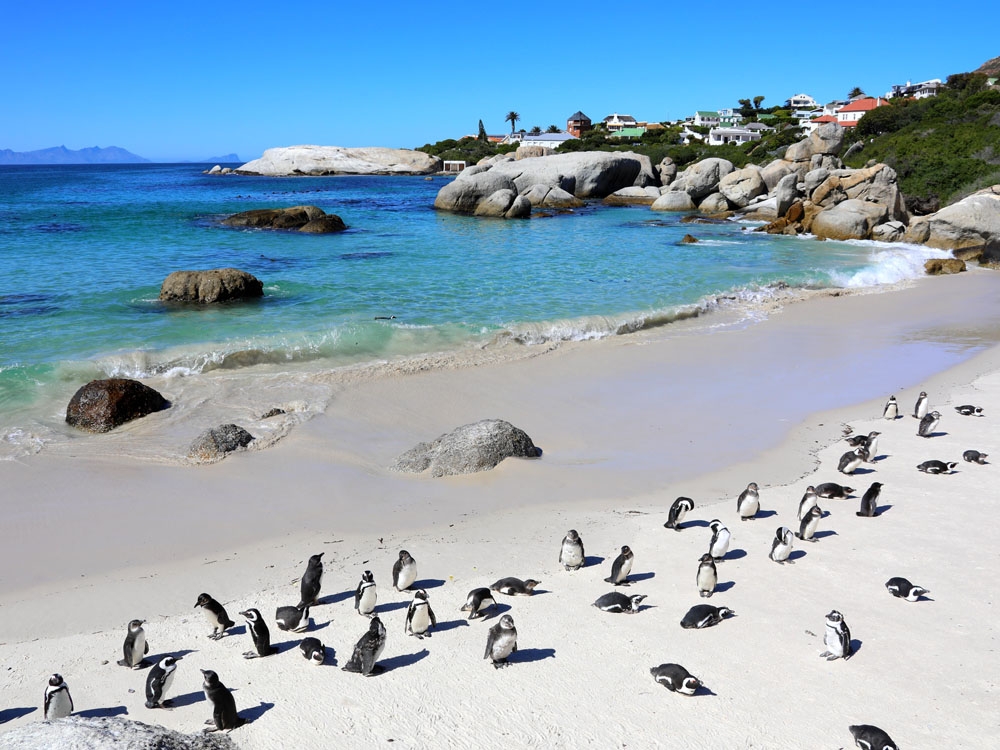
A silent tragedy unfolded along the South African coast, a slow-motion catastrophe witnessed by dwindling colonies of African penguins. Thousands perished, not from disease or predation, but from a far more agonizing fate: starvation.
For eight long years, between 2004 and 2011, researchers documented a devastating collapse in the penguin populations on Dassen Island and Robben Island. The birds, recognizable by their distinctive black-and-white plumage and boisterous calls, simply ran out of food. An estimated 62,000 breeding individuals vanished, a heartbreaking loss that signaled a deeper crisis.
These penguins are uniquely vulnerable. Each year, they undergo a crucial molt, shedding old feathers for new. This process demands complete focus, forcing them ashore and preventing them from hunting for weeks. They rely on substantial fat reserves built up beforehand, but when those reserves are depleted, survival becomes impossible.
The root of the problem lies in the dramatic decline of sardines and anchovies, the penguins’ primary food source. Once abundant, these fish populations have plummeted, impacted by the complex interplay of climate change and commercial fishing. The birds, evolved to thrive in a rich marine environment, were left with nothing.
Scientists meticulously compared food availability with penguin breeding success, revealing a stark correlation. When prey was scarce, fewer birds returned to the colonies to molt, a clear indicator of widespread mortality. The data painted a grim picture of a species pushed to the brink.
Today, fewer than 10,000 breeding pairs remain, a fraction of the 141,000 estimated in 1956, and a heartbreaking shadow of the millions that once graced these shores. The African penguin, the only species native to South Africa, is now classified as “critically” endangered, its future hanging precariously in the balance.
Recent studies have revealed a desperate pattern: penguins increasingly forage alongside commercial fishing vessels, competing for the same dwindling resources. In years of scarcity, as much as 20 percent of the penguin population was found feeding in the immediate vicinity of fishing operations, a dramatic increase from the usual 4 percent.
Recognizing the urgency, the South African government has implemented interim fishing restrictions, creating no-go zones around key breeding colonies. A recent court settlement further solidified these protections, barring commercial fishing near vital penguin habitats for the next decade. These measures offer a glimmer of hope, but are likely not enough.
Experts warn that climate change continues to threaten the long-term availability of prey. The situation demands a multifaceted approach, one that prioritizes the restoration of food supplies and addresses the broader ecological challenges facing the region. The fate of the African penguin serves as a stark warning.
Its decline isn’t simply the loss of an iconic species; it’s a symptom of a much larger crisis. As one researcher poignantly noted, if a well-studied and beloved animal like the African penguin is struggling to survive, how many other species are disappearing unnoticed, silently slipping away into extinction?