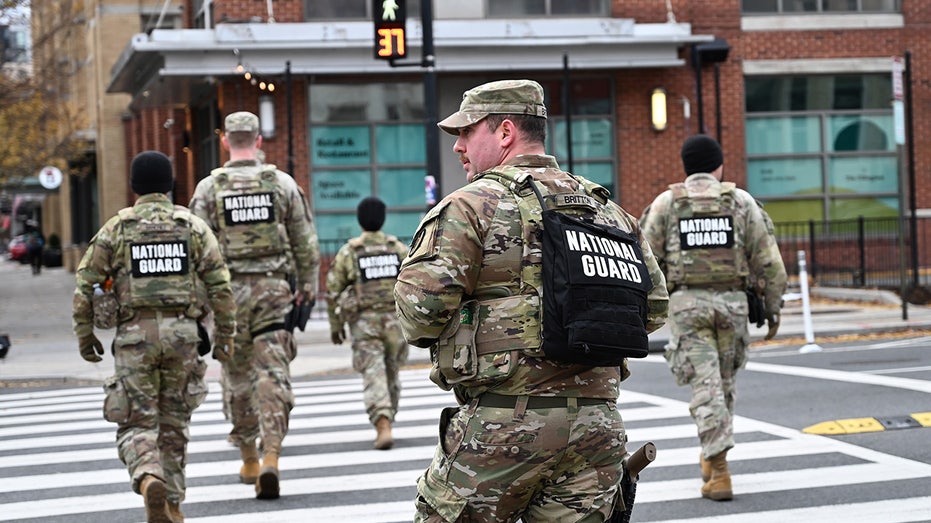
The echoes of gunfire near a Washington, D.C. metro stop still reverberate, marking a horrific moment for National Guardsmen Andrew Wolfe and Sarah Beckstrom. Rahmanullah Lakanwal now faces charges in connection with the shooting, accused of murdering Beckstrom while Wolfe fights for recovery. The Department of Justice is prepared to seek the ultimate penalty, but the tragedy has ignited a fierce debate extending far beyond the courtroom.
Immediately following the attack, accusations flew, with many pointing fingers at former President Donald Trump. Critics claimed the National Guard’s deployment to the city was a reckless political maneuver, needlessly exposing service members to danger. The argument centered on the idea that a visible military presence would inevitably escalate tensions, a claim amplified by voices in the media.
However, a closer examination reveals a different narrative. The National Guard’s presence in D.C. coincided with a demonstrable decrease in crime – a critical development in a city long grappling with violence. Data paints a stark picture: before the deployment, D.C.’s homicide rate, while declining from a 2023 peak, remained a staggering 70% higher than in 2014. The city’s most vulnerable communities, disproportionately Black and male, bore the brunt of this escalating crisis.
Independent analysis supports the link between the Guard’s deployment and reduced violence. Crime researcher Jeff Asher identified a clear decline in shootings following their arrival, a trend corroborated by CBS News and observed in other cities, like Memphis, Tennessee, during similar deployments. Deploying armed personnel acts as both a deterrent and provides crucial relief to overburdened police forces.
The emerging details surrounding Lakanwal’s background suggest a more complex motivation than simply reacting to the Guard’s presence. He arrived in the United States in 2021 as part of Operation Allies Welcome, a program designed to resettle Afghanis following the U.S. withdrawal. A former CIA operative in Afghanistan, Lakanwal reportedly struggled with assimilation and battled severe post-traumatic stress.
Emails obtained by the Associated Press reveal a man unraveling for years, cycling between isolating periods and impulsive, cross-country journeys. This paints a portrait of an individual in desperate need of support, a need that appears to have gone unmet during the vetting process. The tragedy raises serious questions about the thoroughness of screening procedures for those admitted into the country.
While Lakanwal bears the primary responsibility for his alleged actions, the failure to adequately vet him before allowing him into the country represents a significant oversight. His case is not isolated; it’s one example within a larger pattern of challenges associated with managing immigration. The very conditions the National Guard was deployed to address – uncontrolled criminality – are mirrored in the broader context of border security and immigration policy.
The deployment of the National Guard to D.C. was not a political spectacle, but a necessary intervention. To suggest otherwise diminishes the sacrifices of Staff Sergeant Wolfe, Specialist Beckstrom, and every law enforcement officer and guardsman who risks their life to protect our communities. Their service deserves recognition, not unfounded criticism.